---
title: Pre-Inca Civilisations at the Tucume Museum
author: Hilary Bradt
source: https://www.worldhistory.org/article/1403/pre-inca-civilisations-at-the-tucume-museum/
format: machine-readable-alternate
license: Creative Commons Attribution-NonCommercial-ShareAlike (https://creativecommons.org/licenses/by-nc-sa/4.0/)
updated: 2022-07-20
---
# Pre-Inca Civilisations at the Tucume Museum
_Authored by Hilary Bradt_
*On 1 November 2015 CE, at the annual dinner hosted by the British Guild of Travel Writers at the Savoy Hotel in London, it was announced that the Tucume Museum in northern Peru had won the prestigious award for the Best Wider World Tourism Project. Hilary Bradt explains why she nominated Tucume for this award.*
It has been a long time – 23 years, in fact – since the Norwegian ethnographer and adventurer [Thor](https://www.worldhistory.org/Thor/) Heyerdahl (1914-2002 CE) became fascinated with the potential of excavating the sites of the pre-[Inca](https://www.worldhistory.org/Inca_Civilization/) civilisations in northern Peru and persuaded the Kon-Tiki Museum of Oslo to help launch the project. The excavation was taken over by Peru's Ministry of [Culture](https://www.worldhistory.org/disambiguation/culture/) during the latter years of the project and they are justly proud of the result.
[ 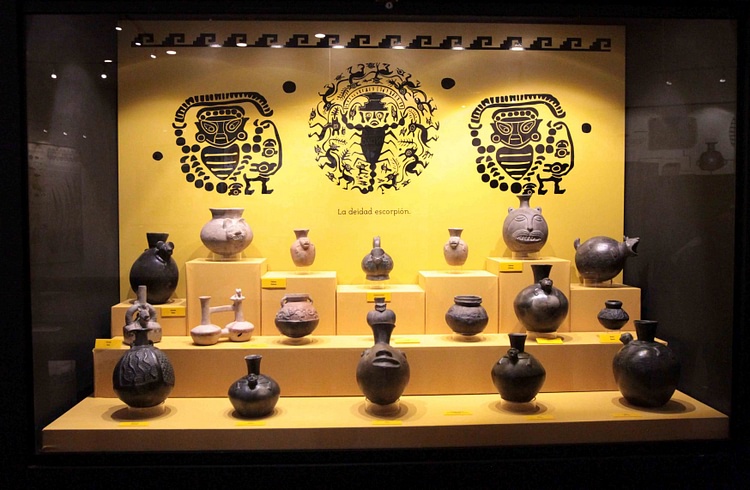 Display of Pre-Inca Pots Hilary Bradt (See Original Source) ](https://www.worldhistory.org/image/10929/display-of-pre-inca-pots/ "Display of Pre-Inca Pots")### Pre-Inca [Pyramids](https://www.worldhistory.org/pyramid/) & Ruins
Before the opening of its new museum in September 2014 CE, Tucume was best known for its enormous pyramids, some 26 of them, constructed before the [Inca Civilization](https://www.worldhistory.org/Inca_Civilization/) (c. 1400-1533 CE) made its [mark](https://www.worldhistory.org/disambiguation/Mark/) in Peru. They are so huge, and so eroded, that they appear as natural mountains to the uninitiated. But Thor Heyerdahl knew that great wonders lay beneath that rock-hard sandstone and we visitors can, at last, take a look.
#### Magazine Syndication
[](http://bit.ly/timeless-travels "Timeless Travels Magazine")### Timeless Travels Magazine
Available in Print & Digital Editions This article was first published in Timeless Travels Magazine and republished with permission. Timeless Travels is the unique travel magazine for those who are inspired to travel by their love or interest in archaeology, history or art. Our editorial team highly recommends this magazine! [Get the Magazine](http://bit.ly/timeless-travels)
.button_container {
margin-top: 2em;
}
.sponsor.book h3 {
text-transform: none;
margin-top: 0px;
margin-bottom: 15px;
font-family: "Libre Baskerville", "Palatino Linotype", "Book Antiqua", Palatino, serif;
}
.sponsor_message {
margin-left: 190px;
font-family: Karla, Arial, Helvetica, sans-serif;
line-height: 140%;
min-height: 200px;
}
.sponsor.book {
padding: 10px 0px 25px 0px;
margin: 25px 0px;
border-top: 1px dotted #dadada;
border-bottom: 1px dotted #dadada;
}
.sponsor.book .key_art {
margin-top: 0px;
margin-bottom: 10px;
float: left;
border: 1px solid #f3f3f3;
}
.sponsor h4 {
font-weight: normal;
text-transform: uppercase;
color: silver;
margin-bottom: 10px;
margin-top: 0px;
font-family: Karla,Arial,Helvetica,sans-serif;
font-size: 13px;
padding: 0;
}
.sponsor_book_author {
color: silver;
margin: -10px 0px 20px;
}
@media (max-width: 1199px) {
.sponsor.book .key_art {
float: none;
width: 100%;
}
.sponsor.book .sponsor_message {
margin-left: 0px;
}
.sponsor.book h3 {
margin-top: 20px;
margin-bottom: 10px;
}
}
@media (max-width: 767px) {
}
The last time I was in northern Peru was in 1973 CE, at the beginning of the 18-month-long backpacking trip which indirectly launched Bradt Travel Guides. Our destination was the Inca ruins in the south and the snow peaks of the Cordillera Blanca, but travelling overland from Ecuador we paused to take a look at Sechín on our way to Huaraz. The extraordinarily graphic representations of battles opened our eyes to the richness of these little-known cultures. In our first guidebook, we wrote:
> If you decide to pass through Casma, don't miss the pre-Inca ruins of Sechín. It commemorates a [battle](https://www.worldhistory.org/disambiguation/battle/). From the pictures on the stone walls, you'll have no difficulty telling the winners from the losers.
Recent studies are less sure about the battle part - maybe these were human sacrifices or even an ancient anatomy lesson. What is clear is that they depict a particularly gruesome dismemberment of human bodies: decapitations, eviscerations, and amputations. They are very old, around 1600 BCE.
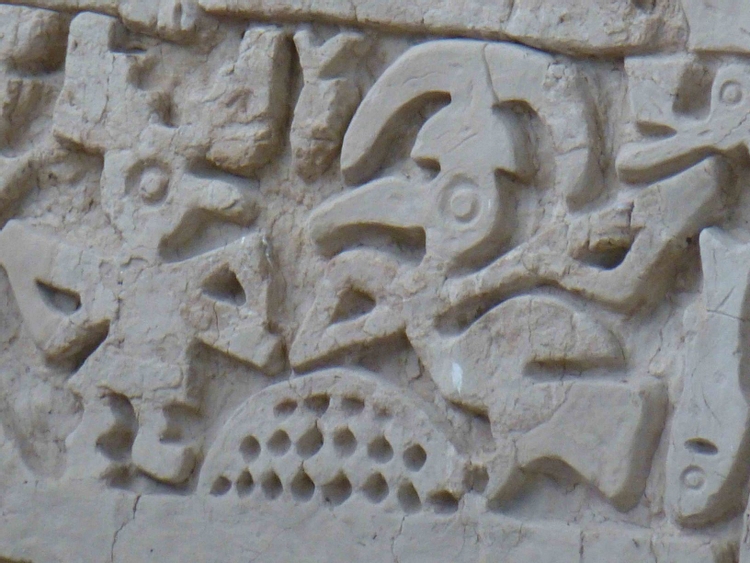
Tucume is altogether more gentle – and more recent. The excavations have revealed the most stunning relief carvings of stylised marine animals and birds hidden inside one of the pyramids. Several different cultures come together here, from the [Lambayeque](https://www.worldhistory.org/Lambayeque_Civilization/) and Sipan (c. 750 - c. 1375 CE) to the Chimu (12th-15th centuries CE) and finally the Inca.
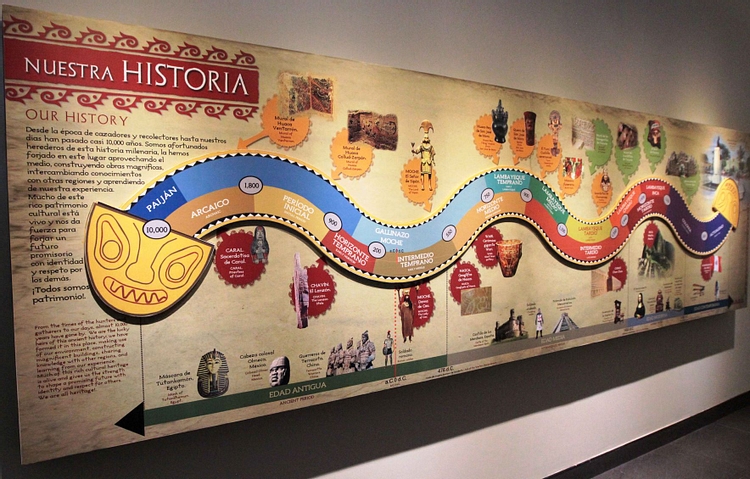
This spread has enabled the museum to take visitors on an imaginatively illustrated journey through northern Peru's ancient history. This is a "doing" museum, not just a "looking" one, and there are plenty of interactive exhibits as well as some extraordinary reconstructed burials from the Chimu and Inca periods with their accompanying artefacts. Refreshingly, the labelling is in English as well as Spanish (a rarity in this part of Peru) so you can wander around the museum at your own pace without a guide or translator. There is so much to take in that it is easy to forget the broader picture - to complete the visit you need to see the pyramids.
[  Tucume Museum Mural Hilary Bradt (See Original Source) ](https://www.worldhistory.org/image/10928/tucume-museum-mural/ "Tucume Museum Mural")### Huaca Larga & Huaca Las Balsas
The largest and most impressive of these, Huaca Larga (Long [Pyramid](https://www.worldhistory.org/pyramid/)), the [Temple](https://www.worldhistory.org/temple/) of the Sacred Stone, and Huaca Las Balsas, are found in Tucume's northeast sector. Huaca Larga, at 2,300 feet (700 m) long, is the longest known adobe structure in the world. It is distinctly marked by traditional Chimu red, white, and black paintings of mythological creatures.
Accompanying the desert trail to Huaca Larga is another path that culminates in a fantastically long staircase leading all the way up to Cerro Purgatorio ('Purgatory Hill' - you will appreciate the name once you have climbed it) which overlooks the 26 pyramids and their valley. The view is terrific. A third trail leads down into a lovely carob forest full of colourful birds, sleepy donkeys, and grazing cattle from neighbourhood farms. The trail ends at Huaca Las Balsas, a partially excavated pyramid, which is the jewel in the crown of the museum.
[ 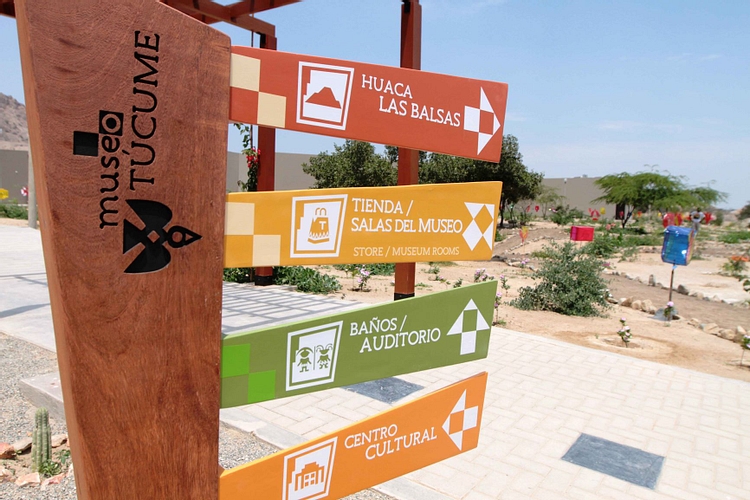 Signposts at the Tucume Museum Hilary Bradt (See Original Source) ](https://www.worldhistory.org/image/10930/signposts-at-the-tucume-museum/ "Signposts at the Tucume Museum")Las Balsas is famous for its carved murals, in perfect condition, which focus on ocean themes, including waves, sea creatures, and marine birds. These can be explored from [metal](https://www.worldhistory.org/disambiguation/metal/) walkways built around the site. A botanical garden, showing the typical dry-zone flora and its accompanying wildlife, completes the picture of the region as a whole. Here we spotted a burrowing owl surveying the scene with a yellow-eyed stare.
### The Opening of the Tucume Museum
On opening the museum in September 2014 CE, Peruvian Prime Minister Ana Jara said:
> In addition to increasing tourist arrivals in the region, this museum guarantees the cultural, economic and social development of the people of Tucume. It is a source of pride to all Peruvians.
My little group of ten tourists were the only foreign visitors when I visited in June 2015 CE. That is why I nominated the museum for the award. I have visited Peru around 30 times since that first visit in 1973 CE but never made it here. Now, I want to spread the word.
[  Pre-Inca Murals Hilary Bradt (See Original Source) ](https://www.worldhistory.org/image/10931/pre-inca-murals/ "Pre-Inca Murals")### Getting there
The museum is located in Lambayeque province, 33 km north-east of Chiclayo, a large town accessible by air from Lima. Although it is possible to get local buses to the museum, most travellers will prefer to take a tour or taxi to the various sites in the area, the most notable of which is the Royal Tombs Museum displaying the artefacts found at Sipan, Ventarron. This museum is the equal of Tucume in its displays but the labelling is all in Spanish.
#### Editorial Review
This human-authored article has been reviewed by our editorial team before publication to ensure accuracy, reliability and adherence to academic standards in accordance with our [editorial policy](https://www.worldhistory.org/static/editorial-policy/).
## Cite This Work
### APA
Bradt, H. (2019, June 21). Pre-Inca Civilisations at the Tucume Museum. *World History Encyclopedia*.
### Chicago
Bradt, Hilary. "Pre-Inca Civilisations at the Tucume Museum." *World History Encyclopedia*, June 21, 2019. .
### MLA
Bradt, Hilary. "Pre-Inca Civilisations at the Tucume Museum." *World History Encyclopedia*, 21 Jun 2019, .
## License & Copyright
Original article by **Hilary Bradt**. Submitted by [Kim Martins](https://www.worldhistory.org/user/kim.martins/ "User Page: Kim Martins"), published on 21 June 2019. The copyright holder has published this content under the following license: [Creative Commons Attribution-NonCommercial-ShareAlike](https://creativecommons.org/licenses/by-nc-sa/4.0/deed.en). This license lets others remix, tweak, and build upon this content non-commercially, as long as they credit the author and license their new creations under the identical terms. When republishing on the web a hyperlink back to the original content source URL must be included. Please note that content linked from this page may have different licensing terms.