---
title: Ancient Cyprus: A Travel Guide
author: Carole Raddato
source: https://www.worldhistory.org/article/1351/ancient-cyprus-a-travel-guide/
format: machine-readable-alternate
license: Creative Commons Attribution-NonCommercial-ShareAlike (https://creativecommons.org/licenses/by-nc-sa/4.0/)
updated: 1970-01-01
---
# Ancient Cyprus: A Travel Guide
_Authored by [Carole Raddato](https://www.worldhistory.org/user/FollowingHadrian/)_
Lying at the crossroads of the eastern [Mediterranean](https://www.worldhistory.org/disambiguation/mediterranean/), the island of [Cyprus](https://member.ancient.eu/cyprus/) has long been a meeting point for many of the world's great [civilizations](https://member.ancient.eu/cyprus/). Situated where [Europe](https://www.worldhistory.org/europe/), Asia and [Africa](https://www.worldhistory.org/disambiguation/africa/) meet, its location shaped its history of bringing civilizations together. Many powers conquered the island, and [Cyprus](https://www.worldhistory.org/cyprus/) was ruled in turn by the [Hittites](https://www.worldhistory.org/hittite/), the Egyptians, the Persians and the Greeks until it was absorbed by the Romans. Cyprus is also known as the “Island of Love”. According to [mythology](https://www.worldhistory.org/mythology/), [Aphrodite](https://www.worldhistory.org/Aphrodite/), the ancient [Greek](https://www.worldhistory.org/disambiguation/greek/) goddess of love and beauty, was born from the foam of the sea on the south-western coast of the island.
[  Aphrodite's Rock in Cyprus Carole Raddato (CC BY-NC-SA) ](https://www.worldhistory.org/image/10182/aphrodites-rock-in-cyprus/ "Aphrodite's Rock in Cyprus")The earliest settlements in Cyprus appeared during the [Neolithic](https://member.ancient.eu/Neolithic/) era, around 7000-6000 BCE. With the development of [copper](https://www.worldhistory.org/copper/) between 3900 BCE and 2500 BCE, a flourishing [trade](https://www.worldhistory.org/disambiguation/trade/) brought wealth and prosperity to the island. Cyprus became a leading commercial centre between the [Near East](https://www.worldhistory.org/Near_East/) and the West. However, the event that stamped permanently the life of Cyprus was the arrival of the [Mycenaeans](https://member.ancient.eu/Neolithic/) and the Achaeans between the 13th and 11th centuries BCE. They introduced their language, customs, [culture](https://www.worldhistory.org/disambiguation/culture/) and their arts and established new [cities](https://www.worldhistory.org/city/). The strategic location of Cyprus and its natural resources attracted the attention of many invaders.
The Greek geographer Strabo who visited Cyprus described the island in his *Geographica* (23 CE): “In fertility Cyprus is not inferior to any one of the islands, for it produces both good wine and good oil, and also a sufficient supply of grain for its own use” (Strab. XIV. p. 383).
\[[https://www.google.com/maps/d/u/0/embed?mid=1pF3DNa6Jpm7SwavPvWiIa\_eK0t8&ll=35.11525335272897%2C33.27296816115563&z=9](https://www.google.com/maps/d/u/0/embed?mid=1pF3DNa6Jpm7SwavPvWiIa_eK0t8&ll=35.11525335272897%2C33.27296816115563&z=9)\]
Gradually the Greek [city](https://www.worldhistory.org/city/)-states fell into the hands of the Assyrians (700 BCE), the Egyptians (565 BCE) and the Persians (546 BCE). Persian rule lasted until 332 BCE following the intervention of [Alexander the Great](https://www.worldhistory.org/Alexander_the_Great/) and his victory at [Tyre](https://www.worldhistory.org/Tyre/). After [Alexander](https://www.worldhistory.org/disambiguation/Alexander/) the Great's [death](https://www.worldhistory.org/disambiguation/Death/), Cyprus became part of [Egypt](https://www.worldhistory.org/egypt/) under the rule of the Ptolemies. During the [Hellenistic period](https://www.ancient.eu/Hellenistic_Period/), cultural life and the arts flourished. It was a time of important public works and the city of Pafos became the capital. In 58 BCE, Cyprus was annexed by [Rome](https://www.worldhistory.org/Rome/). The island was given the status of Province and a period of large public building projects began. The [Roman](https://www.worldhistory.org/disambiguation/Roman/) period came to an end in the 4th century CE with the division of the [Roman Empire](https://www.worldhistory.org/Roman_Empire/) and Cyprus became part of the [Byzantine Empire](https://www.worldhistory.org/Byzantine_Empire/) with [Christianity](https://www.worldhistory.org/christianity/) becoming the official [religion](https://www.worldhistory.org/religion/). Other people would later take control of the island, the [Franks](https://www.worldhistory.org/Franks/), Venetians, Ottomans, the British, and currently the Turks in Northern Cyprus.
With this impressive historical legacy, Cyprus is inevitably an archaeologist's dream destination. It has become famous for its archaeological sites and treasures, including three [UNESCO World Heritage Sites](http://whc.unesco.org/en/statesparties/cy). We have put together a list of the 5 archaeological sites to visit on the island of love.
### **[SALAMIS](https://www.worldhistory.org/disambiguation/Salamis/)**
Once a thriving port city and an important Greek [city-state](https://www.worldhistory.org/Polis/) on the eastern shore of Cyprus, Salamis offers a tantalizing glimpse into the vast history of the island. According to ancient Greek tradition, Salamis was founded after the [Trojan War](https://www.worldhistory.org/Trojan_War/) by the archer Teukros, son of King Telamon, who came from the island of Salamis, off the coast of Attica. Half-brother to the hero [Ajax](https://www.worldhistory.org/disambiguation/Ajax/), Teukros was unable to return home from the [war](https://www.worldhistory.org/disambiguation/War/) after failing to prevent his half-brother's suicide, leading him to flee to Cyprus where he founded Salamis. Successively controlled by various dominant powers, Salamis served as the island's main port and capital for a thousand years. The city saw great wealth and dominated the island until its near-destruction in the 4th century CE following a series of earthquakes. Most of the ruins we see today are from the Roman period. Set along the sea-shore, they cover an area over one kilometre long. Among the many impressive sights to be seen at Salamis are the [gymnasium](https://www.worldhistory.org/Gymnasium/), the [Roman baths](https://www.worldhistory.org/Roman_Baths/), the [theatre](https://www.worldhistory.org/disambiguation/theatre/) and the basilicas.
[ 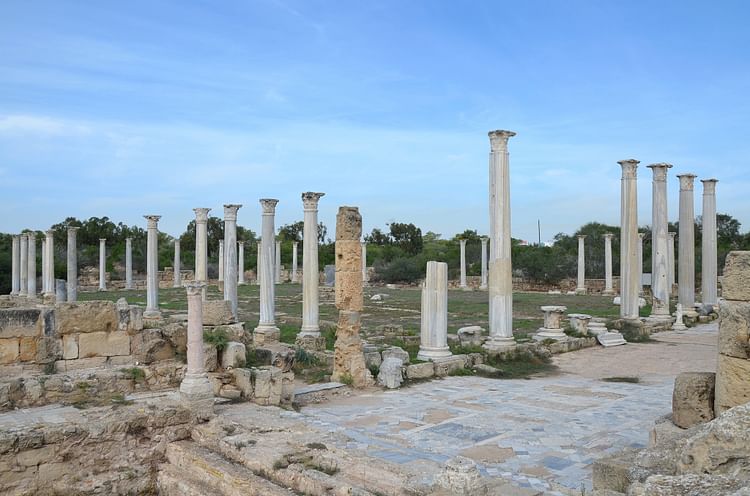 Gymnasium of Salamis, Cyprus Carole Raddato (CC BY-NC-SA) ](https://www.worldhistory.org/image/10204/gymnasium-of-salamis-cyprus/ "Gymnasium of Salamis, Cyprus")The gymnasium was devoted to the training of athletes. Its remains, with a colonnaded courtyard and adjacent pools, allude to Salamis' glory days. The vast exercise ground was destroyed by a number of earthquakes and was restored during the reign of [Hadrian](https://www.worldhistory.org/hadrian/) in the 2nd century CE as well as in the 4th century by the [Byzantine emperor](https://www.worldhistory.org/Byzantine_Emperor/) [Constantius II](https://www.worldhistory.org/Constantius_II/) who renamed the city Constantia. The visible remains of the gymnasium date from these two late restorations.
[  The Gymnasium Pool of Salamis, Cyprus Carole Raddato (CC BY-SA) ](https://www.worldhistory.org/image/4385/the-gymnasium-pool-of-salamis-cyprus/ "The Gymnasium Pool of Salamis, Cyprus")The gymnasium had latrines. It was a semicircular colonnaded structure with seating for 44 people. They are the largest ever found in Cyprus.
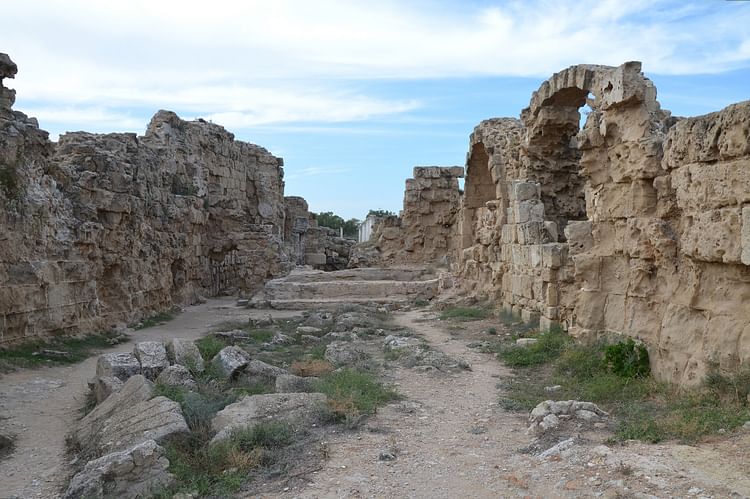
[ 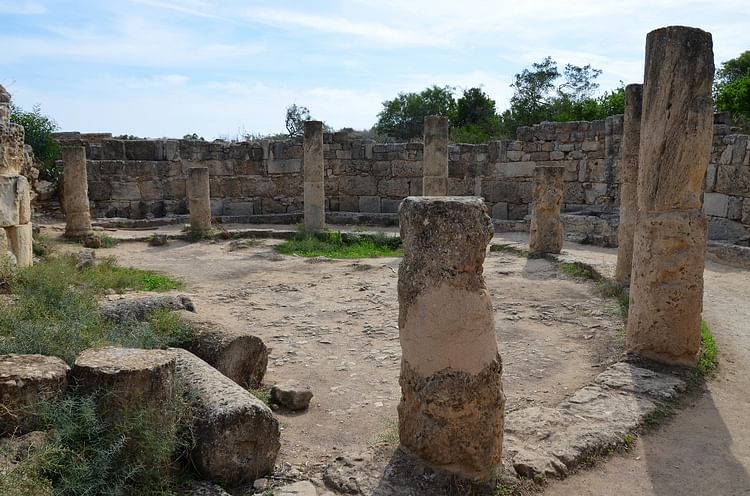 The Latrines of Salamis, Cyprus Carole Raddato (CC BY-NC-SA) ](https://www.worldhistory.org/image/10203/the-latrines-of-salamis-cyprus/ "The Latrines of Salamis, Cyprus")East of the gymnasium lies the bath complex with a sweat-room, marble-lined pools, cold and hot rooms and an exposed hypocaust (underfloor heating system). The building was decorated with stunning mythological-themed mosaics and frescoes. One [mosaic](https://www.worldhistory.org/Mosaic/) depicts the slaying of the Niobids by [Apollo](https://member.ancient.eu/apollo/) and [Artemis](https://www.worldhistory.org/artemis/) while another one represents the well-known legend of [Leda](https://www.worldhistory.org/Leda/) and [Zeus](https://www.worldhistory.org/zeus/). A [fresco](https://www.worldhistory.org/disambiguation/Fresco/) depicts Hylas, the young friend of [Hercules](https://member.ancient.eu/hercules/), and a water [nymph](https://www.worldhistory.org/nymph/). Like the gymnasium, the baths were rebuilt in [Byzantine](https://www.worldhistory.org/disambiguation/Byzantine/) times.
[  Bath Complex of Salamis, Cyprus Carole Raddato (CC BY-NC-SA) ](https://www.worldhistory.org/image/10205/bath-complex-of-salamis-cyprus/ "Bath Complex of Salamis, Cyprus") [ 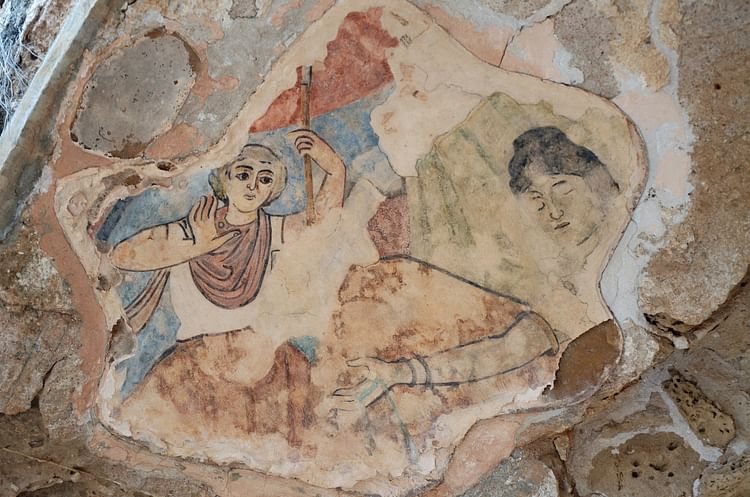 Fresco with Hylas in Salamis, Cyprus Carole Raddato (CC BY-NC-SA) ](https://www.worldhistory.org/image/10206/fresco-with-hylas-in-salamis-cyprus/ "Fresco with Hylas in Salamis, Cyprus")The Roman theatre is another spectacular sight. Built during the reign of Emperor [Augustus](https://member.ancient.eu/augustus/) (27 BCE – 14 CE) and completed during the years of [Trajan](https://www.worldhistory.org/trajan/) and Hadrian (98 – 138 CE), it originally held over 15,000 spectators. Much of it was destroyed by consecutive earthquakes and its stones were removed to provide building material for the Early Christian reconstructions of the gymnasium and the baths. The theatre has now been partially restored and occasionally hosts theatrical and other cultural performances during the summer.
[ 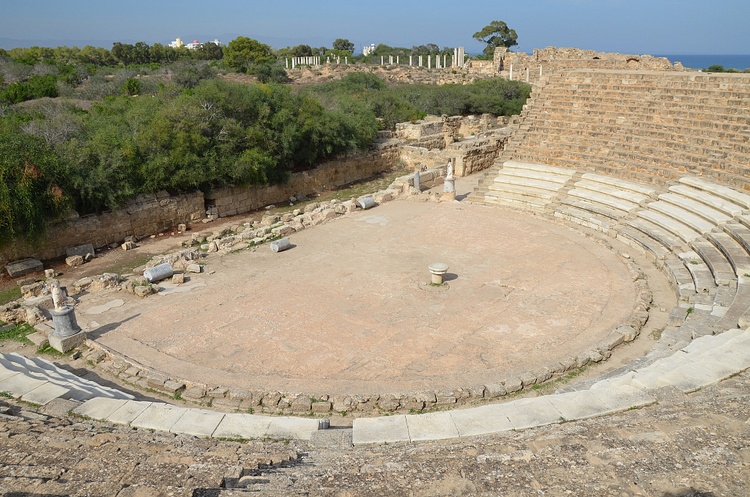 Roman Theatre of Salamis, Cyprus Carole Raddato (CC BY-SA) ](https://www.worldhistory.org/image/4383/roman-theatre-of-salamis-cyprus/ "Roman Theatre of Salamis, Cyprus") [ 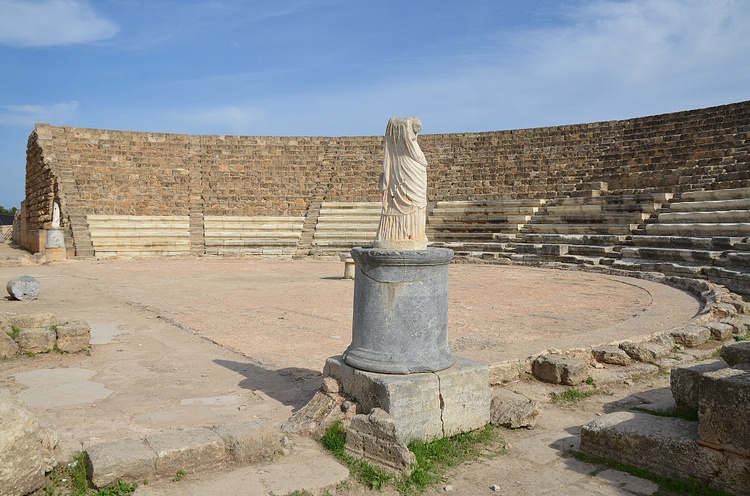 Roman Teatre of Salamis, Cyprus Carole Raddato (CC BY-SA) ](https://www.worldhistory.org/image/4382/roman-teatre-of-salamis-cyprus/ "Roman Teatre of Salamis, Cyprus")The ruins of the Kambanopetra Basilica built in the 4th century CE occupy a magnificent position overlooking the sea. Originally it would have been an impressive complex with a large colonnaded rectangular courtyard and porticoes on all four sides, adjoining a three-aisled basilica.
[ 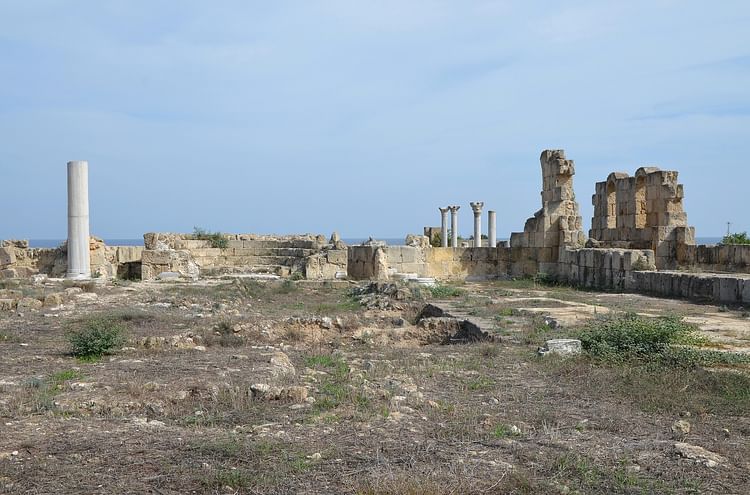 Kambanopetra Basilica in Salamis, Cyprus Carole Raddato (CC BY-NC-SA) ](https://www.worldhistory.org/image/10207/kambanopetra-basilica-in-salamis-cyprus/ "Kambanopetra Basilica in Salamis, Cyprus")For more than a thousand years Salamis lay buried beneath a thick layer of sand which helped preserve the city from looting and destruction.
Other notable sites around Salamis:
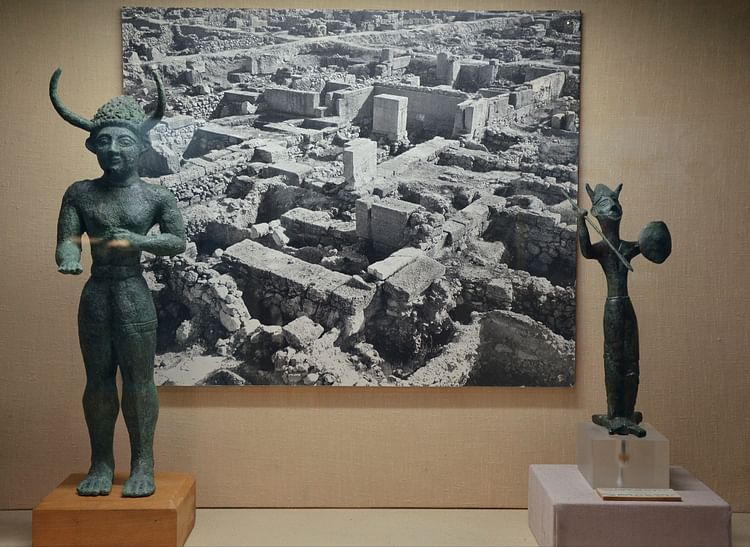
- **Enkomi** (Alasia) was an important [Bronze Age](https://www.worldhistory.org/disambiguation/Bronze_Age/) city dating back as far as 1800 BCE and an important trading centre for copper. The ruins of the site are located about two kilometres west of Salamis. Even though the site was looted several times over the centuries, some of Enkomi's most important finds were unearthed in the early 20th century CE. The finds include two [bronze](https://www.worldhistory.org/disambiguation/bronze/) statuettes dated to the early 12th century BCE (now in the Cyprus Museum). After an [earthquake](https://www.worldhistory.org/disambiguation/earthquake/) c. 1050 BCE, the site was abandoned, leaving an opening for the rise of Salamis.
[  Bronze Horned God & Ingot God from Enkomi, Cyprus Carole Raddato (CC BY-NC-SA) ](https://www.worldhistory.org/image/10244/bronze-horned-god--ingot-god-from-enkomi-cyprus/ "Bronze Horned God & Ingot God from Enkomi, Cyprus")### PAPHOS ARCHAEOLOGICAL SITE
Paphos is one of the island's most mesmerising archaeological sites and the most accessible to visitors. Located in the resort of Paphos on the south-west coast of the island, Nea Pafos - as it was called in antiquity - is home to a treasure trove of some of the most lavish ancient mosaics in the world. Founded in the late 4th century BCE, Pafos became the capital of the island, replacing Salamis, during the [Hellenistic](https://member.ancient.eu/Hellenistic_Period/) and Roman eras. Now a UNESCO World Heritage Site, the site is a vast archaeological area with remains of four Roman villas, an odeon, an [agora](https://www.worldhistory.org/agora/), an Asclepeion (a healing [temple](https://www.worldhistory.org/temple/), sacred to the [god](https://www.worldhistory.org/God/) [Asclepius](https://member.ancient.eu/Hellenistic_Period/), the god of [medicine](https://www.worldhistory.org/disambiguation/medicine/)) and royal tombs.
[  House of Theseus at Paphos, Cyprus Carole Raddato (CC BY-NC-SA) ](https://www.worldhistory.org/image/10208/house-of-theseus-at-paphos-cyprus/ "House of Theseus at Paphos, Cyprus")The city originally occupied an area of about 950,000 square metres and reached its zenith during the Antonine and Severan periods (second half of 2nd / early 3rd century CE). This is reflected by the number of opulent buildings, both public and private, which survive from this period. Like Salamis, Nea Pafos was severely damaged by earthquakes on several occasions and went into decline following the devastating earthquake of the 4th century CE. A chance discovery made in 1962 CE by a farmer ploughing his field has brought to light exquisite mosaics that decorated the floors of wealthy residences of the Roman period.
One of the most exquisite and best-preserved mosaics unearthed at the site is the round mosaic of [Theseus](https://www.worldhistory.org/Theseus/) and the [Minotaur](https://www.worldhistory.org/Minotaur/) in the Villa of Theseus, named after the representation of the Athenian hero fighting the Cretan monster in the [Labyrinth](https://www.worldhistory.org/Labyrinth/).
[ 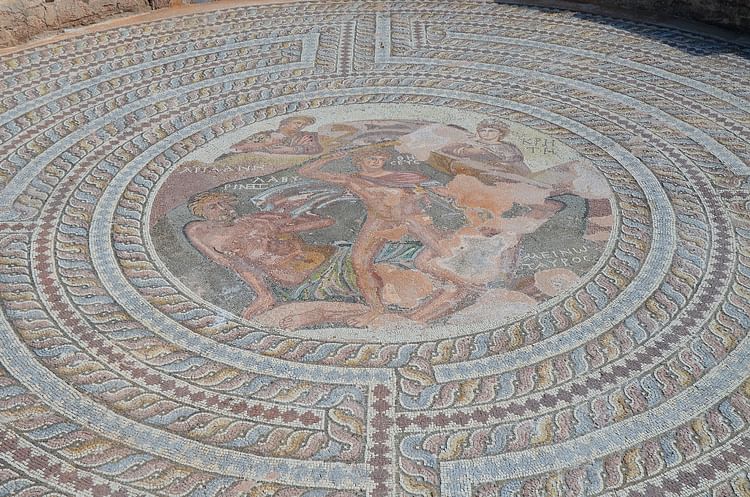 Theseus and the Minotaur Mosaic in Paphos, Cyprus Carole Raddato (CC BY-NC-SA) ](https://www.worldhistory.org/image/10209/theseus-and-the-minotaur-mosaic-in-paphos-cyprus/ "Theseus and the Minotaur Mosaic in Paphos, Cyprus")The Villa of Theseus occupies an area of about 9600 square metres and so far more than 1400 square metres of mosaic pavement have been found within the building. With more than 100 rooms, the house is the largest residential structure on the island and one of the largest in the Mediterranean. It was the residence of the governor of Cyprus (proconsul). This house is still being excavated today.
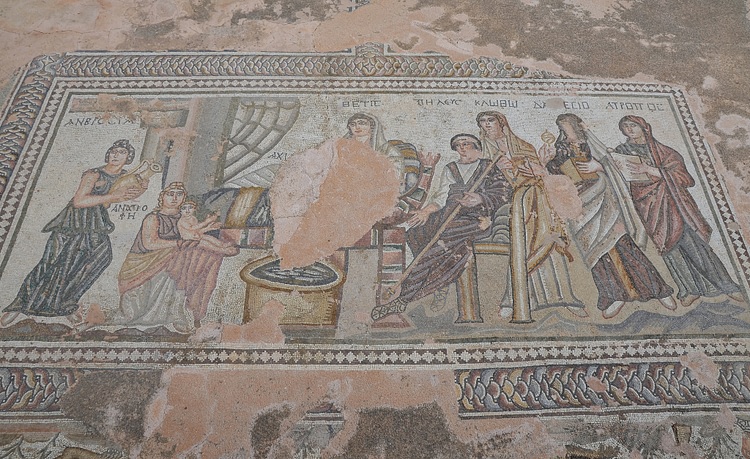
The other mosaic to look for in the Villa of Theseus is the one depicting the Birth of [Achilles](https://www.worldhistory.org/achilles/). The hero lies in the arms of his mother [Thetis](https://www.worldhistory.org/Thetis/) who is shown in the centre lying on a bed. This part of the scene has been greatly damaged. Achilles is also shown sitting on the knees of his nurse who is preparing to dip the infant in a basin.
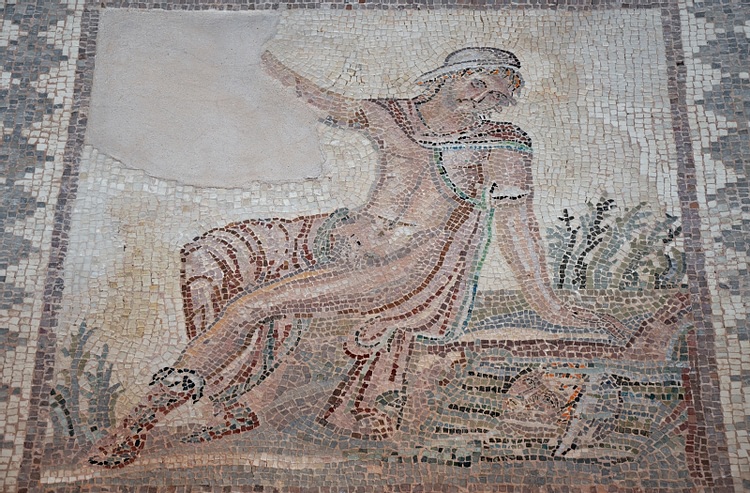
[  Bath of Achilles Mosaic Carole Raddato (CC BY-NC-SA) ](https://www.worldhistory.org/image/10210/bath-of-achilles-mosaic/ "Bath of Achilles Mosaic")The most spectacular group of mosaics comes from the House of [Dionysos](https://www.worldhistory.org/Dionysos/). The building occupies an area of about 2000 square metres, of which 556 are covered with mosaic floors. The name given to the house is due to the central mosaic featuring Dionysos, the god of wine. Almost every mosaic has a mythological theme. On entering the house the first thing you see is a mosaic depicting [Narcissus](https://www.worldhistory.org/Narcissus/) gazing at his own reflection as well as a mosaic with the personification of the four [seasons](https://www.worldhistory.org/Horae/).
[  Narcissus Mosaic Carole Raddato (CC BY-NC-SA) ](https://www.worldhistory.org/image/6373/narcissus-mosaic/ "Narcissus Mosaic")Next to these two mosaics lies the oldest mosaic ever found in Cyprus. It dates to the [Hellenistic period](https://www.worldhistory.org/Hellenistic_Period/) (late 4th / early 3rd century BCE) and represents the mythical sea-monster [Scylla](https://www.worldhistory.org/Scylla_and_Charybdis/), part woman, part fish and part dog. Unlike later [Roman mosaics](https://www.worldhistory.org/article/498/roman-mosaics/), it is monochrome and made of pebbles.
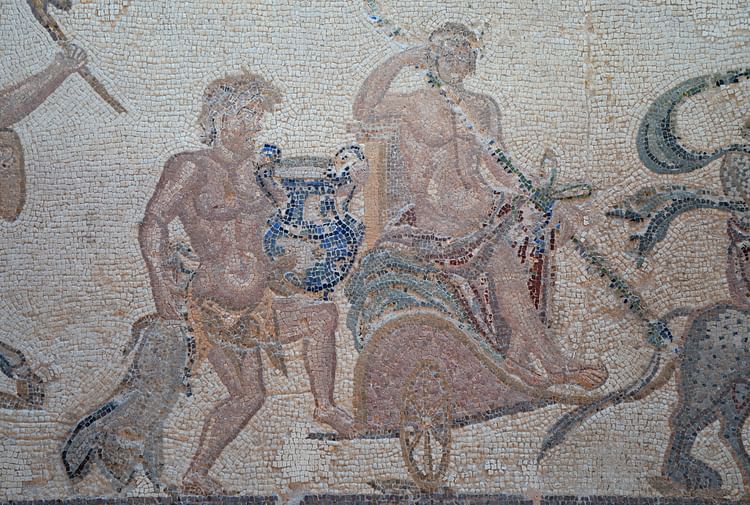
The [Triumph](https://www.worldhistory.org/Roman_Triumph/) of Dionysos and [Phaedra](https://www.worldhistory.org/Phaedra/) and [Hippolytus](https://www.worldhistory.org/Hippolytus/) are among the most impressive mosaics in the house. The former depicts the triumphal return of the god from a military expedition to [India](https://member.ancient.eu/india/) from where he brought Indian slaves and panthers we see on the mosaic. The latter represents the tragic story of Phaedra and Hippolytus. The scene shows the moment after Hippolytus has received and read the love letter from his stepmother Phaedra. The fate of Phaedra and Hippolytus has been recounted by numerous playwrights throughout history.
[  Triumph of Dionysos Mosaic in Paphos, Cyprus Carole Raddato (CC BY-NC-SA) ](https://www.worldhistory.org/image/10211/triumph-of-dionysos-mosaic-in-paphos-cyprus/ "Triumph of Dionysos Mosaic in Paphos, Cyprus") [ 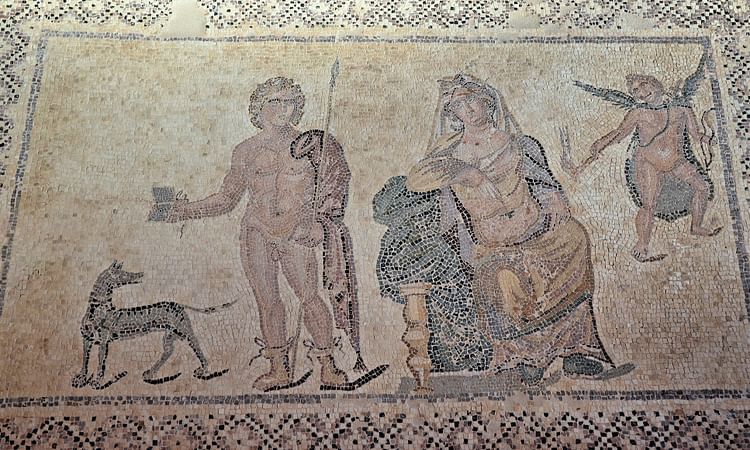 Phaedra & Hippolytus Mosaic Carole Raddato (CC BY-NC-SA) ](https://www.worldhistory.org/image/10212/phaedra--hippolytus-mosaic/ "Phaedra & Hippolytus Mosaic")Two other stunning mosaics in the House of Dionysos are the Rape of [Ganymede](https://www.worldhistory.org/Ganymede/) and the Hunting scene mosaics.
[ 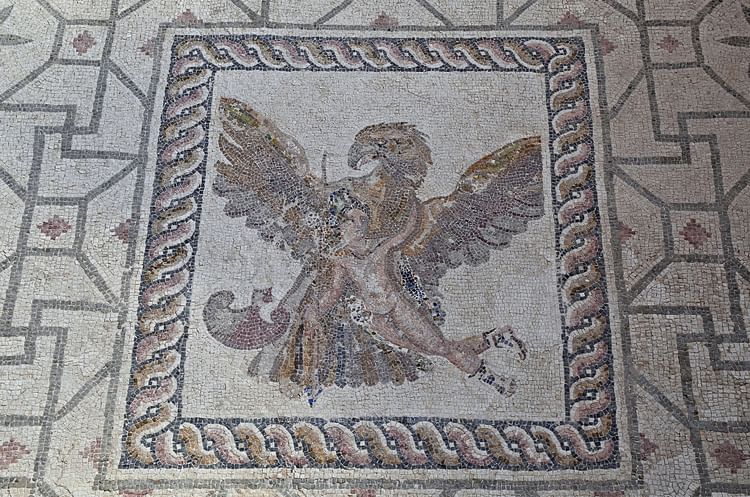 Rape of Ganymede Mosaic Carole Raddato (CC BY-NC-SA) ](https://www.worldhistory.org/image/10213/rape-of-ganymede-mosaic/ "Rape of Ganymede Mosaic")The nearby covered House of [Orpheus](https://www.worldhistory.org/Orpheus/) takes its name from the large mosaic panel depicting Orpheus seated on a rock and playing his [lyre](https://www.worldhistory.org/Lyre/), charming the animals. Two other mosaics that decorated the house show [Hercules](https://www.worldhistory.org/hercules/) and the Lion of [Nemea]() and the [Amazon](https://member.ancient.eu/amazon/), sadly both covered. Finally, the House of Aion is named after Aion, the god of eternal time, depicted in the mosaics. Only a small part of the building has been excavated. The uncovered rooms are decorated with exceptional geometric and figural mosaic floors. They include representations of [Apollo](https://www.worldhistory.org/apollo/), Cassiopeia, [Hermes](https://member.ancient.eu/amazon/), [Marsyas](https://www.worldhistory.org/Marsyas/), Dionysos and various sea creatures.
A short walk away lies the [Agora](https://member.ancient.eu/agora/), the Asclepeion and the Odeon where musical performances were held. These buildings constituted the heart of the ancient city.
[ 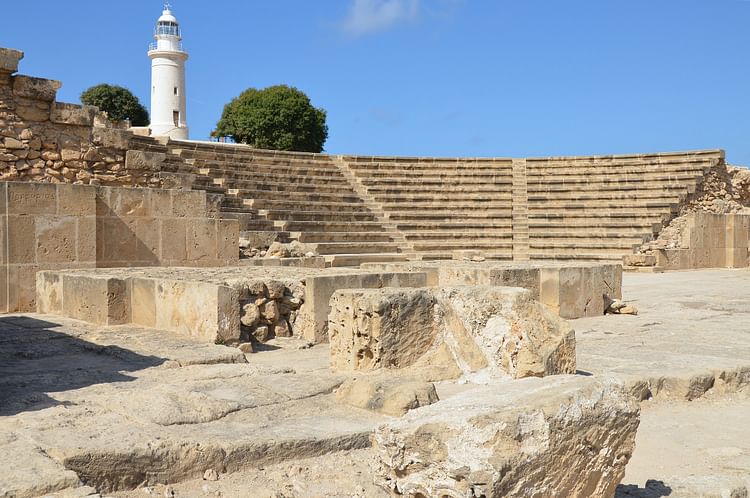 The Odeon of Nea Paphos, Cyprus Carole Raddato (CC BY-SA) ](https://www.worldhistory.org/image/4398/the-odeon-of-nea-paphos-cyprus/ "The Odeon of Nea Paphos, Cyprus")### THE [TOMB](https://www.worldhistory.org/tomb/) OF THE KINGS
Heading slightly north along the coast beyond the old city walls of Paphos you will find the Tombs of the Kings. This fascinating archaeological site contains a set of remarkable underground tombs used by the residents of Nea Pafos during the [Hellenistic](https://www.worldhistory.org/Hellenic_World/) and Roman periods (from the 3rd century BCE to the 3rd century CE). Eight tomb complexes have been opened for viewing.
[ ![Tombs of the Kings, Cyprus [Tomb No 5]](https://www.worldhistory.org/img/r/p/750x750/10214.jpg?v=1624198506) Tombs of the Kings, Cyprus \[Tomb No 5\] Carole Raddato (CC BY-NC-SA) ](https://www.worldhistory.org/image/10214/tombs-of-the-kings-cyprus-tomb-no-5/ "Tombs of the Kings, Cyprus [Tomb No 5]")Despite the name, the tombs were built when there were no more kings on Cyprus. The grandeur and magnificence of the tombs inspired the scholars of the second quarter of the 20th century CE to nickname the area “Tomb of the Kings”. Spread over a vast area covering 200,000 square metres, these impressive underground tombs were carved out of solid rock while some were decorated with Doric pillars. The [burial](https://www.worldhistory.org/burial/) complex contains over 100 tombs and is part of the World Heritage List together with the Pafos Archaeological Site. Prominent and wealthy citizens of Nea Pafos were buried there in pit-shaped tombs, chamber tombs and tombs with a colonnaded atrium.
[ ![Tombs of the Kings, Cyprus [Tomb No 3]](https://www.worldhistory.org/img/r/p/750x750/10215.jpg?v=1640001603) Tombs of the Kings, Cyprus \[Tomb No 3\] Carole Raddato (CC BY-NC-SA) ](https://www.worldhistory.org/image/10215/tombs-of-the-kings-cyprus-tomb-no-3/ "Tombs of the Kings, Cyprus [Tomb No 3]")Other notable sites in or near Paphos:
- Panagia Chrysopolitissa is located just east of the Paphos archaeological park where you can take a fascinating walk around the foundations of a 4th century CE Christian basilica, the largest ever excavated in Cyprus. Several magnificent marble columns with Ionic and Corinthian capitals have been re-erected while others lie scattered around the site. The floor of the basilica was covered with colourful geometric mosaics, some of which are still preserved. To the western side of the basilica stands the so-called [Saint Paul](https://www.worldhistory.org/Paul_the_Apostle/)'s Pillar, where Saint [Paul](https://www.worldhistory.org/disambiguation/Paul/) was allegedly flogged before he converted the Roman Governor, Sergius [Paulus](https://www.worldhistory.org/Paul_the_Apostle/), to Christianity.
[ 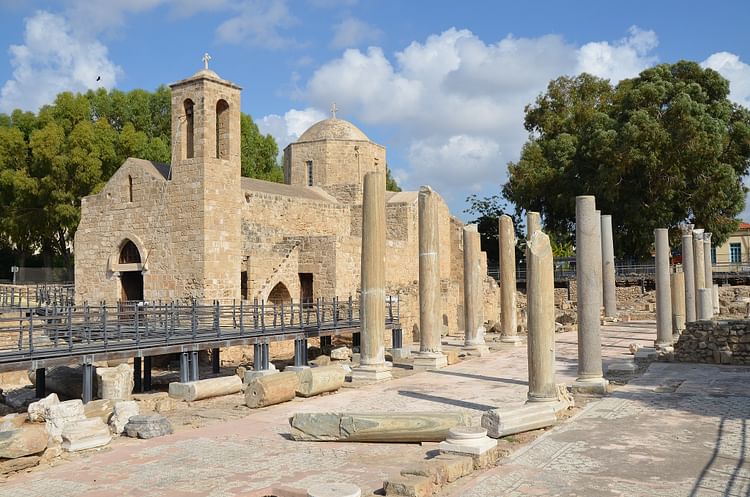 Panagia Chrysopolitissa Church, Cyprus Carole Raddato (CC BY-NC-SA) ](https://www.worldhistory.org/image/10223/panagia-chrysopolitissa-church-cyprus/ "Panagia Chrysopolitissa Church, Cyprus")- The Sanctuary of Aphrodite (Palaepaphos) is located in the village of Kouklia, 14 kilometres east of Paphos. Palaepaphos was a city-kingdom of Cyprus and one of the most important religious centres of the ancient Greek world. Here stood the famous Sanctuary of Aphrodite, a large centre of worship established in the 12th century BCE. Already famous in the time of [Homer](https://www.worldhistory.org/homer/) who referred to the Goddess as Kipris (the “Cyprian”), the sanctuary remained the renowned cult place of Aphrodite until the 4th century CE. Unfortunately, all that is left of the sanctuary are its foundations and scattered columns. Palaepaphos is part of the Aphrodite's Cultural Route which focuses on the archaeological sites dedicated to the ancient cult of Aphrodite.
[ 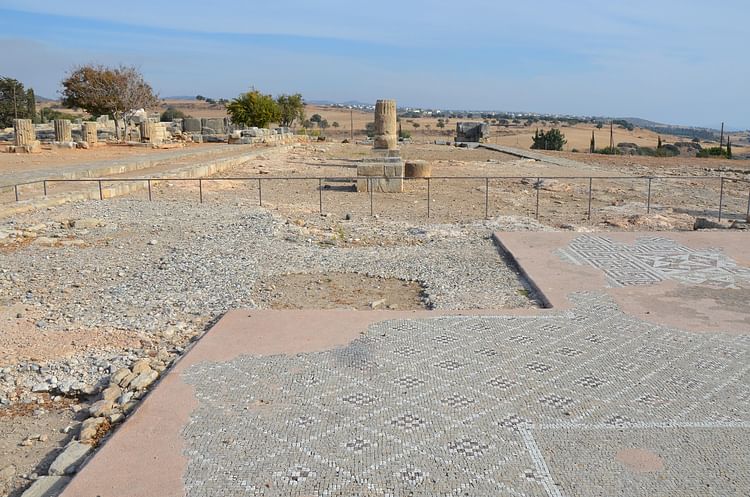 Palaepaphos, Sanctuary of Aphrodite in Cyprus Carole Raddato (CC BY-NC-SA) ](https://www.worldhistory.org/image/10224/palaepaphos-sanctuary-of-aphrodite-in-cyprus/ "Palaepaphos, Sanctuary of Aphrodite in Cyprus")- Agios Georgios in Pegeia includes the ruins of three early Christian basilicas dating back to the 6th century CE with lovely mosaic floors depicting animals and sea creatures. Located near the village of Pegeia, 18 kilometres north of Paphos along the coast of Cape Drepano, it was the site of a late Roman and early Byzantine town and important harbour.
[ 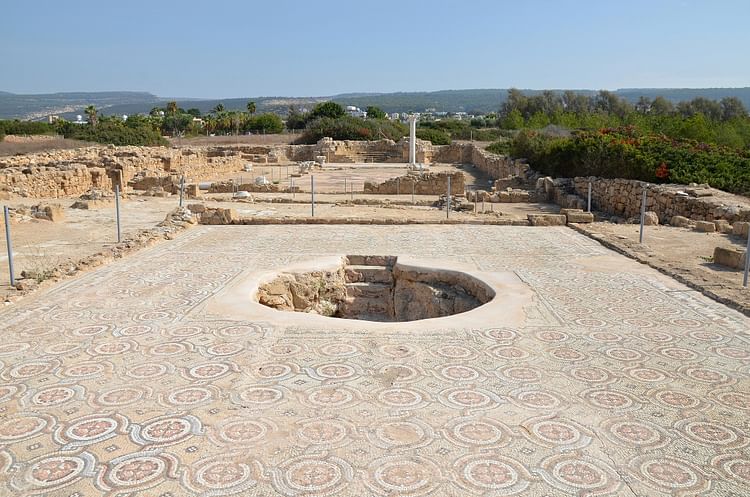 Agios Georgios, Cyprus Carole Raddato (CC BY-NC-SA) ](https://www.worldhistory.org/image/10225/agios-georgios-cyprus/ "Agios Georgios, Cyprus")### KOURION
Sitting on top of a cliff overlooking the [Mediterranean](https://member.ancient.eu/disambiguation/mediterranean/) stands the remains of the best-preserved Greco-Roman city of Southern Cyprus, Kourion (or Curium in Latin). According to legend, the ancient city of Kourion was founded by Achaean colonists from [Argos](https://member.ancient.eu/argos/) in the [Peloponnese](https://www.worldhistory.org/Peloponnese/). Systematic excavations have revealed that the city became a major settlement in the 13th century BCE when [Mycenaean](https://www.worldhistory.org/Mycenaean_Civilization/) colonists settled there. The city prospered under the Ptolemies and the Romans and became an important cultural and religious centre with the nearby Sanctuary of Apollo Ylatis. Christianity started to be established at Kourion by the beginning of the 3rd century CE and eventually supplanted Apollo.
[ 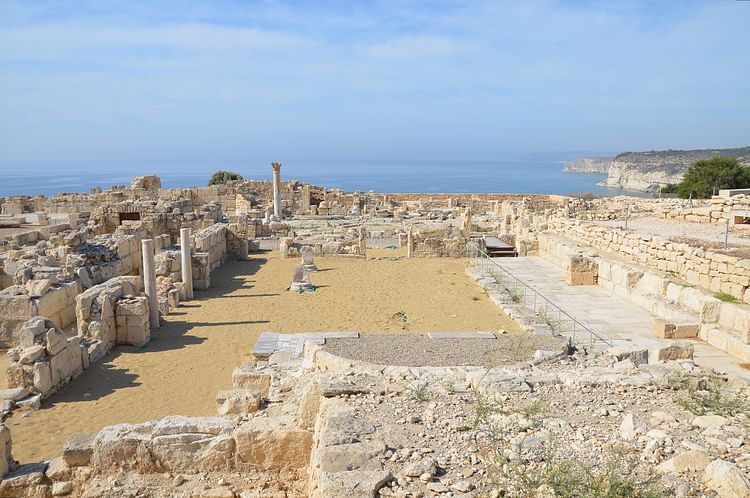 Early Christian Basilica in Kourion, Cyprus Carole Raddato (CC BY-NC-SA) ](https://www.worldhistory.org/image/10216/early-christian-basilica-in-kourion-cyprus/ "Early Christian Basilica in Kourion, Cyprus")Kourion, like all other coastal cities of the island, was ruined by the disastrous earthquakes of the late 4th century CE. The city was rebuilt at the beginning of the 5th century CE before it was entirely destroyed by fire during the Arab raids of the 7th century CE. Kourion declined and was finally abandoned, its inhabitants having moved to a new site two kilometres to the east (the modern village of Episkopi). Kourion was not rediscovered until 1820 CE while systematic excavations began in 1934 CE.
The excavated remains at Kourion lie about 19 km west of Limassol on the road to Paphos. Visitors can wander around impressive ruins such as the theatre, the House of Eustolios, the Early Christian Basilica, the Forum, the public baths and other houses with fascinating mosaics. Apart from the basilica and the House of Eustolios, all the other buildings belong to the Roman period.
[ 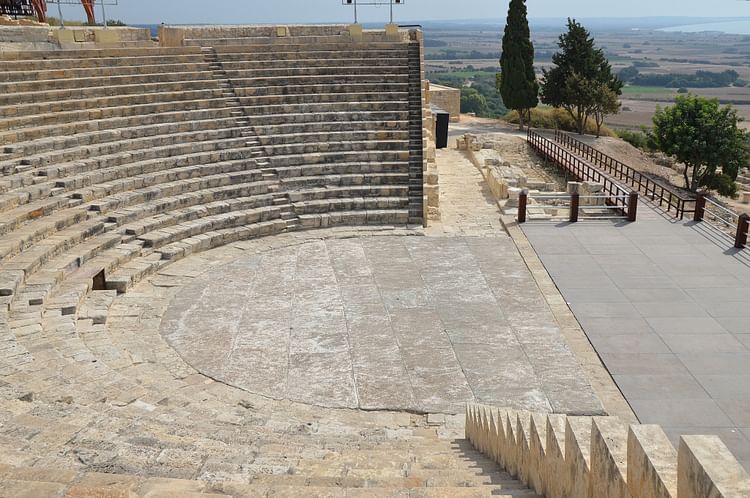 Roman Theatre in Kourion, Cyprus Carole Raddato (CC BY-NC-SA) ](https://www.worldhistory.org/image/10217/roman-theatre-in-kourion-cyprus/ "Roman Theatre in Kourion, Cyprus")The tour of the archaeological site begins with the theatre which enjoys a magnificent location overlooking the sea. The original theatre was probably constructed around the end of the 2nd century BCE and was relatively small. It was later radically remodelled during the time of emperor [Nero](https://member.ancient.eu/Nero/) (50-75 CE) as well as in the beginning of the 2nd century CE after the earthquake of 76 CE. It could accommodate an audience of approximately 3500 people.
During the reign of Emperor [Caracalla](https://member.ancient.eu/Caracalla/) (214-217 CE), the theatrical performances gave way to the popular [gladiatorial games](https://member.ancient.eu/article/635/roman-games-chariot-races—spectacle/) and the theatre was mostly used as an arena. At the end of the 3rd century CE, the spectacle of fights declined in popularity and the theatre regained its original character. It was destroyed and finally abandoned in the late 4th century CE. The stage building (*scaenae frons*) is preserved only in its foundations. The theatre we see today is the result of reconstruction work in the middle of the last century. Nowadays it is used for open-air performances and is one of the venues of the International Festival of Ancient [Greek Drama](https://www.worldhistory.org/Greek_Theatre/).
Next to the theatre are the remains of the House of Eustolios, a palatial residence built in the early Christian period over the ruins of an earlier house dating to the early Roman era. Some 30 rooms are arranged around two interior courtyards with a bathing complex. The majority of the rooms are paved with colourful and mosaic pavements, with many carrying early Christian symbols. The building complex we see today is the result of extensive modelling during the last years of rule of the Emperor Theodosius II (408-450 CE). A mosaic with a welcoming inscription [graces](https://www.worldhistory.org/Graces/) the entrance with the phrase: “Enter for the good luck of the house”.
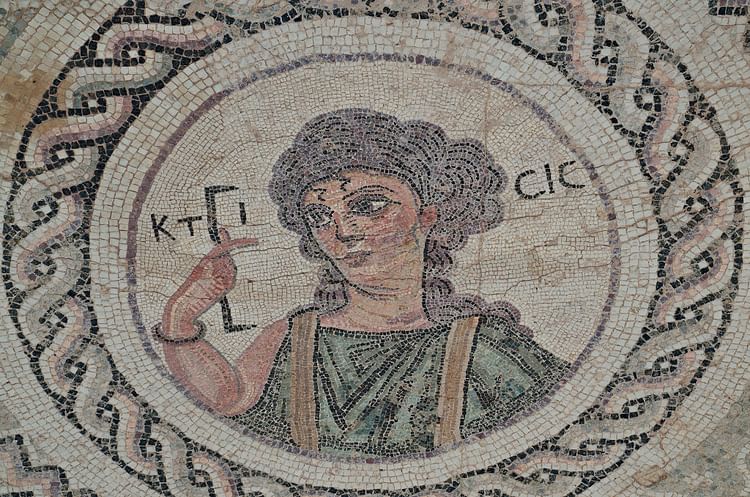
[ 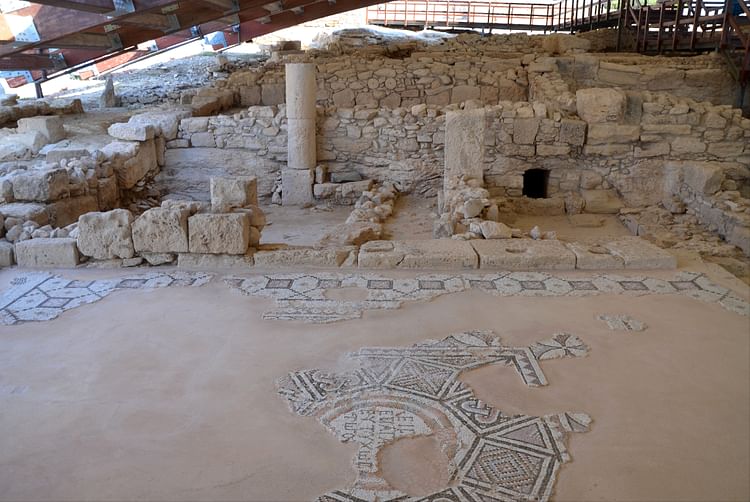 Mosaic with Welcoming Inscription in Kourion, Cyprus Carole Raddato (CC BY-NC-SA) ](https://www.worldhistory.org/image/10232/mosaic-with-welcoming-inscription-in-kourion-cypru/ "Mosaic with Welcoming Inscription in Kourion, Cyprus")Another notable mosaic panel within the house is the one with a bust of a young woman in a medallion holding a measuring tool in her right hand equivalent to a Roman foot. The head of the woman is surrounded by a Greek inscription which identifies her as Ktisis, the personification of Creation.
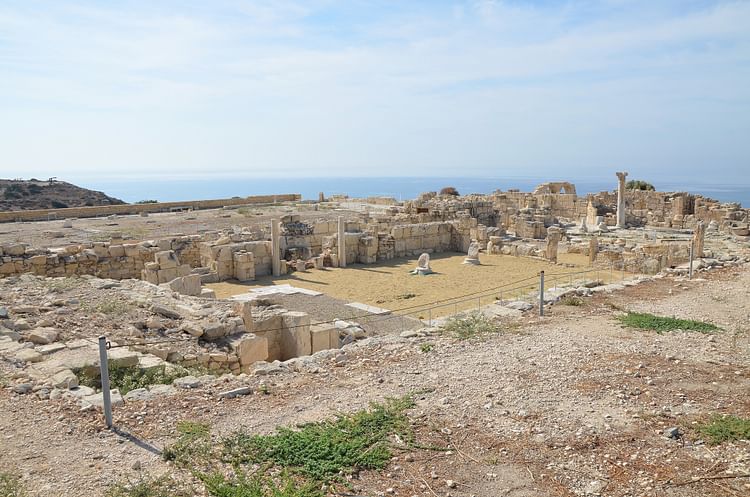
[  Byzantine Mosaic with a Personification of Ktisis Carole Raddato (CC BY-NC-SA) ](https://www.worldhistory.org/image/10218/byzantine-mosaic-with-a-personification-of-ktisis/ "Byzantine Mosaic with a Personification of Ktisis")A short walk away from the theatre and the House of Eustolios lies the Early Christian Basilica which is located at the top of the southeastern cliffs overlooking the sea. Dating to the beginning of the 5th century CE, it is one of the most important Early Christian monuments on the Island. Its foundations show the existence of a baptistery, a narthex, a chapel, a diaconicon where objects used in the services were stored as well as various other rooms. Mosaic floor panels and floor inscriptions are visible among the ruins.
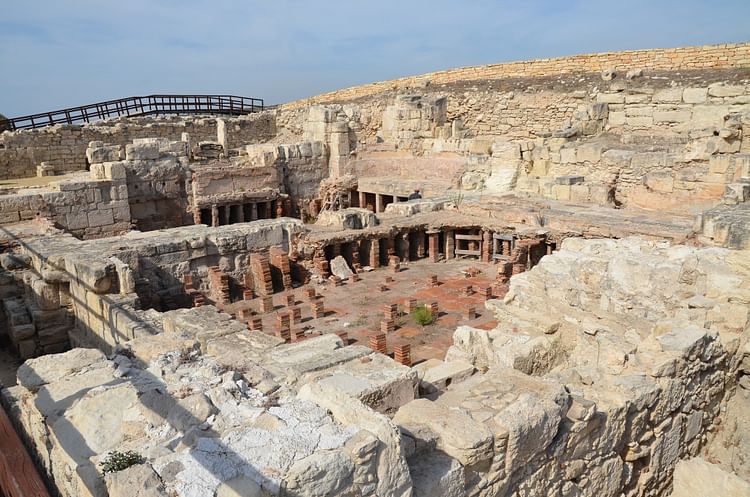
[  Early Christian Basilica in Kourion, Cyprus Carole Raddato (CC BY-NC-SA) ](https://www.worldhistory.org/image/10219/early-christian-basilica-in-kourion-cyprus/ "Early Christian Basilica in Kourion, Cyprus")Adjacent to the Early Christian Basilica are the remains of the [Roman Forum](https://www.worldhistory.org/Roman_Forum/) as well as two bath complexes and a nymphaeum. The Forum was a monumental colonnaded public building serving as a market-place and meeting-place.
[  Bath Complex in Kourion, Cyprus Carole Raddato (CC BY-NC-SA) ](https://www.worldhistory.org/image/10220/bath-complex-in-kourion-cyprus/ "Bath Complex in Kourion, Cyprus")At the northwestern extremity of the site are the remains of two luxurious private houses. The first one is the House of Gladiators, so called because of its two mosaic panels depicting gladiators armed with daggers, shields and helmets and fighting in pairs. The north panel represents two gladiators facing each other and ready for the fight. Above their heads are their names in Greek: MAPΓAPEITHΣ – Margarites and EΛΛHNICOS – Hellenikos.
[  Gladiator Mosaic from Kourion, Cyprus Carole Raddato (CC BY-NC-SA) ](https://www.worldhistory.org/image/10221/gladiator-mosaic-from-kourion-cyprus/ "Gladiator Mosaic from Kourion, Cyprus")The other mosaic panel depicts two armed gladiators in attacking positions and the third figure between them who is the referee. The [gladiator](https://www.worldhistory.org/gladiator/) on the left who is named ΛΥTPAΣ -Lydras- is about to kill his opponent with a dagger but the referee ΔAPEIOΣ - Darios - intervenes and prevents Lydras' attempt by terminating the combat.
[  Mosaic with Gladiators and Referee Carole Raddato (CC BY-NC-SA) ](https://www.worldhistory.org/image/10222/mosaic-with-gladiators-and-referee/ "Mosaic with Gladiators and Referee")The second house is the House of Achilles where a fragment of a mosaic composition depicting the unmasking of Achilles has survived. The scene portrays Achilles meeting with [Odysseus](https://www.worldhistory.org/odysseus/) in Lykomedes' house on the Greek island of Skyros where Achilles, disguised as a girl, was sent by his mother to avoid his participation in the Trojan war.
Other notable places in or around Kourion:
- The Sanctuary of Apollo Hylates, located west of the archaeological site of Kourion, is the largest religious centre on the island where Apollo was worshipped as the god of the woodlands. The sanctuary was established in the 8th century BCE and was used continuously until the 4th century CE. Covering an area of more than 15,000 square metres, the remains of the sanctuary consist of the Temple of Apollo, the priests' quarters, the baths, the palaestra where athletic games used to take place and a long colonnaded stoa.
[ 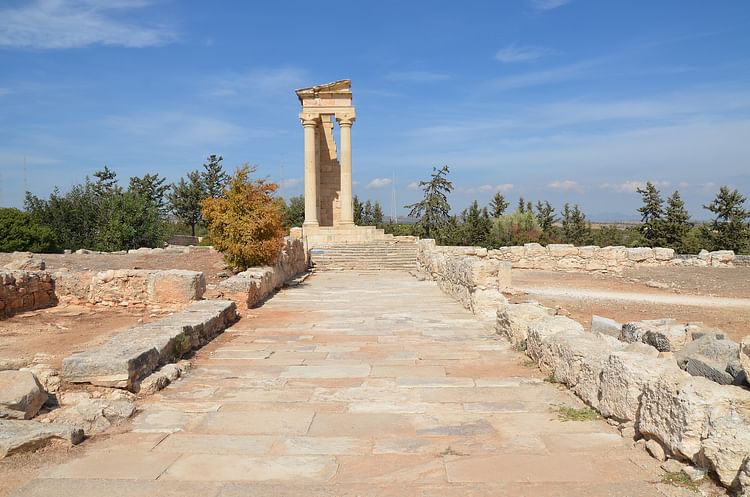 Temple of Apollo Hylates in Cyprus Carole Raddato (CC BY-NC-SA) ](https://www.worldhistory.org/image/10226/temple-of-apollo-hylates-in-cyprus/ "Temple of Apollo Hylates in Cyprus")- The [stadium](https://www.worldhistory.org/Stadium/) of Kourion is located between the archaeological site of Kourion and the Sanctuary of Apollo Hylates. It was constructed during the reign of Emperor [Antoninus Pius](https://www.worldhistory.org/Antoninus_Pius/) in the 2nd century CE and was used for the sports of the [Hellenic](https://www.worldhistory.org/greece/) pentathlon like running, jumping, wrestling and throwing the discus or javelin. With seven rows of seats, the stadium of Kourion could accommodate around 6000 spectators.
[ 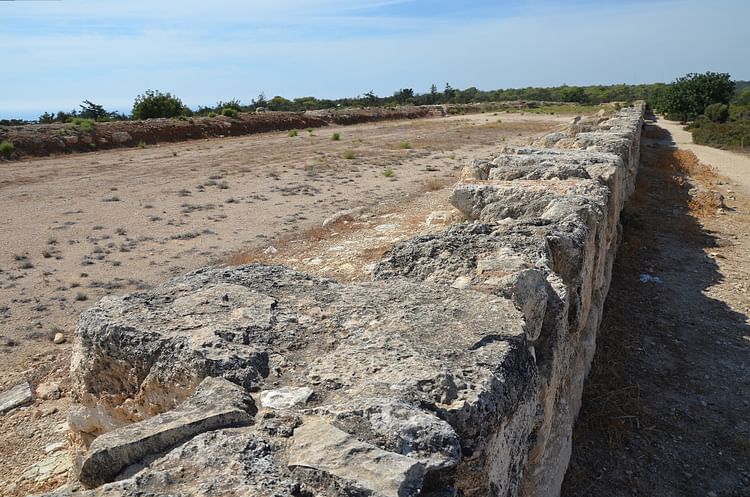 Stadium of Kourion, Cyprus Carole Raddato (CC BY-NC-SA) ](https://www.worldhistory.org/image/10227/stadium-of-kourion-cyprus/ "Stadium of Kourion, Cyprus")### AMATHOUS
The remains of the ancient city of Amathous are located on the south coast of the island, about 11 kilometres east of Limassol. They cover a large area on top of a hill and on the slopes reaching the Mediterranean sea to the south. Amathous was one of Cyprus' four ancient kingdoms with Salamis, Soli and Pafos. Founded in the 11th century BCE, the city had an unbroken history of settlement until the 7th century CE when it was gradually abandoned following the Arab raids. Amathous is also the other great site dedicated to Aphrodite (after Palaepaphos) where remains of sanctuaries and temples of the goddess can still be seen. The Roman Temple of Aphrodite, built over the ruins of a former temple from the Hellenistic era, occupies a large part of the [Acropolis](https://www.worldhistory.org/Acropolis/).
[ 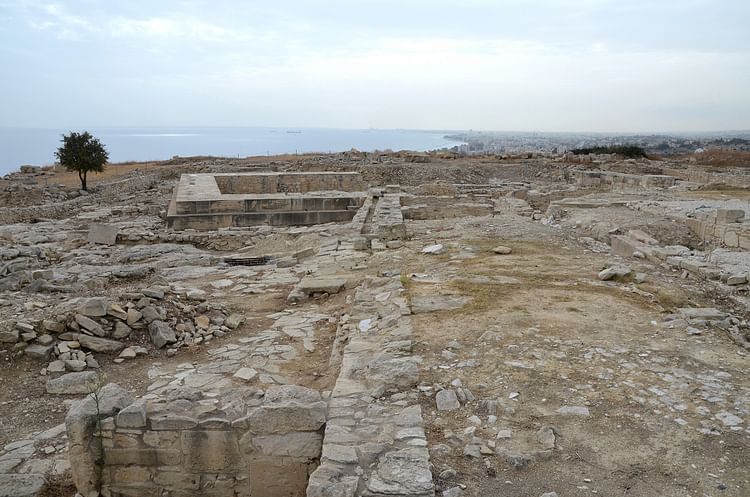 Acropolis of Amathous, Cyprus Carole Raddato (CC BY-NC-SA) ](https://www.worldhistory.org/image/10233/acropolis-of-amathous-cyprus/ "Acropolis of Amathous, Cyprus")Before the Great Goddess of Cyprus was identified as Aphrodite in around 300 BCE, she appeared under the name of “Goddess of Paphos” or “The Lady” or simply “The Goddess”. From the 10th century BCE the Great Goddess, under the influence of the Minoans, was represented with raised arms. She was later assimilated with the Phoenician goddess [Astarte](https://www.worldhistory.org/astarte/) as well as with the [Egyptian](https://www.worldhistory.org/disambiguation/Egyptian/) goddess [Hathor](https://www.worldhistory.org/Hathor/).
[ 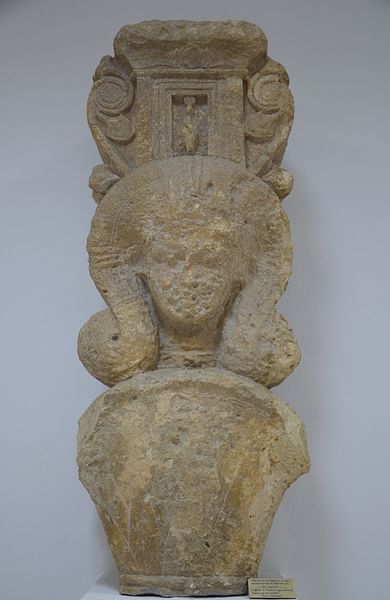 Cypriot Capital with the Image of Hathor Carole Raddato (CC BY-NC-SA) ](https://www.worldhistory.org/image/10234/cypriot-capital-with-the-image-of-hathor/ "Cypriot Capital with the Image of Hathor")The Great Goddess of Cyprus was perhaps worshipped on the acropolis of the Amathous as early as the 11th century BCE. Traces of a sanctuary dating to the 8th century BCE have been found as well as two colossal stone vases of the 6th and 5th century BCE. What we see today are the remains of the Temple of Aphrodite (known locally as Aphrodite Amathousia) built in the 1st century CE on the site of previous temples dating to the Hellenistic period.
[ 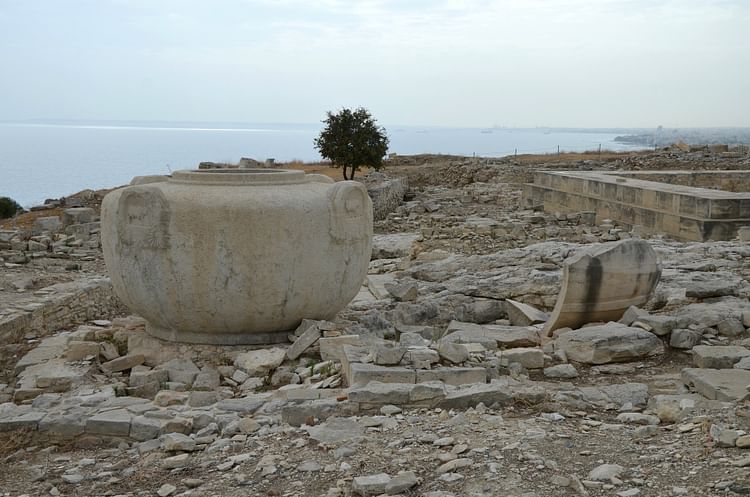 Acropolis of Amathous, Cyprus Carole Raddato (CC BY-NC-SA) ](https://www.worldhistory.org/image/10235/acropolis-of-amathous-cyprus/ "Acropolis of Amathous, Cyprus")The colossal stone vessels on the site are copies. They were used as monumental cisterns to supply water to the crowds of people who came to the temple. Water was needed for rituals, libations, and ablutions. The original of the most complete of the two vessels is on display in the Louvre in [Paris](https://www.worldhistory.org/disambiguation/paris/).
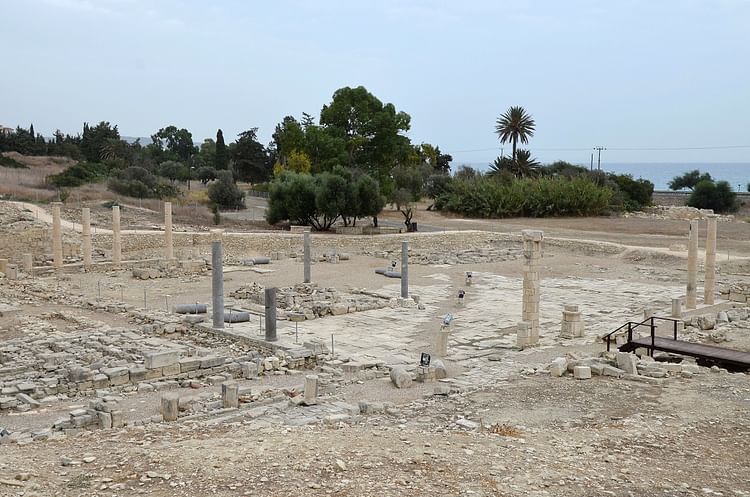
[ 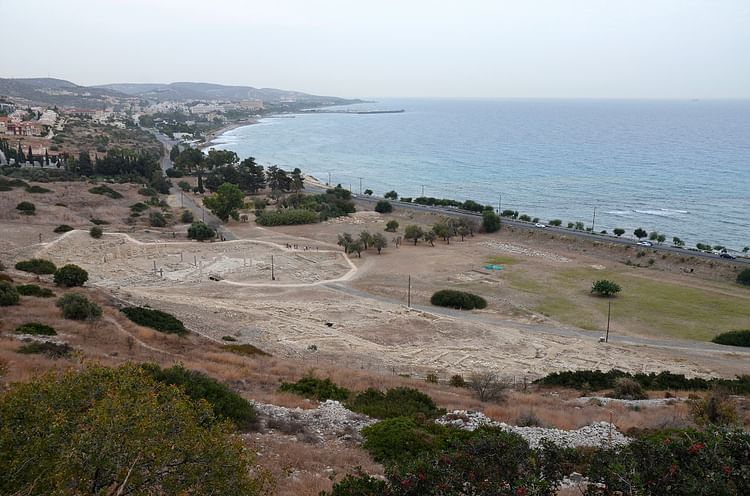 Agora of Amathous, Cyprus Carole Raddato (CC BY-NC-SA) ](https://www.worldhistory.org/image/10236/agora-of-amathous-cyprus/ "Agora of Amathous, Cyprus")The lower city lies between the acropolis and the sea. It was inhabited during the Hellenistic and Roman periods. An Agora, public baths, a fountain complex and a nymphaeum have been uncovered whilst the ruins of the harbour are preserved under the sea.
[  Agora of Amathous, Cyprus Carole Raddato (CC BY-NC-SA) ](https://www.worldhistory.org/image/10238/agora-of-amathous-cyprus/ "Agora of Amathous, Cyprus") [ 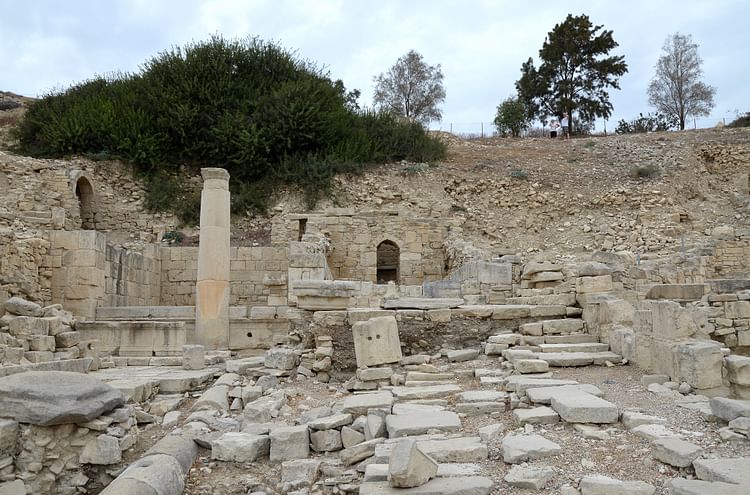 Nymphaeum in the Agora of Amathous, Cyprus Carole Raddato (CC BY-NC-SA) ](https://www.worldhistory.org/image/10237/nymphaeum-in-the-agora-of-amathous-cyprus/ "Nymphaeum in the Agora of Amathous, Cyprus")Amathous is part of the Aphrodite's Cultural Route which focuses on the archaeological sites dedicated to the ancient cult of Aphrodite.
### Archaeological museums
You cannot leave Cyprus without visiting the island's largest and best archaeological museum. The Cyprus Museum, located on Museum Street in central Nicosia, houses the most extensive collection of Cypriot antiquities in the world from the [Neolithic](https://www.worldhistory.org/Neolithic/) Era (7000 BCE) to the end of Roman rule (395 CE). The museum consists of 14 display halls organised in chronological order and by themes.
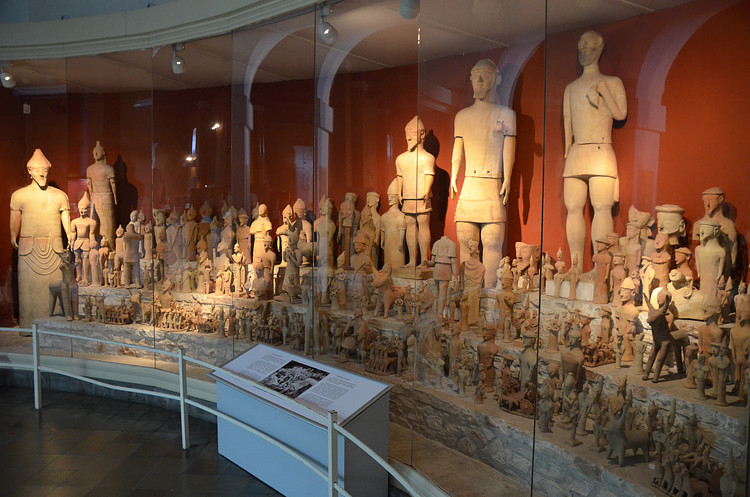
[ 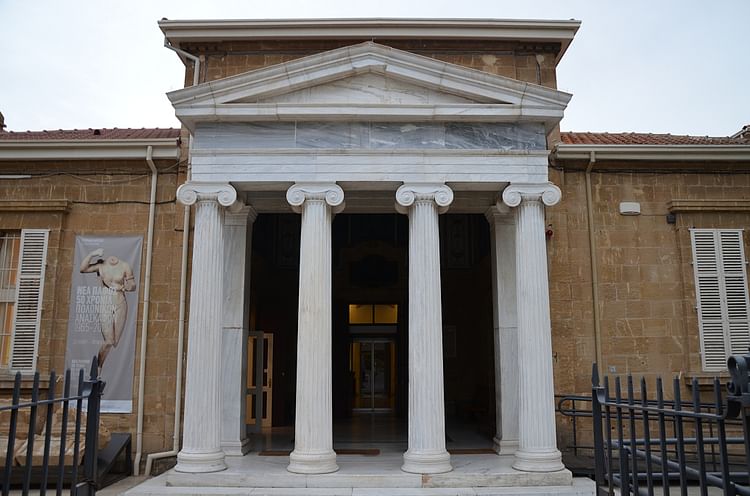 Cyprus Museum, Nicosia Carole Raddato (CC BY-NC-SA) ](https://www.worldhistory.org/image/10239/cyprus-museum-nicosia/ "Cyprus Museum, Nicosia")Among the highlights of the Cyprus Museum are the two thousand votive clay figurines that were found in situ in the sanctuary of Agia Irini on the northwest coast Cyprus. Dating back to the 7th and 6th centuries BCE, the figurines are displayed as they were found and depict priests with bull-masks, sphinxes, minotaurs, centaurs, bulls and warriors on chariots.
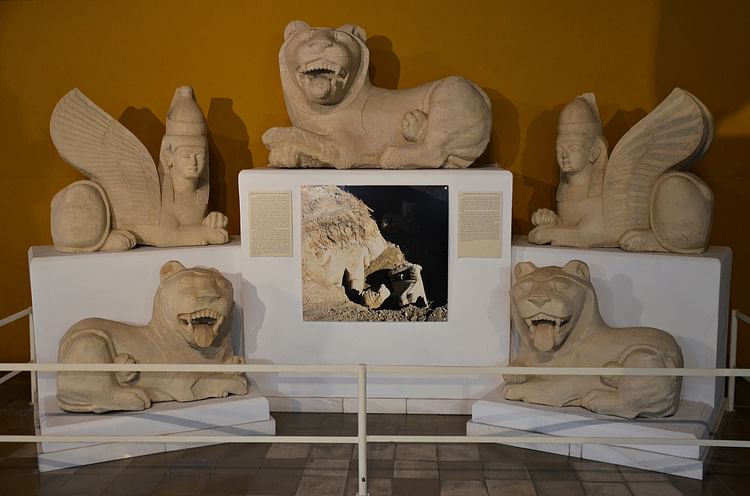
[  Cypriot Votive Clay Figurines Carole Raddato (CC BY-NC-SA) ](https://www.worldhistory.org/image/10240/cypriot-votive-clay-figurines/ "Cypriot Votive Clay Figurines")Another highlight is the collection of five unique [archaic](https://www.worldhistory.org/disambiguation/Archaic/) sculptures found in 1997 CE in the royal necropolis at Telmessos. They represent three pairs of sculptures: two large lions (only one is exhibited as only half of the other one is preserved), two lions of smaller dimensions and two sphinxes.
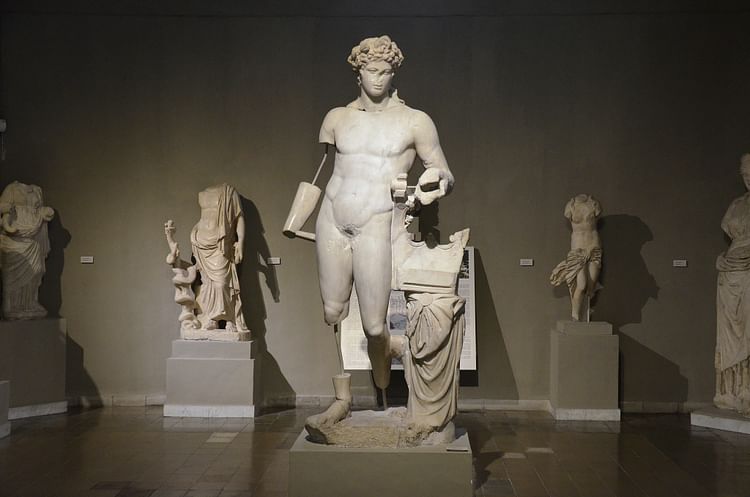
[  Cypro-Archaic Sculptures Carole Raddato (CC BY-NC-SA) ](https://www.worldhistory.org/image/10241/cypro-archaic-sculptures/ "Cypro-Archaic Sculptures")Also look out for the bronze statuettes from Enkomi, the Roman sculptures from Salamis, the bronze statue of the emperor [Septimius Severus](https://www.worldhistory.org/Septimius_Severus/) (193 - 211 CE) as well as the famous marble statue of Aphrodite from Soli which has become a popular symbol of Cyprus.
[  Roman Sculptures from Salamis, Cyprus Carole Raddato (CC BY-NC-SA) ](https://www.worldhistory.org/image/10242/roman-sculptures-from-salamis-cyprus/ "Roman Sculptures from Salamis, Cyprus") [ 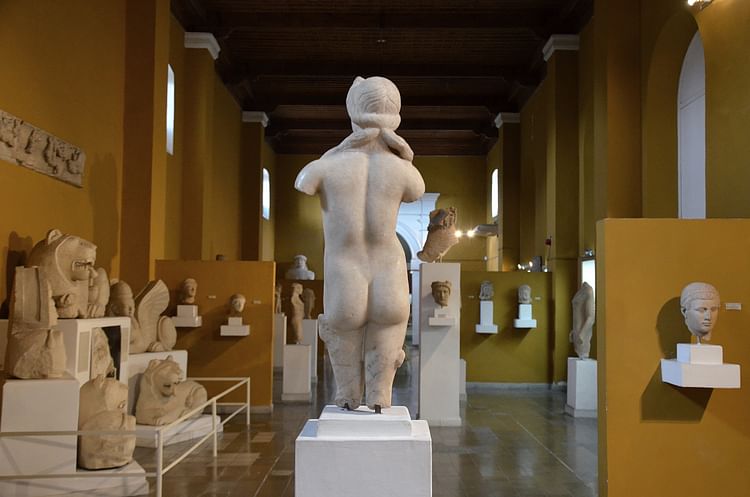 Hall of the Sculptures, Cyprus Museum Carole Raddato (CC BY-NC-SA) ](https://www.worldhistory.org/image/10243/hall-of-the-sculptures-cyprus-museum/ "Hall of the Sculptures, Cyprus Museum")There are also district museums in the four principal towns (Famagusta, Limassol, Paphos and Larnaca) as well as local museums near the main archaeological sites (Kourion, Salamis, Palaepaphos).
#### Editorial Review
This human-authored article has been reviewed by our editorial team before publication to ensure accuracy, reliability and adherence to academic standards in accordance with our [editorial policy](https://www.worldhistory.org/static/editorial-policy/).
## Bibliography
- [Daszewski, W.A. *Guide to the Paphos Mosaics.* Bank of Cyprus Cultural Foundation, 1988.](https://www.worldhistory.org/books/9963420109/)
- [Karageorghis, V. *Cyprus Museum and archaeological sites of Cyprus.* Ekdotke Athenon, 1975.](https://www.worldhistory.org/books/B001Z73RO8/)
- [Karageorghis, V. *Early Cyprus.* Oxford University Press, 2003.](https://www.worldhistory.org/books/0892366796/)
- [Karageorghis, V. *Salamis in Cyprus.* Thames and Hudson, 1969.](https://www.worldhistory.org/books/B000HL4VDE/)
## About the Author
Carole maintains the popular ancient history photo-blog Following Hadrian, where she travels the ancient world in the footsteps of Emperor Hadrian.
- [Facebook Profile](https://www.facebook.com/FollowingHadrian)
- [X/Twitter Profile](https://twitter.com/carolemadge)
## External Links
- [Cyprus—Island of Copper | Essay | The Metropolitan Museum of Art | Heilbrunn Timeline of Art History](https://www.metmuseum.org/toah/hd/cyco/hd_cyco.htm)
- [Hellenistic and Roman Cyprus | Essay | The Metropolitan Museum of Art | Heilbrunn Timeline of Art History](https://www.metmuseum.org/toah/hd/hcyp/hd_hcyp.htm)
## Cite This Work
### APA
Raddato, C. (2019, March 21). Ancient Cyprus: A Travel Guide. *World History Encyclopedia*.
### Chicago
Raddato, Carole. "Ancient Cyprus: A Travel Guide." *World History Encyclopedia*, March 21, 2019. .
### MLA
Raddato, Carole. "Ancient Cyprus: A Travel Guide." *World History Encyclopedia*, 21 Mar 2019, .
## License & Copyright
Submitted by [Carole Raddato](https://www.worldhistory.org/user/FollowingHadrian/ "User Page: Carole Raddato"), published on 21 March 2019. The copyright holder has published this content under the following license: [Creative Commons Attribution-NonCommercial-ShareAlike](https://creativecommons.org/licenses/by-nc-sa/4.0/deed.en). This license lets others remix, tweak, and build upon this content non-commercially, as long as they credit the author and license their new creations under the identical terms. When republishing on the web a hyperlink back to the original content source URL must be included. Please note that content linked from this page may have different licensing terms.