---
title: Fish Sauce in the Ancient World
author: Declan Henesy
source: https://www.worldhistory.org/article/1276/fish-sauce-in-the-ancient-world/
format: machine-readable-alternate
license: Creative Commons Attribution-NonCommercial-ShareAlike (https://creativecommons.org/licenses/by-nc-sa/4.0/)
updated: 1970-01-01
---
# Fish Sauce in the Ancient World
_Authored by Declan Henesy_
The production and [trade](https://www.worldhistory.org/disambiguation/trade/) of fish sauce in the ancient world was a significant and widespread industry, stretching from [Britain](https://www.worldhistory.org/disambiguation/Britain/) to the Black Sea. [Roman](https://www.worldhistory.org/disambiguation/Roman/) fish sauce, known as *garum*, was one of the most popular and commonly used ingredients in the Roman pantry. Some historians have even argued that fish sauce, common throughout Southeast Asia today, was introduced to the continental subregion via the [Silk Road](https://www.worldhistory.org/Silk_Road/).
### The origins of fish sauce
Not much is known about the earliest fish sauces in [Europe](https://www.worldhistory.org/europe/). The first recorded fish sauce was produced by the ancient Greeks along the coastline of the Black Sea. The abundant fishery resources of the region may have been a significant factor in [Greek](https://www.worldhistory.org/disambiguation/greek/) colonisation of the area, even as early as the 7th century BCE. Called *gàros*, it was made by fermenting small fish with salt which produced an [amber](https://www.worldhistory.org/Amber/)-coloured liquid.
[  Roman Fish Mosaic, Tarraco Mark Cartwright (CC BY-NC-SA) ](https://www.worldhistory.org/image/6102/roman-fish-mosaic-tarraco/ "Roman Fish Mosaic, Tarraco")The Carthaginians were also early makers and traders of fish sauce, producing it along the coast of the Lake of Tunis, in modern day Tunisia. A [Punic](https://www.worldhistory.org/carthage/) shipwreck from 5th century BCE, found off the coast of Ibiza, may have been carrying a cargo of fish sauce stored in *[amphorae](https://www.worldhistory.org/Amphora/)* made in [Gades](https://www.worldhistory.org/Gades/) (modern day Spain) and Tingi (modern-day Morocco). There are many early Graeco-Roman literary references to fish sauce, from writers such as [Aristophanes](https://www.worldhistory.org/Aristophanes/), [Sophocles](https://www.worldhistory.org/sophocles/) and [Aeschylus](https://www.worldhistory.org/Aeschylus/). The numerous casual mentions suggest it was a commonplace ingredient in the ancient [Mediterranean](https://www.worldhistory.org/disambiguation/mediterranean/).
### Fish sauce in ancient [Rome](https://www.worldhistory.org/Rome/)
The Roman version of fish sauce was called *garum*. Many believe it originated from the Greek *gàros* as contemporary accounts suggest they had many similarities, notably their pungent smell. But they may have been composed of different kinds of fish and manufactured in distinct ways.
The Romans had a number of different varieties, including *garum*, *liquamen*, *muria*, *allec* and *haimation*. It can be hard to differentiate between the different kinds as the names were used interchangeably. *Liquamen*, for example, became a catch-all term for any fish sauce, though was also used as a specific term for a fish sauce made from the whole fish.
Below are definitions for the main Roman fish sauces:
- ***Garum*** - The term is often used to describe all Roman fish sauces. It may come from the Greek, *gàros*. *Garum* began as an elite food made from fish blood and could be extremely expensive. Pliny said that *garum* was 'blended to the colour of old honey wine' (Walker, 300).
- ***Liquamen*** - Another general term for fish sauce. Translating as 'liquid mixture', Pliny described it as the sediment of *garum*. It is believed to have had a lower status than *garum* and might have been used to extend salt supplies. The fish sauce industry was called *liquaminarium* and a dealer in fish sauce a *liquaminarius*. *Liquamen* was made primarily with sardines, herring, shad and eel.
- ***Muria*** - *Muria* was the brine filtered out after salting the fish and was usually made from tunny.
- ***Allec*** - More of a paste than sauce *allec* was made from leftover sediment. It contained bones and other parts of the fish that did not rot.
- ***Haimation*** - A type of *garum*, this was the highest quality fish sauce and therefore mainly for wealthier citizens. *Haimation*, or 'blood sauce', was often made from the blood and guts of tunny.
[ 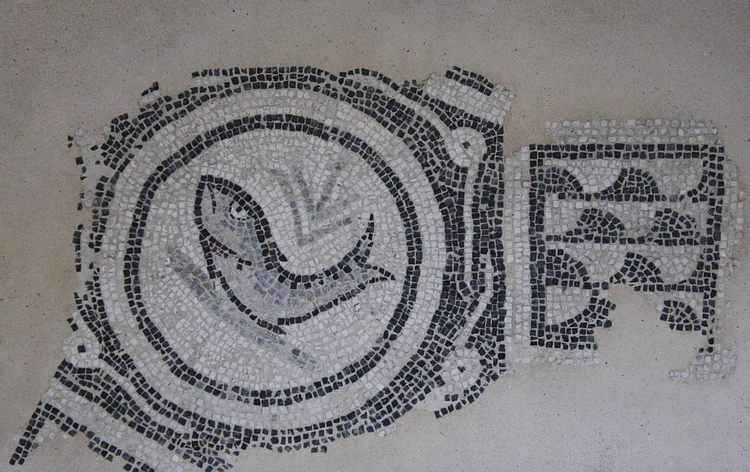 Roman Fish Mosaic, Como Mark Cartwright (CC BY-NC-SA) ](https://www.worldhistory.org/image/4624/roman-fish-mosaic-como/ "Roman Fish Mosaic, Como")Broadly speaking, Roman fish sauces were made by mixing fish blood, guts and heads with large quantities of sea salt. The mixture was then left to ferment for varying amounts of time. According to Pliny, *garum* could be made with a variety of fish or shellfish, including maena, murena, tunny, mullet, oysters, and sea urchins, although mackerel was the most popular.
### Popularity
*Garum* was popular with every level of Roman society for a number of reasons. It was an important way of preserving fish, which spoiled easily once dead. By adding salt to fish and leaving it to ferment, the growth of mould was prevented, extending the shelf life considerably. It also provided a valuable source of protein and nutrients, especially to the poor. More importantly, however, was a love of the salty, umami taste. According to Pliny, *garum* was an "exquisite liquid" which was "so pleasant that it can be drunk" (Walker, 300). Not everybody loved fish sauce, however. The statesman [Seneca](https://www.worldhistory.org/Seneca/) described it as "poisonous fish" which "burns up with stomach with its putrefaction" (Rimas, 51).
### Uses
Relatively little is known about how *garum* was used in the Roman world until the 1st century CE, through the works of [Marcus Gavius Apicius](https://www.worldhistory.org/Marcus_Gavius_Apicius/). Apicius, the renowned epicure, records nearly 350 recipes that use fish sauce. It was added as an ingredient in almost every recipe, including many sweet dishes. It may have also been used as a table condiment, though there is little evidence to support this.
[  Fish, Roman Mosaic Mark Cartwright (CC BY-NC-SA) ](https://www.worldhistory.org/image/1279/fish-roman-mosaic/ "Fish, Roman Mosaic")*Garum* was mixed with other liquids to create new sauces, such as *oenogarum* (fish sauce with wine) and *oxygarum* (fish sauce with vinegar). The most famous sausage in the ancient world, *lucanica*, was smoked, spiced and given a salty flavour with the addition of *liquamen*. [Galen](https://www.worldhistory.org/Galen/), the famed 1st-2nd century CE Roman physician, even prescribed a bowl of lentils and *garum* for those suffering from diarrhoea.
### Production
While the *garum* industry was not as large as that of olive oil or wine, it was still significant and widespread. Factories dedicated to the production existed across the [empire](https://www.worldhistory.org/empire/), mainly found in Spain, Portugal, southern France and North [Africa](https://www.worldhistory.org/disambiguation/africa/). To date, the largest factory uncovered in the western Mediterranean, located at Lixus (in modern-day Morocco). The site included ten factories with a salting capacity of over 1,000,000 litres. By comparison, the largest olive oil factory discovered could only produce one-tenth of this amount.
The production of fish sauce could also take place more widely than those of other foods, such as olive oil and wine, which could not be grown in certain parts of the empire. Fish, on the other hand, could be processed near any body of water that had access to a salt supply. While fish sauce was imported to [Roman Britain](https://www.worldhistory.org/Roman_Britain/) mainly from the Iberian peninsula, archaeological sites near London, Lincoln and York have been identified as possible *garum* factories. Not always popular, at certain times, when the smell from production became too overwhelming, local governors had to temporarily halt production.
Due to varying types of fish and processes used, each location produced a sauce with a distinct taste, colour and consistency. By the time of [Augustus](https://www.worldhistory.org/augustus/) (27 BCE – 14 CE), a type of fish sauce made in Cartagena and [Cadiz](https://www.worldhistory.org/Gades/), Spain, called *garum sociorum*, was considered the highest quality. *Garum sociorum* could be sold for 1,000 *sesterces* for 12 pints, the equivalent of over 950 kg (1.05 tons) of wheat in [Pompeii](https://www.worldhistory.org/pompeii/) in 79 CE or 2,000 loaves of bread.
[ 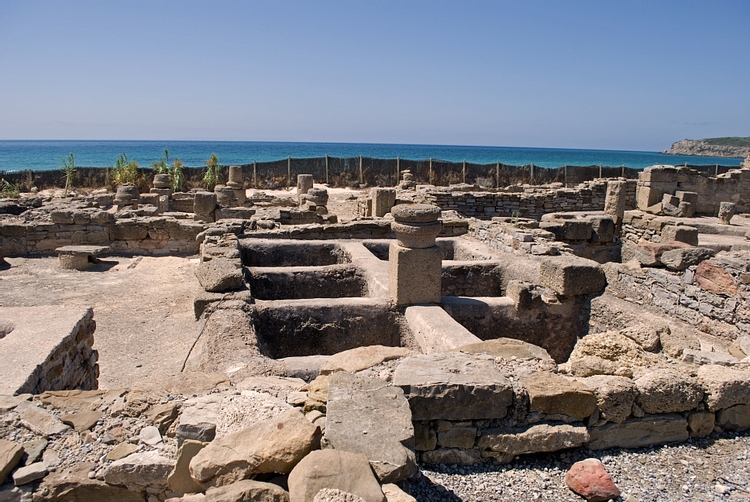 Ruins of a Garum Factory, Baelo Claudia Anual (CC BY) ](https://www.worldhistory.org/image/9327/ruins-of-a-garum-factory-baelo-claudia/ "Ruins of a Garum Factory, Baelo Claudia")### Decline
Some historians believe fish sauce was introduced to Asia by the Romans via the [Silk](https://www.worldhistory.org/Silk/) Road, while others maintain that Asian communities independently invented their own varieties. Either or both may be true. Interestingly, in 2010 CE, a team of researchers analysed samples of *garum* taken from containers preserved at Pompeii. They found that Roman fish sauce from the 1st century CE had an almost identical taste profile to those produced today in southeast Asia.
In Europe, the fall of the [Roman Empire](https://www.worldhistory.org/Roman_Empire/) led to heavy taxes on salt, driving up the price of *garum*. Alongside this, an increase in pirate activity in the Mediterranean meant traditional trades routes were disrupted. Some areas continued localised production, such as the famous *colatura di alici* fish sauce made in Cetara, southwest [Italy](https://www.worldhistory.org/italy/). In general terms, however, production almost entirely disappeared across the West.
References to *garum* crop up again in later accounts from [Byzantium](https://www.worldhistory.org/Byzantium/). It is mentioned by Liutprand of Cremona in the 10th century CE, who wrote:
> There was a liquor called *garum* which was once as widely used at Rome as vinegar is now. We found it as popular in [Turkey](https://www.worldhistory.org/Asia_Minor/) as it ever was. There is not a fishmonger's shop in [Constantinople](https://www.worldhistory.org/Constantinople/) that has not some for sale…
> (Dalby, 2010, 68)
Though *garum* was probably not as popular as Liutprand claims as it was only mentioned sporadically.
### Revival
Since Roman times, and perhaps before, fish sauce has been extremely popular in the southeast Asian countries of Cambodia, Lao, Myanmar, the Philippines, Thailand and Vietnam. Fish sauce had at one point been used widely across [Japan](https://www.worldhistory.org/disambiguation/Japan/), [Korea](https://www.worldhistory.org/Korea/) and parts of [China](https://www.worldhistory.org/china/) but from the 14th century CE soy sauce replaced it as the salt-giving, umami-enhancing ingredient. Today, with the cuisines of Southeast Asia becoming more prominent in the West and with more Westerners travelling to the region than ever before, varieties of fish sauce are regaining their ancient popularity.
#### Editorial Review
This human-authored article has been reviewed by our editorial team before publication to ensure accuracy, reliability and adherence to academic standards in accordance with our [editorial policy](https://www.worldhistory.org/static/editorial-policy/).
## Bibliography
- [Abulafia, D. *The Great Sea.* Oxford University Press, 2013.](https://www.worldhistory.org/books/019931599X/)
- [Anonymous. *A Companion to the Roman Empire.* Wiley-Blackwell, 2009.](https://www.worldhistory.org/books/1405199180/)
- [Anonymous. *The Punic Mediterranean.* Cambridge University Press, 2015.](https://www.worldhistory.org/books/110705527X/)
- [Bekker-Nielsen, T. *Ancient Fishing and Fish Processing in the Black Sea Region.* Aarhus University Press, 2005.](https://www.worldhistory.org/books/8779340962/)
- [Cool, H.E.M. *Eating and Drinking in Roman Britain.* Cambridge University Press, 2007.](https://www.worldhistory.org/books/052100327X/)
- [Dalby, A. *Food in the Ancient World from A to Z.* Routledge, 2013.](https://www.worldhistory.org/books/0415862795/)
- [Dalby, A. *Tastes of Byzantium.* I.B.Tauris, 2010.](https://www.worldhistory.org/books/1848851650/)
- [Dalby, A. *The Classical Cookbook.* J. Paul Getty Museum, 2012.](https://www.worldhistory.org/books/1606061100/)
- [Davidson, A. *The Oxford Companion to Food.* Oxford University Press, 2014.](https://www.worldhistory.org/books/0199677336/)
- [Evan Levy, T. *Crossing Jordan.* Routledge, 2014.](https://www.worldhistory.org/books/1845532694/)
- [Hoyos, D. *The Carthaginians.* Routledge, 2010.](https://www.worldhistory.org/books/0415436451/)
- [Kaufman, C.K. *Cooking in Ancient Civilizations.* Greenwood, 2006.](https://www.worldhistory.org/books/0313332045/)
- [Kurlansky, M. *Salt.* Penguin Books, 2003.](https://www.worldhistory.org/books/0142001619/)
- [Laszlo, P. *Salt.* Columbia University Press, 2001.](https://www.worldhistory.org/books/0231121989/)
- Rimas, A. et al. *Empires of Food.* Simon & Shuster, 2010
- [Tebben, M. *Sauces.* Reaktion Books, 2014.](https://www.worldhistory.org/books/1780233515/)
- [Walker, C. (ed). *Fish Food from the Waters.* Prospect Books, 1998.](https://www.worldhistory.org/books/0907325890/)
## Cite This Work
### APA
Henesy, D. (2018, October 16). Fish Sauce in the Ancient World. *World History Encyclopedia*.
### Chicago
Henesy, Declan. "Fish Sauce in the Ancient World." *World History Encyclopedia*, October 16, 2018. .
### MLA
Henesy, Declan. "Fish Sauce in the Ancient World." *World History Encyclopedia*, 16 Oct 2018, .
## License & Copyright
Original article by **Declan Henesy**. Submitted by [Declan Henesy](https://www.worldhistory.org/user/declanjhenesy/ "User Page: Declan Henesy"), published on 16 October 2018. The copyright holder has published this content under the following license: [Creative Commons Attribution-NonCommercial-ShareAlike](https://creativecommons.org/licenses/by-nc-sa/4.0/deed.en). This license lets others remix, tweak, and build upon this content non-commercially, as long as they credit the author and license their new creations under the identical terms. When republishing on the web a hyperlink back to the original content source URL must be included. Please note that content linked from this page may have different licensing terms.