---
title: The Masaesyli and Massylii of Numidia
author: Joshua J. Mark
source: https://www.worldhistory.org/article/1196/the-masaesyli-and-massylii-of-numidia/
format: machine-readable-alternate
license: Creative Commons Attribution-NonCommercial-ShareAlike (https://creativecommons.org/licenses/by-nc-sa/4.0/)
updated: 2025-01-22
---
# The Masaesyli and Massylii of Numidia
_Authored by [Joshua J. Mark](https://www.worldhistory.org/user/JPryst/)_
The North African [Berber](https://www.worldhistory.org/Berbers/) kingdom of Numidia (202-40 BCE) was originally inhabited by a tribe (or federation of tribes) known as the Masaesyli, to the west, and a coalition of smaller tribes, known as the Massylii, to the east. The meaning of these names is unknown but they are thought to be the indigenous terms for the people, not later designations. These tribes or coalitions were each ruled by their own king or chief and had a long-established [culture](https://www.worldhistory.org/disambiguation/culture/) by the time the [Phoenicians](https://www.worldhistory.org/phoenicia/) founded [Carthage](https://www.worldhistory.org/carthage/) in c. 814 BCE. This [city](https://www.worldhistory.org/city/) would then greatly expand after c. 332 BCE when wealthy refugees from [Tyre](https://www.worldhistory.org/Tyre/) arrived, driven from their city after its fall to [Alexander the Great](https://www.worldhistory.org/Alexander_the_Great/), and the tribes would serve in the Carthaginian military which became increasingly important for defense as Carthage grew in power.
[  Masaesyli in Battle The Creative Assembly (Copyright) ](https://www.worldhistory.org/image/8176/masaesyli-in-battle/ "Masaesyli in Battle")Both of these tribes or federations were allied to Carthage during the [Second Punic War](https://www.worldhistory.org/Second_Punic_War/) (218-202 BCE). Their respective regions are referred to as “kingdoms” but it is unclear whether they were traditionally ruled by a king or a tribal chief. By the time of the Second [Punic](https://www.worldhistory.org/carthage/) [War](https://www.worldhistory.org/disambiguation/War/), however, a kingship had been established among the people of both regions. Masinissa (r. c. 202-148 BCE), a prince of the Massylii, was originally allied to Carthage but changed sides to support [Rome](https://www.worldhistory.org/Rome/) while Syphax (died c. 202 BCE), king of the Masaesyli, first an ally of Rome, defected to Carthage.
Syphax was defeated by Masinissa and the [Roman](https://www.worldhistory.org/disambiguation/Roman/) general [Scipio Africanus](https://www.worldhistory.org/disambiguation/Scipio_Africanus/) in 203 BCE at the [Battle](https://www.worldhistory.org/disambiguation/battle/) of Cirta just prior to [Scipio](https://www.worldhistory.org/disambiguation/Scipio/)'s victory over [Hannibal](https://www.worldhistory.org/hannibal/) at the Battle of Zama in 202 BCE. Following Rome's victory over Carthage, Masinissa became king and annexed the lands of the Masaesyli, uniting the entire region under his leadership as the Kingdom of Numidia. The Masaesyli tribe essentially vanishes from history after 202 BCE.
Numidia flourished under Masinissa's reign and that of his son Micipsa (c. 148-118 BCE) but after the Jugurthine War with Rome (112-105 BCE) lost its western regions to nearby [Mauretania](https://www.worldhistory.org/Mauretania/) and in 46 BCE, following the Roman Civil War between [Julius Caesar](https://www.worldhistory.org/Julius_Caesar/) and [Pompey the Great](https://www.worldhistory.org/pompey/), was divided between Mauretania and Rome.
The last king of an independent Numidia was Arabio, who was killed in 40 BCE, and afterwards Numidia became a province of Rome. The king [Juba II](https://www.worldhistory.org/Juba_II/) (c. 29 BCE - 23 CE) was installed in Numidia by [Augustus](https://www.worldhistory.org/augustus/) [Caesar](https://www.worldhistory.org/disambiguation/caesar/), but by that time, the country had long been under Roman control and, further, Juba moved his capital to nearby Mauretania early in his reign and concentrated his efforts on that region. When Juba's son [Ptolemy of Mauretania](https://www.worldhistory.org/Ptolemy_of_Mauretania/) was murdered by the emperor [Caligula](https://www.worldhistory.org/Caligula/) in 40 CE, the Massylii dynasty ended and nothing further is recorded regarding them.
#### Sponsorship Message
[](http://store.steampowered.com/app/792520 "Total War Rome II: Desert Kingdoms") ### This article was sponsored by Total War™
Total War: ROME II – Desert Kingdoms is a Culture Pack DLC released on March 8th, 2018. Pre-order now to get 10% off. Full faction details available on Steam. [Learn More](http://store.steampowered.com/app/792520 "Total War Rome II: Desert Kingdoms")
.sponsor.ca h3 {
text-transform: none;
margin-top: 0px;
margin-bottom: 15px;
font-family: "Libre Baskerville", "Palatino Linotype", "Book Antiqua", Palatino, serif;
}
.sponsor.ca .ca_logo {
width: 100px !important;
height: 46px;
float: right;
box-shadow: none;
margin: 0;
}
.sponsor_message {
margin-left: 280px;
font-family: Karla, Arial, Helvetica, sans-serif;
line-height: 140%;
}
.sponsor.ca {
padding: 10px 0px 25px 0px;
margin: 25px 0px;
border-top: 1px dotted #dadada;
border-bottom: 1px dotted #dadada;
}
.sponsor_message .big_red_button {
margin-top: 13px;
}
.sponsor.ca .key_art {
margin-top: 0px;
margin-bottom: 10px;
width: 260px;
height: auto;
float: left;
}
.sponsor h4 {
font-weight: normal;
text-transform: uppercase;
color: silver;
margin-bottom: 10px;
margin-top: 0px;
font-family: Karla,Arial,Helvetica,sans-serif;
font-size: 13px;
padding: 0;
}
@media (max-width: 1199px) {
.sponsor.ca .key_art {
float: none;
width: 100%;
}
.sponsor.ca .sponsor_message {
margin-left: 0px;
}
.sponsor.ca h3 {
margin-top: 20px;
margin-bottom: 10px;
}
}
@media (max-width: 767px) {
}
### Culture of the Masaesyli & Massylli
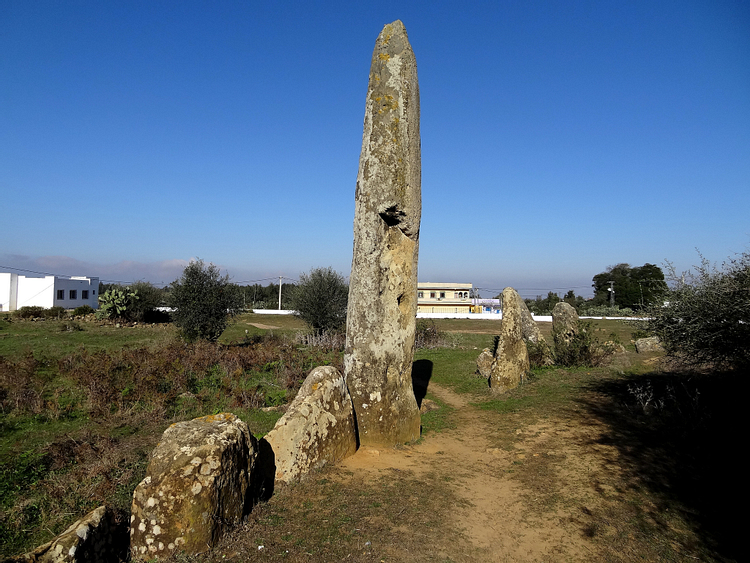
Evidence for the long history of the Masaesyli and Massylii of the region is, possibly, the [Neolithic](https://www.worldhistory.org/Neolithic/) site of Msoura (also given as Mzoura) near modern-day Asilah, Morocco. The site is a ring of 168 megaliths astronomically aligned around a tumulus which, legend claims, is the [tomb](https://www.worldhistory.org/tomb/) of the king Antaeus, best known from the Greco-Roman tales of [Hercules](https://www.worldhistory.org/hercules/). In the story, Antaeus cannot be defeated as long as his feet are touching the earth and so Hercules lifts him into the air and crushes him to [death](https://www.worldhistory.org/disambiguation/Death/). The origins of the legend may have been inspired by a Numidian king who drew his strength from his land.
Both tribes/federations were polytheistic, practiced ancestor worship, and venerated the dead (especially past kings), followed a lunar calendar, and also worshipped the sun and the moon. The claim by later [Greek](https://www.worldhistory.org/disambiguation/greek/) and Roman writers that they worshiped stones most likely comes from sites like Msoura and is clearly wrong; the Numidians were no more worshiping the stones than the people of [Britain](https://www.worldhistory.org/disambiguation/Britain/) and [Scotland](https://www.worldhistory.org/disambiguation/Scotland/) were at [Stonehenge](https://www.worldhistory.org/stonehenge/) or the [Ness of Brodgar](https://www.worldhistory.org/Ness_of_Brodgar/) (two sites which are similar in construction to Msoura). Worship of anthropomorphic deities developed later in their history and, it is claimed, resulted in some of the most important gods to be exported to ancient [Egypt](https://www.worldhistory.org/egypt/): [Amun](https://www.worldhistory.org/amun/), [Osiris](https://www.worldhistory.org/osiris/), and [Neith](https://www.worldhistory.org/Neith/). These deities are sometimes referenced by ancient historians as originating in 'Libya' which was a term often used for Numidia.
[  Msoura Groundhopping Merseburg (CC BY-NC-SA) ](https://www.worldhistory.org/image/8184/msoura/ "Msoura")The Greek and Roman writers claim that the Phoenicians, ancestors of the Carthaginians, founded Carthage in c. 814 BCE under the Queen [Dido](https://www.worldhistory.org/Dido/). Upon their arrival, they encountered native peoples living a nomadic existence and these were therefore referred to as Numidae (nomads) which eventually gave rise to the practice of calling them Numidians. They are first referenced as 'Numidians' by [Polybius](https://www.worldhistory.org/Polybius/) (2nd century BCE) though they are also frequently cited as 'Libyans' by ancient writers. It appears that they called themselves the Masaesyli and Massylii but this is unclear and those terms may have been names others called them.
The lack of clarity regarding the names of the tribes (and whether they were single tribes or coalitions) reflects how little the later writers of their history knew about them. Numidian history was not written by Numidians but by the Romans and the Greeks and, naturally, focus only on those aspects of culture which interested them. The Roman writer [Sallust](https://www.worldhistory.org/Sallust/) (86-35 BCE), for example, was governor of Numidia and observed the culture first-hand but leaves out many details which are mentioned by other writers, presumably because these did not interest him personally.
Although the text of Numidia's ancient history is written by others, the people of the land did leave behind their own stories in their own way. The [script](https://www.worldhistory.org/script/) known as Tifinagh (pronounced `Tiffany') was in use from at least the 3rd century BCE onward and, although the inscriptions in Tifinagh found thus far do not constitute any kind of text, they do attest to important people and events. It is possible that the ancient Numidians used the Tifinagh text the way the Norse used [runes](https://www.worldhistory.org/runes/): as a means of celebrating events or communing with the gods, not as a form of everyday communication, but this is speculative. Tombs and monuments such as those at [Thugga](https://www.worldhistory.org/Dougga/), the ruins at Tipasa, and the mausoleum of Medracen all attest to a highly advanced culture but no indigenous historical text, inscription, or reliefs accompany them.
According to the Greek and Roman historians, the Numidians adhered to a vegetarian diet, abstained from alcohol, and engaged in regular exercise. Men would take a wife and then other [women](https://www.worldhistory.org/disambiguation/women/) as concubines, so families were usually large. Children and adults often went naked around their homes and wore loose-fitting tunics without a belt at public gatherings; they also wore sandals or went barefoot. Their high-energy, vegetarian lifestyle, coupled with the climate of the region, afforded them long lives and robust health.
The Numidians of the Massylii are often praised for their skill with horses, more so than the Masaesyli, and it is said that the people grew up in such close contact with their horses that they formed an unspoken bond and required neither saddle nor bridle to control their steeds (though they did use a whip or prod in battle). The Romans employed Numidian cavalry as mercenaries, as did Carthage, in the Second Punic War, which pit the tribes against each other according to their allegiance.
The Numidian cavalry were lightly armed with a javelin and possibly a sword or dagger. They rode using only a rope around the horse's neck, controlling it with their knees and voice, and were deployed effectively as shock troops. They would engage the enemy, hurl their javelins, and retreat, usually inflicting heavy casualties. Each federation of tribes was led by their king (or chief) who may originally have been a war-chief selected to lead in times of conflict and who led his troops as mercenaries in the wars of other nations.
### The Tribes in the [Punic Wars](https://www.worldhistory.org/Punic_Wars/)
During the [First Punic War](https://www.worldhistory.org/First_Punic_War/) (264-241 BCE), Numidia fought for Carthage. When Carthage lost the war, Rome's heavy war indemnity drained the royal treasury and the city found it could not pay their mercenaries, many of them Numidian. The Numidians were part of the rebel army against Carthage in the Mercenary Wars (241-237 BCE) which started when negotiations on their payment broke down. This conflict was resolved by [Hamilcar Barca](https://www.worldhistory.org/Hamilcar_Barca/) (c. 285 - c. 228 BCE), the Carthaginian champion of the First Punic War, who had fought alongside many of these men against Rome but whose duty compelled him to defend his city.
Carthage suffered greatly following the war, due to their loss of territory and control of the [Mediterranean](https://www.worldhistory.org/disambiguation/mediterranean/), but especially because of the indemnity Rome insisted they pay. This crippling fine contributed to the Second Punic War (218-202 BCE) in which Numidians fought under Hamilcar's son Hannibal Barca and also for Rome under Scipio Africanus. The Numidian king Gala (died 207 BCE) of the Massylii tribe was allied to Carthage while Syphax of the Masaesyli fought for Rome.
[  Ancient Desert Warfare The Creative Assembly (Copyright) ](https://www.worldhistory.org/image/8179/ancient-desert-warfare/ "Ancient Desert Warfare")When Gala died he was succeeded by his son Masinissa. Masinissa initially maintained the alliance with Carthage until he witnessed how effective Scipio was in battle and switched sides, knowing that Rome would win the war. Syphax, meanwhile, had become disillusioned with Rome and changed his allegiance to Carthage. At the Battle of Cirta in 203 BCE, Syphax's forces were defeated by Masinissa and Scipio; Syphax was taken prisoner and brought back to Rome where he died and Masinissa was rewarded, following Rome's [triumph](https://www.worldhistory.org/Roman_Triumph/) over Carthage in 202 BCE, with Carthaginian lands in North [Africa](https://www.worldhistory.org/disambiguation/africa/), including the territory of the Masaesyli in Numidia.
### Masinissa's Kingdom & the [Third Punic War](https://www.worldhistory.org/Third_Punic_War/)
Masinissa married Sophonisba, a Carthaginian noblewoman (daughter of the general Hasdrubal Gisco, d. 202 BCE) and the wife of Syphax, to strengthen the bond between the Massylii and Masaesyli federations but Scipio claimed she was among the spoils of war and had to be submitted to Rome along with any others. After she had been taken to Rome, Scipio said, Masinissa could work through the proper channels to have her returned. Sophonisba was allegedly betrothed to Masinissa before he defected to Rome and only married Syphax after he switched his allegiance to Carthage (though this claim is challenged). When Scipio insisted that she be sent to Rome to appear in the [Roman Triumph](https://www.worldhistory.org/Roman_Triumph/), Masinissa gave her a vial of poison with which she killed herself.
[  Masinissa Numidix (GNU FDL) ](https://www.worldhistory.org/image/7693/masinissa/ "Masinissa")With Rome's support, Masinissa then began a reign which would last over 50 years. He expanded his territory, built grand monuments, and enlarged Numidian towns (such as Thugga and Hippo Regius) into [cities](https://www.worldhistory.org/city/). He established his capital at Cirta and improved the port city of Russicada. He was given a free hand by Rome in territorial expansion as long as whatever he pursued thwarted the interests of Carthage.
Masinissa encouraged raiding parties into Carthaginian territory at the same time that Rome was proposing to raze the city and have it rebuilt further inland. The Carthaginians met the Numidian and Roman threat with military force, breaking the treaty which had ended the war, and so started the Third Punic War (149-146 BCE) which ended with the destruction of Carthage. Masinissa died in 148 BCE, and the Numidian throne passed to his son Micipsa.
### Numidian Kings
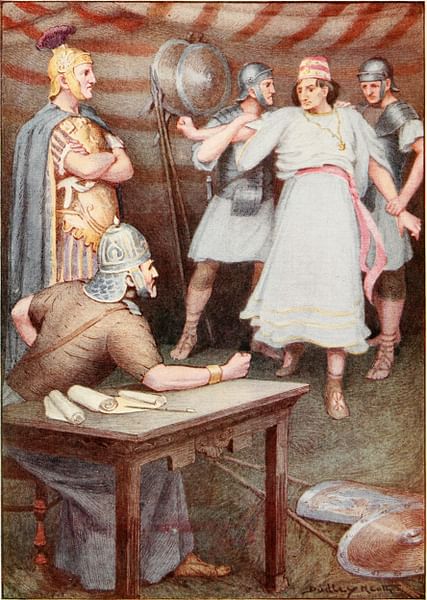
Micipsa's younger brother, Mastanabal, had an illegitimate son named [Jugurtha](https://www.worldhistory.org/Jugurtha/) (c.118-105 BCE) who proved himself an able soldier in the service of Rome. After campaigning in Spain, Jugurtha was sent home to Cirta with a letter of recommendation strongly encouraging Micipsa to make him his heir. Micipsa already had two heirs – his sons Hiempsal I and Adherbal – but made Jugurtha an heir in accordance with Rome's wishes and stipulated in his will that Numidia would be jointly ruled by all three after his death.
When Micipsa died, however, Heimpsal insulted Jugurtha who promptly had him killed. Jugurtha then led his forces against Adherbal, captured him, and tortured him to death. Jugurtha then pursued a policy of doing precisely as he pleased which brought him into further conflict with Rome and initiated the Jugurthine War of 112-105 BCE which ended in a Roman victory and Jugurtha's imprisonment and death. The western lands of Numidia which had once been those of the Masaesyli were given to Bocchus I of Mauretania who had been instrumental in the betrayal and capture of Jugurtha. The eastern part of Numidia was ruled by Jugurtha's half-brother Gauda (c. 105 - c. 88 BCE) and then by his son Hiempsal II (c. 88-60 BCE).
[  Jugurtha Captured Mary Macgregor (Public Domain) ](https://www.worldhistory.org/image/7692/jugurtha-captured/ "Jugurtha Captured")Hiempsal II was driven from his throne by the people, reinstated by Rome, and succeeded by his son Juba I (60-46 BCE). Juba sided with [Pompey](https://www.worldhistory.org/pompey/) during his war with Caesar, and when defeat was certain following the Battle of Thapsus in 46 BCE, he killed himself. Numidia was annexed by Caesar shortly after this engagement with the western part given to Bocchus II of Mauretania who had been Caesar's ally. The mercenary Publius Sittius, who had fought for Caesar's cause, was given the city of Cirta and possibly the area around it.
In c. 44 BCE a Numidian warrior named Arabio, who had fought for Pompey and fled to Spain, returned and took the western regions from Bocchus II, had Sittius executed, and re-founded the kingdom of Numidia. He could not keep from becoming embroiled in Rome's conflicts following Caesar's assassination, however, and was executed by Sextus Pompey, son of Pompey the Great (warring against the forces of [Mark Antony](https://www.worldhistory.org/Mark_Antony/) and Octavius Caesar), who suspected him of disloyalty.
After Sextus was executed, Octavius and [Antony](https://www.worldhistory.org/Mark_Antony/) fought each other and, following Antony's defeat at Actium in 31 BCE, Octavius reorganized the provinces of Rome. After [Julius](https://www.worldhistory.org/disambiguation/Julius/) Caesar's forces defeated Pompey's at the Battle of Thapsus, and Juba I had committed suicide, Juba's son (known as Juba II, c. 29 BCE - c. 23 CE) was taken to Rome to participate in Caesar's triumph. He remained in Rome where he was educated according to Roman custom and became completely Romanized. He went on military campaigns with the young Octavius and was instrumental in his victory at Actium. As part of Octavius' [reformation](https://www.worldhistory.org/disambiguation/Reformation/), therefore, it was natural that Juba II would be given Numidia c. 29 BCE.
Juba II married [Cleopatra Selene II](https://www.worldhistory.org/Cleopatra_Selene_II/), daughter of [Mark](https://www.worldhistory.org/disambiguation/Mark/) Antony and [Cleopatra VII](https://www.worldhistory.org/Cleopatra_VII/), who encouraged [Egyptian art](https://www.worldhistory.org/Egyptian_Art/) and [architecture](https://www.worldhistory.org/disambiguation/architecture/) in the kingdom. The [pyramids](https://www.worldhistory.org/pyramid/) of Numidia date from this period as does the Royal Mausoleum which still stands in Tipasa Province, Algeria. Juba II was a highly respected scholar and author of a number of works cited regularly by later ancient historians. He initiated no military expeditions but is said to have sponsored a number of scholarly missions of exploration and possibly [archaeology](https://www.worldhistory.org/Archaeology/). Under his reign, Numidian art, science, and civilization flourished, and this continued even after he moved his capital to Mauretania c. 27 BCE. He made his son, [Ptolemy](https://www.worldhistory.org/disambiguation/Ptolemy/) (c. 23-40 CE), co-ruler c. 21 CE and tutored him in how to reign in accordance with Roman customs.
After Juba's death in 23 CE, Ptolemy of Mauretania continued his policies and emulated him as a scholar and patron of the arts. His reign was so successful that Mauretania – which included the regions which had once been western Numidia – became one of the wealthiest Roman provinces. Ptolemy was murdered by the [Roman emperor](https://www.worldhistory.org/Roman_Emperor/) Caligula in 40 CE after Caligula had invited the scholar to visit him. The motivation behind the murder remains unclear. With Ptolemy's death, the Numidian dynasty of the Massylii which had been established by Masinissa ended.
### Conclusion
Numidia had long been a Roman province and would continue as such after the [fall of the Western Roman Empire](https://www.worldhistory.org/article/835/fall-of-the-western-roman-empire/) in 476 CE. It became the Praetorian Prefecture of Africa, under the Eastern Roman ([Byzantine](https://www.worldhistory.org/disambiguation/Byzantine/)) [Empire](https://www.worldhistory.org/empire/), following the defeat of the [Vandals](https://www.worldhistory.org/Vandals/) in North Africa in c. 534 CE and was then known as the Exarchate of Africa, remaining under Byzantine control, until the Arab [conquest](https://www.worldhistory.org/warfare/) of the region in the 7th century CE.
The region would be dominated by a number of different nationalities over the centuries until it won its independence from France in 1962 CE as modern-day Algeria and was free to direct its own fate. The story of the Masaesyli and Massylii has been seen largely as a footnote in Roman history and, unless excavations are encouraged in modern-day North Africa, will no doubt continue to be. The site of Msoura in Morocco, to choose only one example, has hardly been touched by modern archaeology and the Tifinagh script is often ignored by scholars. It is hoped that this situation changes in the future and a clearer picture of the people of ancient Numidia, and their grand history, will then emerge in its own right.
#### Editorial Review
This human-authored article has been reviewed by our editorial team before publication to ensure accuracy, reliability and adherence to academic standards in accordance with our [editorial policy](https://www.worldhistory.org/static/editorial-policy/).
## Bibliography
- [Appian. *Appian.* Independently published, 2017.](https://www.worldhistory.org/books/1520368992/)
- [Bauer, S.W. *The History of the Ancient World.* W. W. Norton & Company, 2007.](https://www.worldhistory.org/books/039305974X/)
- [Diodorus Siculus. *Diodorus Siculus.* Harvard University Press, 1935.](https://www.worldhistory.org/books/0674993349/)
- [Grant, M. *Readings in the Classical Historians.* Scribner, 1993.](https://www.worldhistory.org/books/0684192454/)
- [Grant, M. *The Ancient Historians.* Barnes & Noble, 1994.](https://www.worldhistory.org/books/1566195993/)
- [Naylor, P.C. *North Africa, Revised Edition.* University of Texas Press, 2015.](https://www.worldhistory.org/books/0292761902/)
- [Polybius. *Polybius.* Loeb Classical Library, 1922.](https://www.worldhistory.org/books/0674991427/)
- [Rollin, C. *The Ancient History of the Jews and of the Minor Nations of Antiquity.* Mayhew, Isaac, and Co, 1834.](https://www.worldhistory.org/books/B0008AWH94/)
- [Sallust. *Sallust's Histories.* Harvard University Press, 2015.](https://www.worldhistory.org/books/0674996860/)
- [Schmitz, L. *A Manual of Ancient Geography.* Ulan Press, 2012.](https://www.worldhistory.org/books/B00A2T7HCI/)
- Smedley, E. et al. *Encyclopedia Metropolitan or Universal Dictionary of Knowledge, Vol. 4.* Clowes & Sons, 1845
- [Strabo. *Strabo.* Harvard University Press, 1929.](https://www.worldhistory.org/books/0674992466/)
- [Strassler, R.B. *The Landmark Herodotus.* Anchor Books, 2009.](https://www.worldhistory.org/books/1400031141/)
- [The Mysterious Moroccan Megalithic Menhirs of Mzoura by Graham Salisbury](https://heritageaction.wordpress.com/2011/01/27/the-mysterious-moroccan-megalithic-menhirs-of-mzora/ "The Mysterious Moroccan Megalithic Menhirs of Mzoura by Graham Salisbury"), accessed 19 Mar 2020.
- [Titus Livius. *A Literal Translation of Livy's Roman History, Book XXI - 2016 Edition.* Palala Press, 2018.](https://www.worldhistory.org/books/B01M7SCZ85/)
- [Tomlins, T.G. & Milner, W. *A Universal History of the Nations of Antiquity; Comprising a Complete History..* Rarebooksclub.com, 2018.](https://www.worldhistory.org/books/1236139593/)
## About the Author
Joshua J. Mark is World History Encyclopedia's co-founder and Content Director. He was previously a professor at Marist College (NY) where he taught history, philosophy, literature, and writing. He has traveled extensively and lived in Greece and Germany.
- [Linkedin Profile](https://www.linkedin.com/pub/joshua-j-mark/38/614/339)
## Cite This Work
### APA
Mark, J. J. (2018, February 27). The Masaesyli and Massylii of Numidia. *World History Encyclopedia*.
### Chicago
Mark, Joshua J.. "The Masaesyli and Massylii of Numidia." *World History Encyclopedia*, February 27, 2018. .
### MLA
Mark, Joshua J.. "The Masaesyli and Massylii of Numidia." *World History Encyclopedia*, 27 Feb 2018, .
## License & Copyright
Submitted by [Joshua J. Mark](https://www.worldhistory.org/user/JPryst/ "User Page: Joshua J. Mark"), published on 27 February 2018. The copyright holder has published this content under the following license: [Creative Commons Attribution-NonCommercial-ShareAlike](https://creativecommons.org/licenses/by-nc-sa/4.0/deed.en). This license lets others remix, tweak, and build upon this content non-commercially, as long as they credit the author and license their new creations under the identical terms. When republishing on the web a hyperlink back to the original content source URL must be included. Please note that content linked from this page may have different licensing terms.