---
title: Ancient History Encyclopedia in Armenia
author: James Blake Wiener
source: https://www.worldhistory.org/article/1150/ancient-history-encyclopedia-in-armenia/
format: machine-readable-alternate
license: Creative Commons Attribution-NonCommercial-ShareAlike (https://creativecommons.org/licenses/by-nc-sa/4.0/)
updated: 1970-01-01
---
# Ancient History Encyclopedia in Armenia
_Authored by [James Blake Wiener](https://www.worldhistory.org/user/jbw288/)_
Last fall, [**Ancient History Encyclopedia (AHE)**](http://www.ancient.eu/) received a grant from the [**National Association for Armenian Studies and Research (NAASR) and the Knights of Vartan Fund for Armenian Studies**](http://naasr.org/) to complete a grant project that would entail the [writing](https://www.worldhistory.org/writing/) and publishing of content on topics related to ancient and early medieval Armenian history and [culture](https://www.worldhistory.org/disambiguation/culture/). Generous funding from the National Association for Armenian Studies and Research also permitted me to travel to [Armenia](https://www.worldhistory.org/armenia/) this past May and see first-hand countless sites of interest and explore Armenia's cultural treasures.
[  Amberd Fortress, Armenia James Blake Wiener (CC BY-NC-SA) ](https://www.worldhistory.org/image/7567/amberd-fortress-armenia/ "Amberd Fortress, Armenia")### Arrival
My flight from Moscow Sheremetyevo to Yerevan, Armenia on Aeroflot had been delayed two [hours](https://www.worldhistory.org/Horae/) due to unseasonably cold and wet weather. (It had actually snowed several days earlier while I was in Moscow much to surprise and consternation of spring-mad Muscovites.) I was eager but also nervous and excited to be traveling to Armenia. Despite reading endless guidebooks and a reassuring exchange of over 100 emails with **[Arara Tour](https://araratour.com/)**, I felt a perceptible gnaw of apprehension about my first visit to the Caucasus. My worrying, however, was utterly misguided, as a real adventure and education awaited. Over the course of nine days, I traversed prehistoric archaeological sites that were over 4,000 years old, immersed myself in the splendor of medieval churches and monasteries that were unlike anything I had ever seen, and caught enigmatic glimpses of centuries of flourishing cultural exchanges along the fabled [Silk Road](https://www.worldhistory.org/Silk_Road/).
I had chosen the perfect time of year to visit Armenia; spring had just arrived and although the flowers were in bloom, the sun's rays glistened the snow still on mountain slopes. With my guide Ara Petrosyan, a former archaeologist and scholar himself, I set about exploring Armenia's rich past. Yerevan, the capital of present-day Armenia, is situated close to several key sites that I visited: the Metsamor archaeological site, which once had been a thriving community between c. 4000 to 3000 BCE; the holy [city](https://www.worldhistory.org/city/) of Echmiadzin, which is headquarters of the Armenian Apostolic Church and operates much like an “Armenian Vatican”; the medieval Amberd Fortress located high on the mountain slopes of Mount Aragats, which was never conquered by Arab invaders; and the ruins of the ancient fortress of [Erebuni](https://www.worldhistory.org/Erebuni/), which predate [Rome](https://www.worldhistory.org/Rome/) and was founded by the mysterious Urartian [civilization](https://www.worldhistory.org/civilization/).
[ 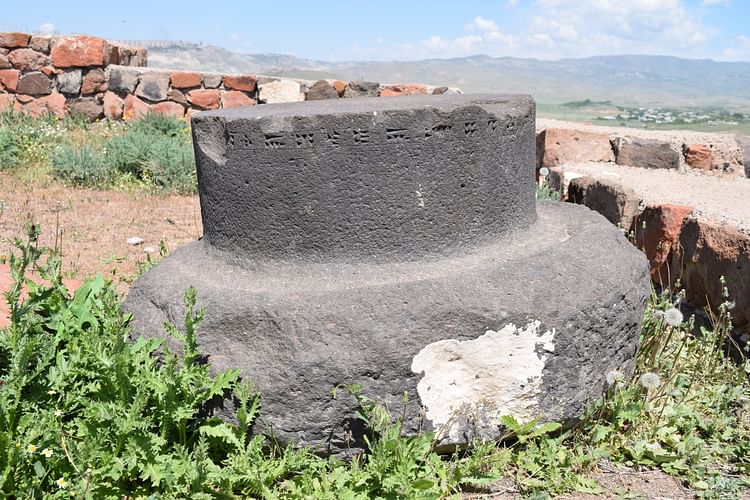 Basalt Pillar with Cuneiform, Armenia James Blake Wiener (CC BY-NC-SA) ](https://www.worldhistory.org/image/7141/basalt-pillar-with-cuneiform-armenia/ "Basalt Pillar with Cuneiform, Armenia")In Yerevan itself - a city of over a million people - I visited the Matenadaran Museum, which contains chiefly Armenian manuscripts dating from Late Antiquity through the Early Modern Era, and the History Museum of Yerevan, where I came up close and personal with the grand scope of Armenian history. Saying that my first days in Armenia were “busy” would be an understatement; there was much to photograph, record, and collect for my fellow team members, and thankfully Ara proved to have unfathomable patience with my endless rounds of photo stops. (We later laughed about this over dinner, where I was assured that I was actually quite fast and disciplined in “keeping up a solid pace.”)
### The treasures of Southeastern Armenia
After my first few days exploring Yerevan and its environs, it was time to journey deep into southern and southeastern Armenia. The true heart of eastern Armenia's soul and spirit dwells here, and there is no shortage of sites for visitors to see and experience. Here one finds abandoned caravanserai, icons of Armenian art, and [architecture](https://www.worldhistory.org/disambiguation/architecture/) like the Noravank Monastery, which was designed by the famed architect Momik, and intriguing prehistoric [megalithic](https://www.worldhistory.org/disambiguation/megalithic/) structures like Zorats Carer.
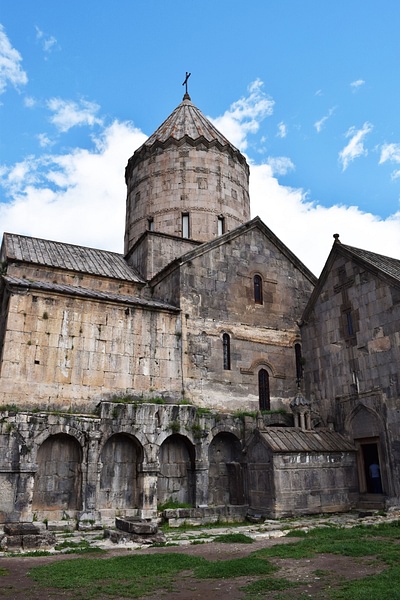
[ 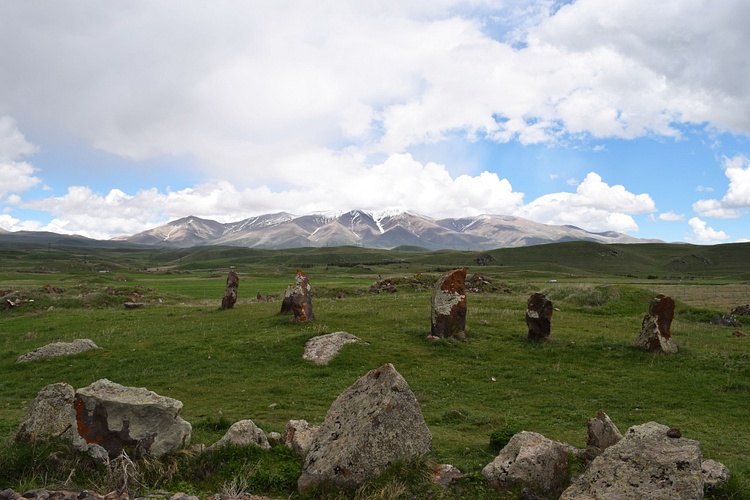 Zorats Karer in Armenia James Blake Wiener (CC BY-NC-SA) ](https://www.worldhistory.org/image/7387/zorats-karer-in-armenia/ "Zorats Karer in Armenia")Important monasteries and churches are scattered throughout the country as they functioned as sanctuaries of learning and [Christianity](https://www.worldhistory.org/christianity/) for over two millennia. I visited several on my tour, including the spectacular Tatev Monastery. This [medieval monastery](https://www.worldhistory.org/Medieval_Monastery/), which is accessible by the world's longest non-stop double-track cable car and is located in Armenia's southeastern province of Syunik Province, was the locus of Armenian culture from the 13th-15th centuries CE. Once the site of the University of Tatev, the Tatev Monastery advanced the arts and sciences, as a repository of countless valuable manuscripts, works of art, and official documents and legal contracts.
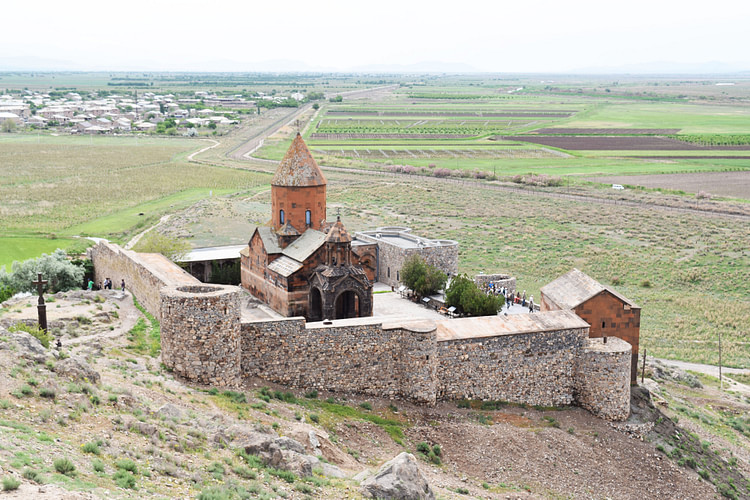
[  Tatev Monastery James Blake Wiener (CC BY-NC-SA) ](https://www.worldhistory.org/image/7569/tatev-monastery/ "Tatev Monastery")A visit to [Khor Virap](https://www.worldhistory.org/Khor_Virap/) Monastery with its views of the legendary Mt. Ararat and the ruins of the ancient Armenian capital of [Artashat](https://www.worldhistory.org/Artashat/), serves as a reminder to those of us of European descent that Armenia was the first nation to adopt Christianity en masse and that throughout most of Armenian history it was the Armenian Apostolic Church that safeguarded Armenia's traditions and identity against foreign invaders.
[  Khor Virap Monastery James Blake Wiener (CC BY-NC-SA) ](https://www.worldhistory.org/image/7568/khor-virap-monastery/ "Khor Virap Monastery")Friends and family kept asking me via SMS “which site was my favorite place I had visited, and why?” while I was traveling through Armenia this past May. It is difficult to pick a “favorite site” among the many I visited on my tour, but I concede that I especially enjoyed visiting the [Areni Cave](https://www.worldhistory.org/Areni_Cave/) and Garni [Temple](https://www.worldhistory.org/temple/). The Areni Cave is a Chalcolithic and [Bronze Age](https://www.worldhistory.org/disambiguation/Bronze_Age/) site containing the oldest earliest known winery, the remnants of the earliest known shoe, and portions of a nearly 6,000-year-old straw skirt. Multileveled and cavernous in the extreme, I felt privileged to be able to walk around an archaeological site of immense importance to all of humanity. (Sadly, I cannot share my pictures from the site as the cave is still under excavation by Armenian archaeologists.)
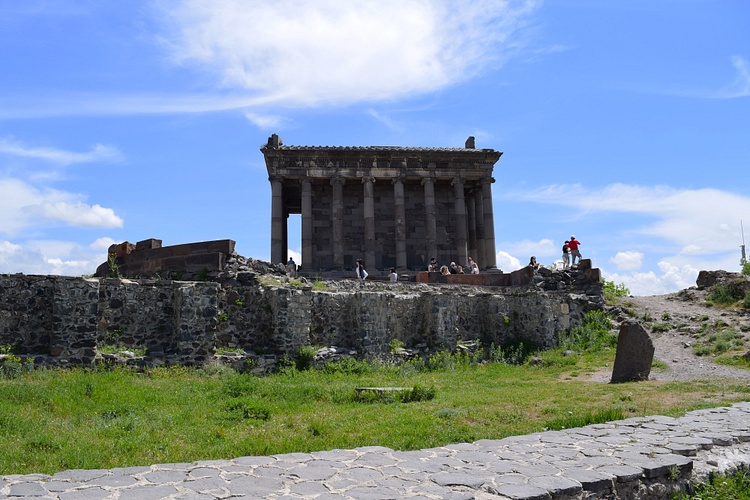
[  Entrance to Areni Cave in Armenia James Blake Wiener (CC BY-NC-SA) ](https://www.worldhistory.org/image/7435/entrance-to-areni-cave-in-armenia/ "Entrance to Areni Cave in Armenia")Garni Temple, Armenia's only standing Greco-[Roman](https://www.worldhistory.org/disambiguation/Roman/) and colonnaded building, captured my heart. Although partially reconstructed between 1969-1975 CE and relatively small when compared to Greco-Roman temples in [Europe](https://www.worldhistory.org/europe/), the Middle East, or North [Africa](https://www.worldhistory.org/disambiguation/africa/), Garni Temple delineates both a sense of grandeur and cultural continuity. It was built to honor the Armenian sun [god](https://www.worldhistory.org/God/) Mihr, and its proportionality is in line with other ancient Armenian sites, both Christian and pagan. I delighted in photographing its elegant friezes and even some medieval graffiti in Arabic. (I attempted to translate what I saw for Ara.)
[  Side View of Garni Temple in Armenia James Blake Wiener (CC BY-NC-SA) ](https://www.worldhistory.org/image/7386/side-view-of-garni-temple-in-armenia/ "Side View of Garni Temple in Armenia")### A trip to remember
My grant trip to Armenia was an adventure. Exploring Armenia's archaeological sites and cultural monuments left an indelible impression on my mind as well as cherished memories that I won't soon forget. Armenia is an ancient land in every sense; its history is inescapable, grand, often tragic, but also engrossing and fascinating. When the time came for me to leave Armenia and travel to Georgia - another equally bewitching, ancient country - I meditated upon all that I saw and what struck me the most: Armenia's monuments, ruins, and works of art are majestic and exceptional, but it is the hospitality, friendliness, and spirit of the Armenian people that I believe will continue to resonate in my mind for a long time to come.
On behalf of Ancient History Encyclopedia, I'd like to thank the National Association for Armenian Studies and Research, the Knights of Vartan as well as Arara Tour for their willingness to allow us to share Armenia's history and heritage. We were delighted to visit, and we hope to explore the Caucasus again in the near future.
This article was made possible with generous support from the [National Association for Armenian Studies and Research](https://naasr.org/?utm_source=ancient.eu&utm_medium=link&utm_campaign=ancient.eu) and the Knights of Vartan Fund for Armenian Studies.
#### Editorial Review
This human-authored article has been reviewed by our editorial team before publication to ensure accuracy, reliability and adherence to academic standards in accordance with our [editorial policy](https://www.worldhistory.org/static/editorial-policy/).
## About the Author
James Blake Wiener has a particular interest in cross-cultural exchange and world history. He is a co-founder of World History Encyclopedia and formerly was its Communications Director.
- [Linkedin Profile](https://www.linkedin.com/in/jameswiener)
## Cite This Work
### APA
Wiener, J. B. (2017, November 08). Ancient History Encyclopedia in Armenia. *World History Encyclopedia*.
### Chicago
Wiener, James Blake. "Ancient History Encyclopedia in Armenia." *World History Encyclopedia*, November 08, 2017. .
### MLA
Wiener, James Blake. "Ancient History Encyclopedia in Armenia." *World History Encyclopedia*, 08 Nov 2017, .
## License & Copyright
Submitted by [James Blake Wiener](https://www.worldhistory.org/user/jbw288/ "User Page: James Blake Wiener"), published on 08 November 2017. The copyright holder has published this content under the following license: [Creative Commons Attribution-NonCommercial-ShareAlike](https://creativecommons.org/licenses/by-nc-sa/4.0/deed.en). This license lets others remix, tweak, and build upon this content non-commercially, as long as they credit the author and license their new creations under the identical terms. When republishing on the web a hyperlink back to the original content source URL must be included. Please note that content linked from this page may have different licensing terms.