---
title: The Soul in Ancient Egypt
author: Joshua J. Mark
source: https://www.worldhistory.org/article/1023/the-soul-in-ancient-egypt/
format: machine-readable-alternate
license: Creative Commons Attribution-NonCommercial-ShareAlike (https://creativecommons.org/licenses/by-nc-sa/4.0/)
updated: 2024-05-28
---
# The Soul in Ancient Egypt
_Authored by [Joshua J. Mark](https://www.worldhistory.org/user/JPryst/)_
At the beginning of time, the [god](https://www.worldhistory.org/God/) Atum stood on the primordial mound in the midst of the waters of chaos and created the world. The power which enabled this act was *[heka](https://www.worldhistory.org/Heka/)* (magic) personified in the god Heka, the invisible force behind the gods. The earth and everything in it was therefore imbued with magic, and this naturally included human beings. Humanity had been created by the gods, and one lived and moved owing to the magical force which animated them: the soul.
[  Egyptian Ba Amulet to Ward Off Evil Walters Art Museum (Public Domain) ](https://www.worldhistory.org/image/5984/egyptian-ba-amulet-to-ward-off-evil/ "Egyptian Ba Amulet to Ward Off Evil")An individual's life on earth was considered only one part of an eternal journey. The personality was created at the moment of one's birth, but the soul was an immortal entity inhabiting a mortal vessel. When that vessel failed and the person's body died, the soul went on to another plane of existence where, if it was justified by the gods, it would live forever in a paradise which was a mirror image of one's earthly existence.
This soul was not only one's character, however, but a composite being of different entities, each of which had its own role to play in the journey of life and afterlife. The mortuary rituals which were such an important aspect of [Egyptian culture](https://www.worldhistory.org/Egyptian_Culture/) were so carefully observed because each aspect of the soul had to be addressed in order for the person to continue on their way to eternity.
### The Parts of the Soul
The soul was thought to consist of nine separate parts which were integrated into a whole individual but had very distinct aspects. Egyptologist Rosalie David explains:
> The Egyptians believed that the human personality had many facets - a concept that was probably developed early in the [Old Kingdom](https://www.worldhistory.org/disambiguation/Old_Kingdom/). In life, the person was a complete entity, but if he had led a virtuous life, he could also have access to a multiplicity of forms that could be used in the next world. In some instances, these forms could be employed to help those whom the deceased wished to support or, alternately, to take revenge on his enemies. (116)
In order for these aspects of the soul to function, the body had to remain intact, and this is why mummification became so integral a part of the mortuary rituals and the [culture](https://www.worldhistory.org/disambiguation/culture/). In some eras, the soul was thought to be comprised of five parts and in others seven, but, generally, it was nine:
The ***Khat*** was the physical body which, when it became a corpse, provided the link between one's soul and one's earthly life. The soul would need to be nourished after [death](https://www.worldhistory.org/disambiguation/Death/) just as it had to be while on earth, and so food and drink offerings were brought to the [tomb](https://www.worldhistory.org/tomb/) and laid on an offerings table. Egyptologist [Helen](https://www.worldhistory.org/disambiguation/Helen/) Strudwick observes that "one of the most common subjects for tomb paintings and carvings was the deceased seated at an offerings table laden with food" (188). The dead body was not thought to actually eat this food but to absorb its nutrients supernaturally. Paintings and statues of the dead person were also placed in the tomb so that, if something should happen to damage the body, the statue or painting would assume its role.
The ***Ka*** was one's double-form or astral self and corresponds to what most people in the present day consider a 'soul.' This was "the vital source that enabled a person to continue to receive offerings in the next world" (David, 117). The *ka* was created at the moment of one's birth for the individual and so reflected one's personality, but the essence had always existed and was "passed across the successive generations, carrying the spiritual force of the first creation" (David, 117). The *ka* was not only one's personality but also a guide and protector, imbued with the spark of the divine. It was the *ka* which would absorb the power from the food offerings left in the tomb, and these would sustain it in the afterlife. All living things had a *ka* - from plants to animals and on up to the gods - which was evident in that they were, simply, alive.
The ***Ba*** is most often translated as 'soul' and was a human-headed bird aspect, which could speed between earth and the heavens and, specifically, between the afterlife and one's corpse. Each *ba* was linked to a particular body, and the *ba* would hover over the corpse after death but could also travel to the afterlife, visit with the gods, or return to earth to those places the person had loved in life. The corpse had to reunite with the *ka* each night in order for the *ka* to receive sustenance, and it was the job of the *ba* to accomplish this. The gods had a *ba* as well as a *ka*. Examples of this are the [Apis](https://www.worldhistory.org/Apis/) bull which was the *ba* of [Osiris](https://www.worldhistory.org/osiris/) and the Phoenix, the *ba* of Ra.
[ 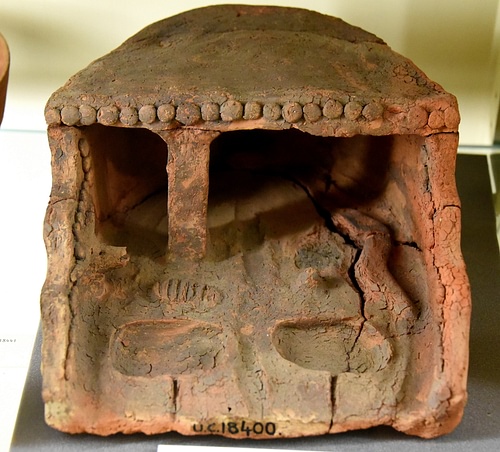 Egyptian Pottery Soul House Osama Shukir Muhammed Amin (Copyright) ](https://www.worldhistory.org/image/4766/egyptian-pottery-soul-house/ "Egyptian Pottery Soul House")The ***Shuyet*** was the shadow self which means it was essentially the shadow of the soul. The shadow in [Egypt](https://www.worldhistory.org/egypt/) represented comfort and protection, and the sacred sites at [Amarna](https://www.worldhistory.org/Amarna/) were known as *Shadow of Ra* for this reason. Exactly how the *shuyet* functioned is not clear, but it was considered extremely important and operated as a protective and guiding entity for the soul in the afterlife. *The [Egyptian Book of the Dead](https://www.worldhistory.org/Egyptian_Book_of_the_Dead/)* includes a spell where the soul claims, "My shadow will not be defeated" in stating its ability to traverse the afterlife toward paradise.
The ***Akh*** was the immortal, transformed self, which was a magical union of the *ba* and *ka*. Strudwick writes, "once the *akh* had been created by this union, it survived as an 'enlightened spirit,' enduring and unchanged for eternity" (178). *Akh* is usually translated as 'spirit' and was the higher form of the soul. Spell 474 of the *[Pyramid](https://www.worldhistory.org/pyramid/) Texts* states, "the *akh* belongs to heaven, the corpse to earth," and it was the *akh* which would enjoy eternity among the stars with the gods. The *akh* could return to earth, however, and it was an aspect of the *akh,* which would come back as a [ghost](https://www.worldhistory.org/ghost/) to haunt the living if some wrong had been done or would return in dreams to help someone they cared for.
The ***Sahu*** was the aspect of the *Akh* which would appear as a ghost or in dreams. It separated from the other aspects of the soul once the individual was justified by Osiris and judged worthy of eternal existence.
The ***Sechem*** was another aspect of the *Akh* which allowed it mastery of circumstances. It was the vital life energy of the individual, which manifested itself as the power to control one's surroundings and outcomes.
The ***Ab*** was the heart, the source of good and evil, which defined a person's character. This was the spiritual heart which rose from the physical heart (*hat*), which was left in the mummified body of the deceased for this reason: it was the seat of the person's individuality and the record of their thoughts and deeds during their time on earth. It was the *ab,* which was weighed in the balances against the white feather of truth by Osiris, and, if found heavier than the feather, it was dropped to the floor where it was devoured by the monster Amut. Once the heart was eaten, the soul ceased to exist. If the heart was found lighter than the feather, the soul was justified and could proceed on toward paradise. A special amulet was included in the mummification of the corpse and placed over the heart as a protective charm to prevent the heart from bearing witness against the soul and possibly condemning it falsely.
[  Weighing the Heart, Book of the Dead Jon Bodsworth (Public Domain) ](https://www.worldhistory.org/image/113/weighing-the-heart-book-of-the-dead/ "Weighing the Heart, Book of the Dead")The ***Ren*** was one's secret name. This was given to one at birth by the gods, and only the gods knew it. Scholar Nicholaus B. Pumphrey writes, "the only way that the fate or destiny can change is if a creature of higher power changes the name. As long as the name of the being exists, the being will exist throughout eternity as part of the fabric of the divine order" (6-7). The *ren* was the name by which the gods knew the individual soul and how one would be called in the afterlife.
### The Mortuary Rituals & the Soul
The mortuary rituals were observed to address each aspect of the soul and assure the living that the deceased would live on after death. Mummification was practiced to preserve the body, amulets and magical texts were included to address the other spiritual facets which made up an individual. The dead were not forgotten once they were placed in their tomb. Rituals were then observed daily in their honor and for their continued existence. Rosalie David writes:
> In order to ensure that the link was maintained between the living and the dead, so that the person's immortality was assured, all material needs had to be provided for the deceased, and the correct funerary rituals had to be performed. It was expected that a person's heir would bring the daily offerings to the tomb to sustain the owner's *ka*. (118)
If the family was unable to perform this duty, they could hire a '*Ka*-servant' who was a priest specially trained in the rituals. A tomb could not be neglected or else the person's spirit would suffer in the afterlife and could then return to seek revenge. This, in fact, is the plot of one of the best-known [Egyptian](https://www.worldhistory.org/disambiguation/Egyptian/) ghost stories, *Khonsemhab and the Ghost*, in which the spirit of Nebusemekh returns to ask help of Khonsemhab, the High Priest of [Amun](https://www.worldhistory.org/amun/). Nebusemekh's tomb has been neglected to the point where no one even remembers where it is and no one comes to visit or bring the necessary offerings. Khonsemhab sends his servants to locate, repair, and refurbish the tomb and then promises to provide daily offerings to Nebusemekh's *ka*.
[  Khonsemhab and the Ghost Khruner (CC BY-NC-SA) ](https://www.worldhistory.org/image/5981/khonsemhab-and-the-ghost/ "Khonsemhab and the Ghost")These offerings would be left on an altar table in the offering chapel of those tombs elaborate enough to have one or on the offerings table in the tomb. The *ka* of the deceased would enter the tomb through the false door provided and inhabit the body or a statue and draw nourishment from the offerings provided. In case there was a delay for whatever reason, a significant quantity of food and drink was buried with those who could afford it. Strudwick notes how "the immediate needs of the deceased were met by inhuming a veritable feast - meat, vegetables, fruit, bread, and jugs of wine, water, and [beer](https://www.worldhistory.org/Beer/) - with the mummy" (186). This would ensure that the departed was provided for but did not negate the obligation on the part of the living to remember and care for the dead.
Offerings Lists, which stipulated what kinds of food were to be brought and in what quantity, were inscribed on tombs so that the *Ka*-servant or some other priest in the future could continue provisions, even long after the family was dead. Autobiographies accompanied the Offerings Lists to celebrate the person's life and provide a means of lasting remembrance. For the most part, people took the upkeep of their family's graves and the offerings seriously in honor of the departed and knowing that, someday, they would require the same kind of attention for the sustenance of their own souls.
#### Editorial Review
This human-authored article has been reviewed by our editorial team before publication to ensure accuracy, reliability and adherence to academic standards in accordance with our [editorial policy](https://www.worldhistory.org/static/editorial-policy/).
## Bibliography
- [Bunson, M. *The Encyclopedia of Ancient Egypt.* Gramercy Books, 1991.](https://www.worldhistory.org/books/B01NH04966/)
- [David, R. *Religion and Magic in Ancient Egypt.* Penguin Books, 2003.](https://www.worldhistory.org/books/0140262520/)
- [Gibson, C. *The Hidden Life of Ancient Egypt.* Saraband, 2009.](https://www.worldhistory.org/books/B01K3K74PK/)
- [Names and Power: The Concept of Secret Names in the Ancient Near East by Nicholaus B. Pumphrey](http://etd.library.vanderbilt.edu/available/etd-03272009-190249/unrestricted/Nick'sThesis.pdf "Names and Power: The Concept of Secret Names in the Ancient Near East by Nicholaus B. Pumphrey"), accessed 2 Mar 2017.
- [Pinch, G. *Egyptian Mythology: A Guide to the Gods, Goddesses, and Traditions of Ancient Egypt.* Oxford University Press, 2004.](https://www.worldhistory.org/books/0195170245/)
- [Shaw, I. *The Oxford History of Ancient Egypt.* Oxford University Press, 2016.](https://www.worldhistory.org/books/B000OKSGJ8/)
- [Strudwick, H. *The Encyclopedia of Ancient Egypt.* Metro Books, 2006.](https://www.worldhistory.org/books/B01MS1KVAK/)
- [Wallis Budge, E. A. *Egyptian Ideas of the Future Life.* CreateSpace Independent Publishing Platform, 2012.](https://www.worldhistory.org/books/1478310006/)
## About the Author
Joshua J. Mark is World History Encyclopedia's co-founder and Content Director. He was previously a professor at Marist College (NY) where he taught history, philosophy, literature, and writing. He has traveled extensively and lived in Greece and Germany.
- [Linkedin Profile](https://www.linkedin.com/pub/joshua-j-mark/38/614/339)
## Cite This Work
### APA
Mark, J. J. (2017, March 02). The Soul in Ancient Egypt. *World History Encyclopedia*.
### Chicago
Mark, Joshua J.. "The Soul in Ancient Egypt." *World History Encyclopedia*, March 02, 2017. .
### MLA
Mark, Joshua J.. "The Soul in Ancient Egypt." *World History Encyclopedia*, 02 Mar 2017, .
## License & Copyright
Submitted by [Joshua J. Mark](https://www.worldhistory.org/user/JPryst/ "User Page: Joshua J. Mark"), published on 02 March 2017. The copyright holder has published this content under the following license: [Creative Commons Attribution-NonCommercial-ShareAlike](https://creativecommons.org/licenses/by-nc-sa/4.0/deed.en). This license lets others remix, tweak, and build upon this content non-commercially, as long as they credit the author and license their new creations under the identical terms. When republishing on the web a hyperlink back to the original content source URL must be included. Please note that content linked from this page may have different licensing terms.