---
title: Zealots
author: Rebecca Denova
source: https://www.worldhistory.org/Zealots/
format: machine-readable-alternate
license: Creative Commons Attribution-NonCommercial-ShareAlike (https://creativecommons.org/licenses/by-nc-sa/4.0/)
updated: 2024-10-16
---
# Zealots
_Authored by [Rebecca Denova](https://www.worldhistory.org/user/rdenova/)_
The Zealots were a group of Jews who began to emerge as a religious/political movement around the beginning of the 1st century CE. They strongly opposed [Roman](https://www.worldhistory.org/disambiguation/Roman/) rule and turned on everyone, including other Jews, who cooperated with [Rome](https://www.worldhistory.org/Rome/). A subgroup of them, known as the Sicarii, frequently attacked Romans and those considered to work for them.
The term 'zealot' is from the Hebrew *kanai/kana’im* (those who are "zealous on behalf of [God](https://www.worldhistory.org/God/)"). The [Greek](https://www.worldhistory.org/disambiguation/greek/) term was *zelotes* ("emulator," "admirer," or "follower"). In the modern day, 'zeal' is applied to a person who is sometimes considered a fanatic or radical in the cause of an idea or movement.
### Origins
The [Maccabean Revolt](https://www.worldhistory.org/article/827/the-maccabean-revolt/) by the Jews in 167 BCE drove out the Greek occupiers and established an independent [kingdom of Israel](https://www.worldhistory.org/Kingdom_of_Israel/). The Hasmonean family who led the revolt combined the office of the king with that of the high priest at the [Temple in Jerusalem](https://www.worldhistory.org/article/852/the-temple-in-jerusalem/). Not everyone was happy with Hasmonean rule. Kings in [Israel](https://www.worldhistory.org/disambiguation/Israel/) were to be from David's tribe, Judah, while the high priest had to descend from Zadok, the first high priest under [Solomon](https://www.worldhistory.org/solomon/), but the Hasmoneans could claim neither line. This is when various groups of Jews formed sects within the religious body. All agreed on the basics of the [Law](https://www.worldhistory.org/disambiguation/law/) of [Moses](https://www.worldhistory.org/Moses/) and the books of the Prophets. The dominating difference was the ability to live in this now cosmopolitan [Greek culture](https://www.worldhistory.org/disambiguation/Greek_Culture/), and yet retain the unique identity markers and traditions of the Jews. One such group was the Zealots.
### Roman Rule
Rome sent the general [Pompey](https://www.worldhistory.org/pompey/) Magnus (106 BCE to 48 BCE) to the East against the king of Pontus [Mithridates VI](https://www.worldhistory.org/Mithridates_VI/) (r. 120-63 BCE) on the Black Sea who had conquered Asia Province and [Greece](https://www.worldhistory.org/greece/). After successfully destroying Mithridates' ambitions, he reorganized the area as client-kingdoms of Rome. He was going to let things alone in [Jerusalem](https://www.worldhistory.org/jerusalem/), but two Hasmonean brothers were fighting over the position of the high priest. When he could not get them to compromise, he laid siege to Jerusalem and conquered it in 63 BCE.
Rome had no interest in Israel except as a buffer-state against the [Parthian Empire](https://www.worldhistory.org/Parthia_(Empire)/) in the East (the inheritors of [Persia](https://www.worldhistory.org/Persia/)). While Pompey was there, he used the services of a tribal family from Idumea, [Antipater](https://www.worldhistory.org/disambiguation/Antipater/) and his son, Herod. They were committed to keeping the order in the region. The Herodians (the umbrella term for this family in the [New Testament](https://www.worldhistory.org/New_Testament/)) became embroiled in the civil wars that broke out in the last days of the [Roman Republic](https://www.worldhistory.org/Roman_Republic/). After the [assassination of Julius Caesar](https://www.worldhistory.org/article/803/the-assassination-of-julius-caesar/) in 44 BCE, Herod was called to Rome with others to report on conditions in the East. As a reward for his service, [Augustus](https://www.worldhistory.org/augustus/) (r. 27 BCE to 14 CE) and [Mark](https://www.worldhistory.org/disambiguation/Mark/) Anthony (83-30 BCE) granted him the title of King of the Jews. [Herod the Great](https://www.worldhistory.org/Herod_the_Great/) became one of the most hated kings in Jewish history, often accused of not really being a Jew because he worked for Rome.
[  Roman Empire under Augustus Cristiano64 (CC BY-SA) ](https://www.worldhistory.org/image/4334/roman-empire-under-augustus/ "Roman Empire under Augustus")Upon the [death](https://www.worldhistory.org/disambiguation/Death/) of Herod the Great (4 BCE), his territory was divided among his sons (the Tetrarchies). The [city](https://www.worldhistory.org/city/) of Jerusalem was assigned to Herod [Archelaus](https://www.worldhistory.org/disambiguation/Archelaus/) (l. 22 BCE to 18 CE), who was such a bad leader that the Jews sent a delegation to Rome to ask Augustus not to appoint another son of Herod when he died. In the year 6 CE, Judea and Jerusalem became a senatorial province of Rome, being ruled directly by a procurator. From 6 to 66 CE, the Jews experienced a series of corrupt Roman magistrates.
### The Zealot Party
The Zealots emerged as a religious/political movement in the 1st century CE. Most of our information about the Zealots comes from the Jewish historian, [Flavius Josephus](https://www.worldhistory.org/Flavius_Josephus/) (36-100 CE), who was also an eyewitness to the [Great Jewish Revolt of 66 CE](https://www.worldhistory.org/article/823/the-great-jewish-revolt-of-66-ce/). In both *The Antiquities of the Jews* and *The Jewish [War](https://www.worldhistory.org/disambiguation/War/)*, [Josephus](https://www.worldhistory.org/Flavius_Josephus/) described the various Jewish sects of schools of [philosophy](https://www.worldhistory.org/philosophy/). The Zealots were called "the fourth sect." According to Josephus, the movement began with Judas of Galilee, who, along with Zadok the Pharisee, founded the fourth sect. When a new Roman governor, Quirinius, was appointed in [Syria](https://www.worldhistory.org/syria/) who also oversaw activities in Judea, these two led a tax revolt in the year 6 CE. This was the census mentioned in Luke's story of the [nativity of Jesus](https://www.worldhistory.org/article/2545/nativity-of-jesus/).
[  Judas the Zealot Hispalois (CC BY-NC-SA) ](https://www.worldhistory.org/image/15239/judas-the-zealot/ "Judas the Zealot")The Zealots left no [literature](https://www.worldhistory.org/literature/), but the theological basis for their beliefs and activities most likely derives from the story of Phineas and the experiences of the Maccabee martyrs. During the wilderness years after the Jews left [Egypt](https://www.worldhistory.org/egypt/), Phineas was a priest, the grandson of Aaron. Camping near Peor, some of the Israelites were interacting with the enemy Midianites and Moabites (who worshipped [Baal](https://www.worldhistory.org/baal/)-Peor). God had punished them with a [plague](https://www.worldhistory.org/disambiguation/plague/). Seeing a man with a Midianite woman together in a tent, he ran a spear through them, which stopped the plague (Numbers 25:10-13). Phineas became an example of being "zealous for God" and "This was credited to him as righteousness for endless generations to come" (Psalm 106:31).
The Zealots turned back to the stories of the Maccabees (1 & 2 Maccabees) as the Maccabee martyrs were inspirational for their willingness to die for the sins of the nation. Their deaths were understood as an atonement; a sacrifice that God would reward with being instantly translated into his presence after their deaths. For the Zealots, only the God of Israel should rule over them as king. Just as God had helped the Maccabees, he would be on their side against Rome.
The Zealots were noted for a subgroup of Sicarii or "dagger-men." The sicar was a small, short-bladed dagger, which was easily concealed. The Sicarii, again copying the methods of the Maccabees, utilized their guerilla warfare tactics and raids on Roman convoys and anyone who attempted to collect taxes, many of whom were Jews.
### The Jewish Revolt (66-73 CE)
Nowhere is the negative polemic against the Zealots more dramatic than in Josephus' account of the Jewish Revolt. The blame for the destruction of Jerusalem and the Second [Temple](https://www.worldhistory.org/temple/) by Rome was placed solely on the Zealots and their misguided influence on the rest of the people. Josephus was put in charge as the general of Galilee at the outbreak of the revolt. In that capacity, he often had more clashes with the Zealots than with the legions of the [Roman army](https://www.worldhistory.org/Roman_Army/). Josephus infamously later changed sides and became an ally of Rome.
Simon bar Giora had his own faction of Zealots and his own army. According to Josephus, he spent more time attacking and looting villages to feed his troops. Simon had recruited Idumeans into his army who were considered thugs by the provisional government in Jerusalem. Simon was known for his savagery, cutting off prisoners hands.
John of Gishala led another faction in Galilee. [Titus](https://www.worldhistory.org/disambiguation/Titus/) (Emperor [Vespasian](https://www.worldhistory.org/Vespasian/)'s son and future [Roman emperor](https://www.worldhistory.org/Roman_Emperor/), r. 79-81 CE) marched to Gischala and laid siege to the city and called for its surrender. According to Josephus, John asked Titus not to enter the city that day, as it was the Sabbath. Titus agreed, but it gave John time to escape and flee to Jerusalem.
Simon and John both forced their way into Jerusalem, where they fought over control of the Temple Mount. The result was the slaughter of the high priest, other priests, and anyone assumed to be a traitor. When Titus conquered Jerusalem, both Simon and John were captured. They were taken as prisoners to march in the later [triumph](https://www.worldhistory.org/Roman_Triumph/) of Titus. Both were strangled.
[  Temple of Solomon Treasure, Arch of Titus Mark Cartwright (CC BY-NC-SA) ](https://www.worldhistory.org/image/1287/temple-of-solomon-treasure-arch-of-titus/ "Temple of Solomon Treasure, Arch of Titus")With the collapse of Jerusalem, Josephus reported that remnants of the Zealots and Sicarii escaped and took over the fortress of [Masada](https://www.worldhistory.org/Masada/) on the Dead Sea, where they survived for three more years. According to the story, the Zealot leader, Eleazar ben Ya'ir, made several speeches that it was better to die than be a slave to Rome. What entailed was a mass suicide, allegedly of 960 people. That "Masada shall not fall again" has become the way in which some political factions in modern Israel promote themselves as zealous for the state.
### The New Testament
In the New Testament, the Zealots are referred to as *lestes* ("bandits") as a negative slur. *Lestes* meant a robber, plunderer, or a brigand, but the English translation of this term as "thieves" removes the political connotation of the activity. The two thieves who were crucified with [Jesus](https://www.worldhistory.org/Jesus_Christ/) were revolutionaries; [crucifixion](https://www.worldhistory.org/crucifixion/) was the Roman punishment for treason.
[ 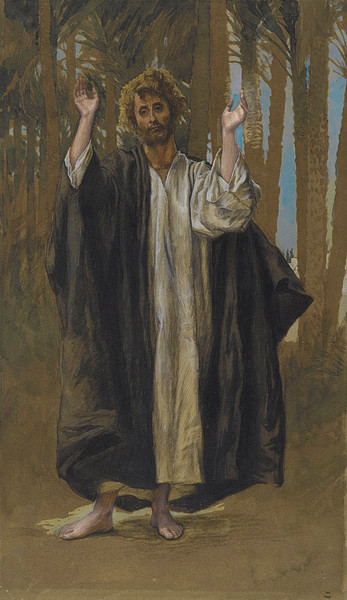 Simon the Zealot James Tissot (CC BY) ](https://www.worldhistory.org/image/15241/simon-the-zealot/ "Simon the Zealot")A disciple known as Simon the Zealot is listed in Luke 6:15 and Acts 1:13. Confusion surrounds this individual as there are several Simons in [the gospels](https://www.worldhistory.org/The_Gospels/), often without distinction. In Mark and Matthew, we have Simon the Canaanite (Mark 3:18; Matthew 10:4). Their Greek word (*kananaios*) meant "zealous," but in Jerome's Latin translation, it became "Canaanite." In modern debates, some scholars see his presence as an argument that Jesus, did in fact, urge a political revolution against Rome.
[Paul the Apostle](https://www.worldhistory.org/Paul_the_Apostle/), as one of the [Pharisees](https://www.worldhistory.org/Pharisees/), initially violently persecuted the Christians (but without saying why or how), and by his own description, he was more zealous for the Law of Moses than all other Jews. After his revelation and becoming a Christian, in his letters he appears to have continued the same zealousness in his attempts to convert the Gentiles from their idolatry.
#### Editorial Review
This human-authored definition has been reviewed by our editorial team before publication to ensure accuracy, reliability and adherence to academic standards in accordance with our [editorial policy](https://www.worldhistory.org/static/editorial-policy/).
## Bibliography
- [Horsley, Richard A. *Bandits, Prophets, and Messiahs.* Trinity Press International, 1999.](https://www.worldhistory.org/books/1563382733/)
- [Sorek, Susan. *The Jews Against Rome.* Bloomsbury Academic, 2008.](https://www.worldhistory.org/books/1847252486/)
## About the Author
Rebecca I. Denova, Ph.D. is Emeritus Professor of Early Christianity in the Department of Religious Studies, University of Pittsburgh. She has recently completed a textbook, "The Origins of Christianity and the New Testament" (Wiley-Blackwell)
## Timeline
- **c. 167 BCE**: [Maccabean Revolt](https://www.worldhistory.org/article/827/the-maccabean-revolt/) frees [Palestine](https://www.worldhistory.org/palestine/) from foreign rule and allows for rise of Hasmonean Dynasty.
- **6 CE**: Tax revolt against [Rome](https://www.worldhistory.org/Rome/) led by Judas of Galilee and Zadok the Pharisee.
- **66 CE - 73 CE**: The Jewish Revolt against [Rome](https://www.worldhistory.org/Rome/).
## Cite This Work
### APA
Denova, R. (2022, February 10). Zealots. *World History Encyclopedia*.
### Chicago
Denova, Rebecca. "Zealots." *World History Encyclopedia*, February 10, 2022. .
### MLA
Denova, Rebecca. "Zealots." *World History Encyclopedia*, 10 Feb 2022, .
## License & Copyright
Submitted by [Rebecca Denova](https://www.worldhistory.org/user/rdenova/ "User Page: Rebecca Denova"), published on 10 February 2022. The copyright holder has published this content under the following license: [Creative Commons Attribution-NonCommercial-ShareAlike](https://creativecommons.org/licenses/by-nc-sa/4.0/deed.en). This license lets others remix, tweak, and build upon this content non-commercially, as long as they credit the author and license their new creations under the identical terms. When republishing on the web a hyperlink back to the original content source URL must be included. Please note that content linked from this page may have different licensing terms.