---
title: Utilitarianism
author: Mark Cartwright
source: https://www.worldhistory.org/Utilitarianism/
format: machine-readable-alternate
license: Creative Commons Attribution-NonCommercial-ShareAlike (https://creativecommons.org/licenses/by-nc-sa/4.0/)
updated: 2024-02-20
---
# Utilitarianism
_Authored by [Mark Cartwright](https://www.worldhistory.org/user/markzcartwright/)_
Utilitarianism is a [philosophy](https://www.worldhistory.org/philosophy/) founded by [Jeremy Bentham](https://www.worldhistory.org/Jeremy_Bentham/) (1748-1832) and then extended by other thinkers, notably [John Stuart Mill](https://www.worldhistory.org/John_Stuart_Mill/) (1806-1873). Utilitarianism involves the greatest happiness principle, which holds that a [law](https://www.worldhistory.org/disambiguation/law/) or action is good if it promotes the greatest happiness of the greatest number, happiness being defined as the presence of pleasure and the absence of pain.
### Origins of Utilitarianism
Philosophers have been concerned with the idea of happiness and how to achieve it ever since antiquity. In 18th-century France, in particular, secular philosophers saw happiness as an important and realisable goal in this world. During the European Enlightenment, there was a new interest in somehow linking happiness to government policy and even ethics. Happiness became a noble aim, shedding its baggage of mere self-indulgent hedonism that had weighed down the concept since antiquity. The United States [Declaration of Independence](https://www.worldhistory.org/article/2411/declaration-of-independence/) of 1776 even put this aim in [writing](https://www.worldhistory.org/writing/), stating that "the pursuit of happiness" was a natural right.
Several thinkers across [Europe](https://www.worldhistory.org/europe/) had specifically proposed a consideration of the happiness of the greatest number in their work, including the Irishman Francis Hutcheson (1694-1746), the Frenchman Claude-Adrien Helvétius (1715-1771), and the Italian Cesare Beccaria (1738-1794). It was Hutcheson who first coined the term "the greatest happiness of the greatest number" (Yolton, 236) in his *Inquiry Concerning Moral Good and Evil*, published in 1726. Hutcheson stated that citizens had a right to overthrow any government that was not working to promote their happiness. Helvétius, writing in *De l'esprit* (1758), stressed that the only true motive of human action was the desire for pleasure and avoidance of pain; it is up to governments to manipulate these desires for the common good since they cannot be ignored or suppressed. In his *Discours*, Helvétius goes so far as to say that a person is only virtuous because their search for pleasure happens to coincide with the common good.
Beccaria, in his *Dei delitti e delle pene* (*On Crimes and Punishments*, 1764), focussed on increasing the general happiness of the citizen body by making sure crime was reduced through deterrents. Although he was against unnecessarily harsh punishments and the [death](https://www.worldhistory.org/disambiguation/Death/) penalty, Beccaria thought punishments should be weighted according to the harm they do to the common good.
The work of [John Locke](https://www.worldhistory.org/John_Locke/) (1632-1704) was also important to utilitarianism as he provided the groundwork when, in his *Essay Concerning Human Understanding* (1689), he presented his idea that pleasure is equal to good and pain is equal to bad when considering matters of ethics.
[ 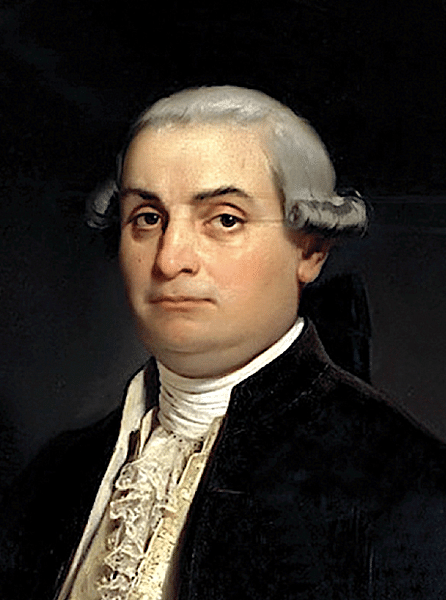 Cesare Beccaria by Sala Eliseo Sala (Public Domain) ](https://www.worldhistory.org/image/18496/cesare-beccaria-by-sala/ "Cesare Beccaria by Sala")### Bentham, Founder of Utilitarianism
Jeremy Bentham believed that certain key concepts which had become popular during [the Enlightenment](https://www.worldhistory.org/The_Enlightenment/) were wrong. These included the idea that humans had natural rights and had formed a [social contract](https://www.worldhistory.org/Social_Contract/) on how to govern themselves. Bentham described such theories involving inalienable rights as "nonsense on stilts" (Blackburn, 417). Instead, he thought that only laws created rights, an idea he presented in *A Fragment on Government*, published in 1776.
Bentham was keen to find an objective way of measuring if a law was good or not. He published *Introduction to the Principles of Morals and Legislation* in 1789 and presented his new system. He starts from the fundamental principle that the goal of governments, laws, society, and individuals is to ensure the greatest happiness of the greatest number; this, he said, is "the foundation of morals and legislation" (quoted in Law, 189). Bentham defined happiness as maximising the presence of pleasure and minimising the presence of pain. For Bentham, "Nature has placed mankind under the governance of two sovereign masters, pain and pleasure. It is for them alone to point out what we ought to do" (quoted in Law, 188). Happiness, nevertheless, is defined more broadly than mere pleasure or pain and includes spiritual well-being. Happiness also includes the idea of utility or usefulness.
Bentham's philosophy became known as utilitarianism, and the method by which pleasure and pain were measured is known as the felicific calculus. The name ‘calculus' is suggestive. The historian H. Chisick points out that here "is another instance of the aspiration, characteristic of the Enlightenment, to reduce politics to a [science](https://www.worldhistory.org/science/)" (421). Bentham believed the felicific calculus was an objective measuring tool since it measures happiness in units which can be ranked according to several criteria such as the intensity, duration, proximity, and certainty of the pleasure or pain. The pain category is easier to define and includes hunger, poverty, abuse, injustice, torture, persecution, and disease. Lawmakers should rid society of these things, or at the very least minimise them. Utilitarianism thus had, for some, three things in its favour: it had simple criteria for judging consequences, it applied to all individuals equally, and it removed [religion](https://www.worldhistory.org/religion/) from legislation.
[ 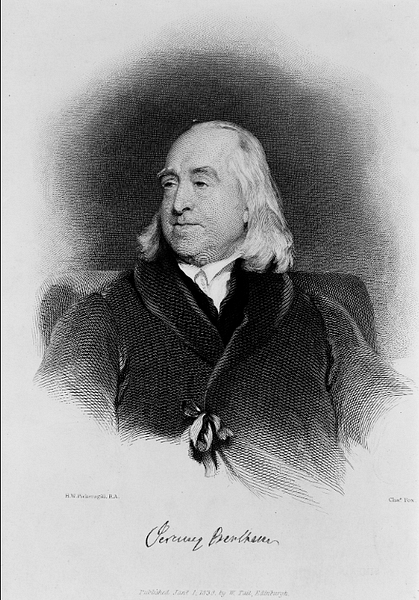 Portrait of Jeremy Bentham Wellcome Images (CC BY) ](https://www.worldhistory.org/image/18475/portrait-of-jeremy-bentham/ "Portrait of Jeremy Bentham")The implied limit of government interference of utilitarianism appealed to liberals. For Bentham, as long as citizens do not compromise the welfare of others, they should be permitted to pursue their own happiness as they see fit. As Chisick notes, "The limit of the individual's rights…stop in typically liberal fashion, at the point at which significant discomfort to others begins" (422). Every individual, then, is being credited with possessing sufficient reason, self-restraint, and consideration for others to make the right choices according to the greatest happiness principle. This is a very positive view of human nature. As a safeguard, the threat of punishment will deter wrong behaviour.
Bentham saw a government's limited role as preventing infringements of happiness, and so he was primarily concerned with the rule of law. Bentham believed that the state should guide citizens' natural instincts for happiness – both through laws and education – in such a way that the happiness of everyone (or as many people as possible) is achieved.
### Act & Rule Utilitarianism
The overall aims of utilitarianism, then, may be summarised as "the greatest good of the greatest number" in all senses. For this reason, Bentham extended the happiness principle to moral behaviour, judging that an action was right if it made more people happy than otherwise. This is often called act utilitarianism. "Act utilitarianism is distinctive not only in the stress on utility, but in the fact that each individual action is the primary object of ethical evaluation" (Blackburn, 7).
In contrast to act utilitarianism, rule (or indirect) utilitarianism considers actions which promote the greatest happiness of the greatest number from the point of view of institutions or systems of conduct or hypothetical individuals of optimal character. In this case, whatever the institution, rule, or optimal character tells us to do is the right thing to do, irrespective of how much happiness is, in fact, created. Thus, rule utilitarianism allows us to not worry about the specifics of each action but only their general impact on happiness; following the rules is the important thing, even if sometimes this approach fails to produce the greatest happiness.
[ 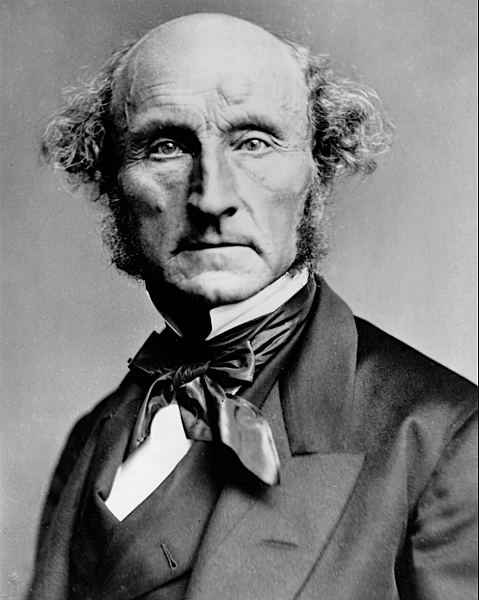 Photograph of John Stuart Mill London Stereoscopic Company (Public Domain) ](https://www.worldhistory.org/image/18482/photograph-of-john-stuart-mill/ "Photograph of John Stuart Mill")### John Stuart Mill
James Mill (1773-1836) was in a group of friends which included Bentham; they called themselves the "philosophical radicals". Mill sought to apply utilitarianism to practical politics, education, and the press. James Mill's son, John Stuart Mill, adopted the greatest happiness principle of utilitarianism in his *On Liberty* and *Utilitarianism*, published in 1859 and 1863, respectively. Mill wrote that "actions are right in proportion as they tend to promote happiness, wrong as they tend to produce the reverse of happiness" (Blackburn, 490). Mill's utilitarianism combines elements of both act and rule utilitarianism, but he favours the latter and only applies the former when two rules clash and we are left not knowing which to adopt. For example, should I steal food if this is the only way of saving a starving person? Mill would argue that in this case, I must assess my specific individual action by measuring the pleasure or pain consequences of that action (for example, the lost revenue of the shopkeeper versus the death of the person I wish to help), as Bentham would have done.
Unlike Bentham, Mill proposed that some kinds of happiness are better than others. The unfortunate consequence of this is that the felicific calculus is no longer useful, or at least much less useful. Mill (rather snobbishly perhaps) suggests that cerebral pleasures like reading [literature](https://www.worldhistory.org/literature/), feeling aesthetic emotions, and exercising the imagination have more value than physical pleasures like eating nice cakes. Mill famously stated that:
> It is better to be a human being dissatisfied than a pig satisfied; better to be a [Socrates](https://www.worldhistory.org/socrates/) dissatisfied than a fool satisfied. And if the fool, or the pig, is of a different opinion, it is because they only know their own side of the question.
> (Law, 205)
Like Bentham, Mill was deeply interested in social and political reform. In 1865, Mill was "the first person in Parliament to call for [women](https://www.worldhistory.org/disambiguation/women/) to be given the right to vote" (Law, 213). Mill called for a more tolerant and diverse society, which allowed people to pursue happiness in their own way. The only limit on freedom is that an individual's actions should not limit the freedom of others. Mill wrote:
> The only part of the conduct of any one, for which he is amenable to society, is that which concerns others. In the part which merely concerns himself, his independence is, of right, absolute. Over himself, over his own body and mind, the individual is sovereign.
> (Popkin, 86)
### [  John Stuart Mill by Watts George Frederic Watts (Public Domain) ](https://www.worldhistory.org/image/18481/john-stuart-mill-by-watts/ "John Stuart Mill by Watts")
### Criticisms of Utilitarianism
Some of the principle criticisms of utilitarianism include:
- The difficulty in defining happiness
- The difficulty in measuring happiness
- The difficulty in predicting happiness in advance
- Happiness is a private affair and no concern of governments
- The happiness of the minority is ignored
- Some things, like a right to life, are more important than happiness
- Motivations of actions are not considered, only consequences
- Some people do not care about the happiness of others
- Some people's happiness may be more important than others
- It removes religion from ethics
The first major criticism is that it is very difficult to define happiness (and even pleasure and pain). Not only is the concept rather vague, but there is the fact that the very same thing can bring some people happiness and others none, or certainly less happiness. This means that the felicific calculus is not at all objective but must be reduced to a matter of preference by the assessor. Some thinkers like Pietro Verri (1728-1797) thought that happiness does not actually exist, and it is merely the state we enjoy when there is no pain and so can never be measured.
There is the problem of conflicts of happiness between individuals and how to practically determine who is happy and who is not. There is the question of when will the happiness arrive, immediately or at some point in the future. If the latter, then how long in the future? If we must wait to see the full effects of an action, then this makes it very difficult to take a decision now. Moral principles need to tell us in advance what action to take. A utilitarian might argue, as Bentham did, that in the case of uncertain happy consequences far in the future, one should use probability, but this seems to introduce a level of subjectivity into the happiness calculus, something it was designed in the first place to avoid. Even if one were able to accurately measure happiness, some thinkers, notably Friedrich Nietzsche (1844-1900), present a view that some people's happiness is more important than others, adding yet another layer of complexity to the not-so-simple felicific calculus.
Some critics point out that there are other considerations of the human condition besides utility and happiness/pain/pleasure. [David Hume](https://www.worldhistory.org/David_Hume/) (1711-1776) was a philosopher who believed this (he thought it was, in any case, impossible to measure accurately right and wrong). In some scenarios, a sense of justice or the right to life outweighs merely numerical considerations of how many happy or unhappy people an action will create. For example, would it be right to tell a significant lie to keep someone happy? Would it be right to allow one patient to die so that their organs could then be used to save the lives of two other patients who would otherwise die without organ transplants? In both cases, the utilitarian principle would say yes, but most people would probably say no, even if they were not sure why. This feeling (as opposed to actually knowing for certain) that an action is simply wrong is felt by some philosophers, notably Bernard Williams (1929-2003), to be worthy of consideration.
[ 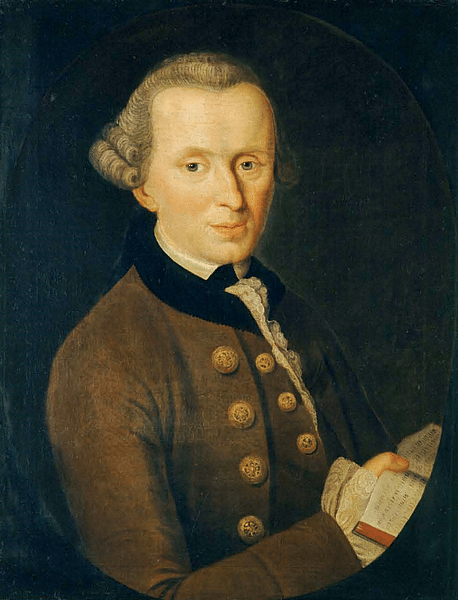 Immanuel Kant, 1768 Johann Gottlieb Becker (Public Domain) ](https://www.worldhistory.org/image/18360/immanuel-kant-1768/ "Immanuel Kant, 1768")Utilitarianism may lead to individual actions conflicting with the idea of a common good. The greatest happiness principle allows individuals to take certain actions which are not harmful to the common good provided they are the only ones to take such actions. For example, if I decide to cut directly across the corner of a park and not use the pathway, there will be no consequences for anyone. However, if everyone, or a significant number of people cut across the grass, then the grass will die, and the pleasure of a green park will be marred for everyone. Adherents of rule utilitarianism would state that this dilemma is solved by always following the rule "people should not walk across the grass". Opponents might state the reality of experience: the worn-away grass one frequently sees in parks with excessively winding pathways.
Objectives like reducing disease and poverty are noble aims, but utilitarianism does not provide clear answers on how to achieve such objectives. Even for the individual, the principle of the greatest happiness really only tells one what *not* to do but rarely lays down any *positive* rules or values to follow. Neither does the system seem to allow for completely self-interested and unscrupulous individuals who do not care at all about the majority around them.
[Immanuel Kant](https://www.worldhistory.org/Immanuel_Kant/) (1724-1804) thought happiness was not the concern of governments, but only the private concern of the individual, and so was not a proper consideration for politicians and lawmakers. Kant (and others) firmly believed that we must consider the motivation of the person carrying out an act to determine if that act is morally good or not. Concentrating on consequences ignores the fact that good people can inadvertently do bad things, and bad people can inadvertently do good things. A surgeon accidentally killing their patient in [theatre](https://www.worldhistory.org/disambiguation/theatre/) does not make the surgeon a morally bad person, just a bad surgeon. Conversely, a cyber-criminal who accidentally sends their ill-gotten gains to the bank account of a charity instead of their own would still not be considered a morally good person.
Further criticisms include the point that a law that is necessary and beneficial to society as a whole may bring unhappiness to at least some individuals. Even if successful, utilitarianism may well lead to a majority being happy, but what about the minority? Further, the minority may be a very large number of people, indeed, in any given society, strictly speaking, up to 49% of the population. What we could end up with, then, is a tyranny of the majority. Mill did recognise this effect and so was keen to limit government power and to protect the rights of minorities against such non-legislative restrictions on their behaviour as public opinion (what he calls social tyranny). Individuals must be allowed to pursue their own happiness provided they do no harm to the happiness of others. Critics might argue 'how do we know the actions of the minority may or may not be harmful to the majority?'
[  Ostraka for Themistocles Mark Cartwright (CC BY-NC-SA) ](https://www.worldhistory.org/image/3331/ostraka-for-themistocles/ "Ostraka for Themistocles")The philosopher John Rawls (1921-2002), who was primarily concerned with justice in society, noted that what might be for the good of society as a whole as defined by the greatest happiness principle may turn out to be unjust for some individuals. For example, a utilitarian would say that it would be right to imprison an innocent individual if that action deterred other criminals in the future.
Finally, Christians did not approve of utilitarianism because it removed [God](https://www.worldhistory.org/God/) and the teachings of the [Bible](https://www.worldhistory.org/bible/) from ethical decision-making. Further, a concentration on happiness in this life was far removed from the Christian idea that happiness was only truly awarded in the next life. This explains why Helvétius' *De l'esprit* was condemned by the [Paris](https://www.worldhistory.org/disambiguation/paris/) Parlement and the Archbishop of Paris and why Hutcheson was prosecuted for heresy by the Church.
### Legacy
Utilitarianism did influence criminal laws and penal codes with its idea of assessing happiness and ensuring that "punishment should be corrective and deterrent rather than vindictive" (Hampson, 156). Utilitarians called forcefully for social reforms, the rights of women, and an end to slavery. Helvétius famously stated that "not a barrel of sugar arrives in Europe that is not stained with human blood" (Hampson, 110).
Utilitarianism continued to appeal to some later philosophers. Henry Sidgwick (1838-1900) adopted utilitarianism as part of his wider philosophy. The philosopher Peter Singer (1946-) suggested that we can have few or no moral grounds for not applying the principle of the greatest happiness to animals.
The principle of the happiness of the greatest number, despite its flaws, continues to influence governing policies worldwide, as noted by S. Blackburn: "As well as an ethical theory, utilitarianism is, in effect, the view of life presupposed in most modern political and economic planning, when it is supposed that happiness is measured in economic terms" (490).
#### Editorial Review
This human-authored definition has been reviewed by our editorial team before publication to ensure accuracy, reliability and adherence to academic standards in accordance with our [editorial policy](https://www.worldhistory.org/static/editorial-policy/).
## Bibliography
- [Blackburn, Simon. *The Oxford Dictionary of Philosophy .* Oxford University Press, 2016.](https://www.worldhistory.org/books/0198735308/)
- [Chisick, Harvey. *Historical Dictionary of the Enlightenment .* Scarecrow Press, 2005.](https://www.worldhistory.org/books/0810850974/)
- [Gottlieb, Anthony. *The Dream of Enlightenment.* Liveright, 2016.](https://www.worldhistory.org/books/0871404435/)
- [Hampson, Norman. *The Enlightenment.* Penguin Books, 1991.](https://www.worldhistory.org/books/0140137459/)
- [Law, Stephen. *The Great Philosophers.* Quercus, 2009.](https://www.worldhistory.org/books/1847240186/)
- [Popkin, R H et al. *Philosophy Made Simple .* Routledge, 1993.](https://www.worldhistory.org/books/0750609427/)
- [Robertson, Ritchie. *The Enlightenment.* Harper, 2021.](https://www.worldhistory.org/books/B075WTL1X8/)
- [Yolton, John W. & Rogers, Pat & Porter, Roy & Stafford, Barbara. *A Companion to the Enlightenment .* Wiley-Blackwell, 1991.](https://www.worldhistory.org/books/0631196889/)
## About the Author
Mark is WHE’s Publishing Director and has an MA in Political Philosophy (University of York). He is a full-time researcher, writer, historian and editor. Special interests include art, architecture and discovering the ideas that all civilizations share.
## Timeline
- **1726 CE**: Francis Hutcheson coins the term "the greatest happiness of the greatest number" in his Inquiry Concerning Moral Good and Evil.
- **1748 CE - 1832 CE**: Life of the English philosopher and founder of [utilitarianism](https://www.worldhistory.org/Utilitarianism/) [Jeremy Bentham](https://www.worldhistory.org/Jeremy_Bentham/).
- **1789 CE**: [Jeremy Bentham](https://www.worldhistory.org/Jeremy_Bentham/) publishes his thoughts on [utilitarianism](https://www.worldhistory.org/Utilitarianism/) in his Introduction to the Principles of Morals and Legislation.
- **1859 CE**: [John Stuart Mill](https://www.worldhistory.org/John_Stuart_Mill/) publishes his On Liberty.
- **1863 CE**: [John Stuart Mill](https://www.worldhistory.org/John_Stuart_Mill/) publishes his [Utilitarianism](https://www.worldhistory.org/Utilitarianism/).
## Questions & Answers
### What is utilitarianism in simple terms?
Utilitarianism in simple terms is the philosophy that all laws and morally good actions should promote the greatest happiness of the greatest number.
### What are three principles of utilitarianism?
Three principles of utilitarianism are happiness is the important measure of laws and actions, all people are equal in this measurement, and laws and ethics have no connection to religious laws.
### What are the main criticisms of utilitarianism?
The main criticisms of utilitarianism are that happiness is not the only important consideration of laws and actions, that motivations are not considered, only the consequences of actions, that happiness is difficult to define and measure, and that it may lead to a tyranny of the majority.
## Cite This Work
### APA
Cartwright, M. (2024, February 19). Utilitarianism. *World History Encyclopedia*.
### Chicago
Cartwright, Mark. "Utilitarianism." *World History Encyclopedia*, February 19, 2024. .
### MLA
Cartwright, Mark. "Utilitarianism." *World History Encyclopedia*, 19 Feb 2024, .
## License & Copyright
Submitted by [Mark Cartwright](https://www.worldhistory.org/user/markzcartwright/ "User Page: Mark Cartwright"), published on 19 February 2024. The copyright holder has published this content under the following license: [Creative Commons Attribution-NonCommercial-ShareAlike](https://creativecommons.org/licenses/by-nc-sa/4.0/deed.en). This license lets others remix, tweak, and build upon this content non-commercially, as long as they credit the author and license their new creations under the identical terms. When republishing on the web a hyperlink back to the original content source URL must be included. Please note that content linked from this page may have different licensing terms.