---
title: Shogun
author: Mark Cartwright
source: https://www.worldhistory.org/Shogun/
format: machine-readable-alternate
license: Creative Commons Attribution-NonCommercial-ShareAlike (https://creativecommons.org/licenses/by-nc-sa/4.0/)
updated: 2025-11-27
---
# Shogun
_Authored by [Mark Cartwright](https://www.worldhistory.org/user/markzcartwright/)_
The shoguns of [medieval Japan](https://www.worldhistory.org/Medieval_Japan/) were military dictators who ruled the country via a feudal system where a vassal's military service and loyalty was given in return for a lord's patronage. Established as an institution by the first shogun proper, Minamoto no Yoritomo in 1192 CE, the shoguns would rule for seven centuries until the [Meiji Restoration](https://www.worldhistory.org/Meiji_Restoration/) of 1868 CE. The position of shogun was held by members of certain families which gave their names to two of the three successive shogunate governments (*bakufu*): the Ashikaga Shogunate (r. 1338-1573 CE) and Tokugawa Shogunate (r. 1603-1868 CE). In the case of the first shogunate, the capital gave its name to the government: the [Kamakura](https://www.worldhistory.org/Kamakura/) Shogunate (r. 1192-1333 CE). The other shogunates may also be referred to by their capitals: Muromachi (Ashikaga Shogunate), an area of [Heiankyo](https://www.worldhistory.org/Heiankyo/)/Kyoto, and Edo (Tokugawa Shogunate), the original name of Tokyo.
Between 1203 and 1333 CE regents ruled on behalf of shoguns who were still minors or who acted merely as puppet figureheads. A final component in this dense political web was the Japanese emperor, largely powerless and restricted to ceremonial duties in the medieval period but still able to give legitimacy to shoguns by formally bestowing them their coveted title.
#### Book Promotion
[  ](https://amzn.to/4isZ4B5 "The Forsaken 14th Century")### The Forsaken 14th Century
by World History Encyclopedia WHE's first book takes a truly global outlook and introduces readers to the different cultures that survived, thrived, and fell amid adversity in the 14th century. Filled with in-depth text written by WHE authors, many exclusive maps, and plenty of illustrations, The Forsaken 14th Century takes you on a global journey from the nomads of the Mongol Empire to the Black Death in Europe, the booming trade on the Swahili Coast to the Aztecs and the Māori settlements in New Zealand. [Learn More](https://amzn.to/4isZ4B5)
.sponsor.book img.key_art {
box-shadow: none !important;
}
.button_container {
margin-top: 1em;
}
.sponsor.book h3 {
text-transform: none;
margin-top: 0px;
margin-bottom: 15px;
font-family: "Libre Baskerville", "Palatino Linotype", "Book Antiqua", Palatino, serif;
}
.sponsor_message {
margin-left: 190px;
font-family: Karla, Arial, Helvetica, sans-serif;
line-height: 140%;
min-height: 200px;
}
.sponsor.book {
padding: 20px;
margin: 25px 0px;
background-color: #f3f3f3;
}
.sponsor.book .key_art {
margin-top: 0px;
margin-bottom: 10px;
float: left;
}
.sponsor h4 {
font-weight: bold;
text-transform: uppercase;
color: #000;
margin-bottom: 10px;
margin-top: 0px;
font-family: Karla,Arial,Helvetica,sans-serif;
font-size: 13px;
padding: 0;
}
.sponsor_book_author {
color: #999;
margin: -10px 0px 20px;
}
@media (max-width: 1199px) {
.sponsor.book .key_art {
float: none;
width: 100%;
}
.sponsor.book .sponsor_message {
margin-left: 0px;
}
.sponsor.book h3 {
margin-top: 20px;
margin-bottom: 10px;
}
}
@media (max-width: 767px) {
}
### The First Shogun: Minamoto no Yoritomo
The [Genpei War](https://www.worldhistory.org/Genpei_War/) (1180-1185 CE) saw the victory of the [Minamoto clan](https://www.worldhistory.org/Minamoto_Clan/) over the Taira, and the leader of the former was Minamoto no Yoritomo, who thus became the most powerful military leader in [Japan](https://www.worldhistory.org/disambiguation/Japan/). Yoritomo made himself the first shogun, in effect military dictator, of Japan, a position he would hold from 1192 CE to 1199 CE. He would, therefore, be the first shogun of the Kamakura Shogunate.
The position of shogun was the first to offer an alternative system of government to that of the Japanese imperial court. The title of shogun or 'military protector' had been used before (*seii tai shogun*) but had only been a temporary title for military commanders on campaign against the Ezo/Emishi (Ainu) in the still-disputed territory in the north of Japan during the 8th century CE. In that context, the title shogun translated as 'barbarian-subduing generalissimo.' The title of shogun was actually first resurrected by Yoritomo's cousin, Minamoto Yoshinaka (1154-1184 CE), who commanded the clan's forces in Heiankyo in 1183 CE, although he did not receive it from the emperor, as was the tradition.
Yoritomo was able to hold the title of shogun with its new wider meaning thanks to his agreement with the young Emperor Go-Toba (r. 1183-1198 CE) who bestowed it in return for Yoritomo's military protection. Technically, the emperor was above the shogun, but in practice, it was the reverse as whoever had control of the army also controlled the state. The emperors did maintain a ceremonial function, and their endorsement was still sought by shoguns to give a veneer of legitimacy to their own rule. Indeed, the fact that the emperor gave the title bestowed upon the shogun his status as 'protector of the nation', a very useful idea which meant he could use anyone and any means for any purpose he saw fit. Emperors could delay a shogun's appointment but not indefinitely. It was also the case that the title of shogun at this stage in Japan's history was not as prestigious as it would become in the 13th century CE, a fact illustrated by Yoritomo's desire to acquire many other traditional court ranks besides, notably *udaisho* (Captain of the Right Division of the Inner [Palace](https://www.worldhistory.org/disambiguation/palace/) Guards).
[ 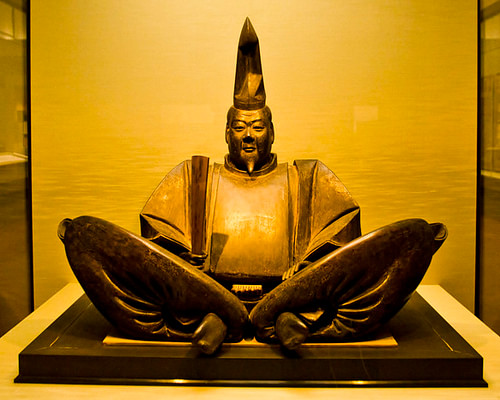 Minamoto no Yoritomo Statue Jack Zalium (CC BY-NC-SA) ](https://www.worldhistory.org/image/6758/minamoto-no-yoritomo-statue/ "Minamoto no Yoritomo Statue")Yoritomo was succeeded as shogun by his eldest son Minamoto no Yorie (r. 1202-1203 CE), but only after a power struggle. When Yoritomo died, his wife, Hojo Masako (1157-1225 CE), and her father, Hojo Tokimasa, had decided to rule themselves, and so they created the position of shogunal regent (*shikken*) and promoted the interests of the Hojo clan. In this arrangement, much copied throughout the [Kamakura Period](https://www.worldhistory.org/Kamakura_Period/) (1185-1333 CE), the regent shogun had the real power and the shogun was a mere puppet, each one picked by the Hojo. It also allowed a regent to bypass the requirement that a shogun had to come from the warrior class and so achieve a position of power otherwise unavailable to them.
The lack of any written description concerning the precise role of the shogun and the absence of any legal definition now meant that the role was easily manipulated by a long line of regents - 16 from 1203 to 1333 CE - to fit their own purposes; it was not the shogun who ruled Japan but the shogunate government. This situation would not change until the establishment of the Ashikaga Shogunate in 1338 CE when regents became a thing of the past and the shogun once more was the real leader of the country. Even then, though, a government apparatus was in place which shared out power to prominent members of Japan's military class.
### Shogunate Government
The shogunate government, also known as *bakufu*, which means 'tent government' in reference to its origins as a title held by a commander in the field, was based on the feudal relationship between lord and vassal. At the top of the social and political pile was the shogun or regent shogun who distributed land to loyal followers in return for their military service (both personal and of their individual private armies of [samurai](https://www.worldhistory.org/Samurai/)).
[  Major Temples and Shrines of Japan circa 1200 CE, Kamakura Shogunate Stone Chen (CC BY-ND) ](https://www.worldhistory.org/image/6470/major-temples-and-shrines-of-japan-circa-1200-ce-k/ "Major Temples and Shrines of Japan circa 1200 CE, Kamakura Shogunate")The shogun was assisted in the practicalities of government by various ministers, officials, and institutions. Many of these were added to the government apparatus over time as it became ever more complex. Foremost amongst these was the deputy shogun (*kanrei*), usually a position held on a rotation basis by a member of one of three families: the Shiba, Hosokawa, and Hatakeyama. The role was created from 1333 CE, and a key function was to act as a liaison between the shogun and regional military governors and their deputies.
In 1180 CE the Samurai-dokor (Board of Retainers) was formed, which supervised vassal warriors (*gokenin*) and dished out disciplinary measures for any misdemeanours. Later, it would also supervise government agents in the provinces, the shogunate's own property, and the security of Heiankyo. The imperial court at the capital was supervised by the Kyoto *shugo* or military governor, a position replaced by the Rokuhara deputy from 1221 CE. Potential trouble spots far from the capital and government headquarters such as Kyushu and Oshu each had their own special commissioners.
In 1184 CE the Kumonjo (Public Documents Office) was established. This was then renamed and widened in function as the Mandokoro (Administrative Board) in 1191 CE as it became the main executive and administration centre of the government. Later still, it would be given charge of the state treasury. Also in 1184 CE, the Monchujo (Board of Inquiry) was set up which looked after all legal matters including lawsuits, appeals, disputes over land rights and loans.
A new position, a vice-regent to the shogun (*rensho*) was created in 1225 CE, and official documents then required both his and the regent shogun's signature. Also in 1225 CE, the Hyojoshu (Council of State) was formed, which had as its members the top officials, warriors, and scholars of the moment. They voted on issues with a simple majority winning the day. In 1232 CE a new [law](https://www.worldhistory.org/disambiguation/law/) code was established, the Joei Code (*Joei shikimoku*), which had 51 articles and established who owned what land, defined the relationship between lords, vassals, and samurai, limited the role of the emperor, and established the taking of legal decisions based on precedence. Finally, in 1249 CE a High Court, the Hikitsukeshu, was formed which was especially concerned with any disputes related to land and taxes.
[ 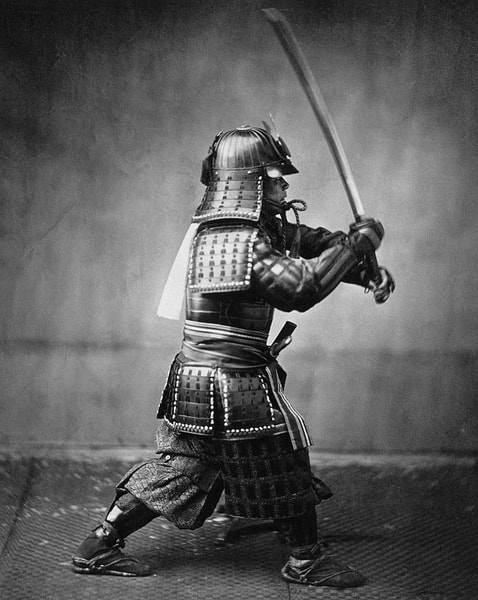 Samurai Felice Beato (Public Domain) ](https://www.worldhistory.org/image/6479/samurai/ "Samurai")To ensure the shogunate's rule extended to all territories, two important local offices were created: *shugo* and *jito*. A *shugo* was a military governor of a province with policing duties (hence he is often called a constable) while a *jito* was responsible for collecting taxes from private estates (and so is sometimes called a steward). Over time both positions would evolve and become hereditary; many of the *daimyo*, the powerful feudal lords of medieval Japan, had ancestors who had performed these duties. Some *daimyo* would control such vast estates that they were, in effect, princedoms, and these men would seriously challenge the power of the shogunate government.
### Patrons of the Arts
While the imperial court was based at Heiankyo during the medieval period, the shogun's government changed location depending on his choice of [city](https://www.worldhistory.org/city/). Kamakura was the seat of the shogunate from 1192 to 1333 CE, while the Ashikaga Shogunate was based in the Muromachi area of Heiankyo, and the Tokugawa Shogunate in Edo. These moves brought cultural as well as political consequences because shoguns wished to beautify their new capital. Consequently, fine palaces, temples, and new art schools sprang up. Many shoguns, especially when they retired from public office, became great patrons of the arts, commissioning painters and sculptors, sponsoring performances of [Noh theatre](https://www.worldhistory.org/Noh_Theatre/), and perpetuating the aristocratic fashion for the [Japanese Tea Ceremony](https://www.worldhistory.org/Japanese_Tea_Ceremony/).
The shogun Ashikaga Yoshimitsu (r. 1368-1394/5 CE) built the famous [Kinkakuji](https://www.worldhistory.org/Kinkakuji/) or 'The [Temple](https://www.worldhistory.org/temple/) of the Golden Pavilion' in 1397 CE, originally as his rather gaudy retirement home, but it was later converted to a Zen [Buddhist](https://www.worldhistory.org/buddhism/) temple. Another addition to Kyoto's palaces that followed the same pattern of use was made by Ashikaga Yoshimasa (r. 1449-1474 CE) who built the [Ginkakuji](https://www.worldhistory.org/Ginkakuji/) or 'The Serene Temple of the [Silver](https://www.worldhistory.org/Silver/) Pavilion', completed in 1483 CE. Another surviving architectural gem from Japan's medieval past is Kyoto's [Nijo castle](https://www.worldhistory.org/Nijo_Castle/), built by the shogun [Tokugawa Ieyasu](https://www.worldhistory.org/Tokugawa_Ieyasu/) from 1603 CE. Shoguns were not averse to a bit of restoration work either, frequently ploughing money into temple sites, especially after the many fires that burnt so many down over the centuries. [Tokugawa Iemitsu](https://www.worldhistory.org/Tokugawa_Iemitsu/) (r. 1623-1651 CE), for example, fully restored Kyoto's celebrated Buddhist temple [Kiyomizu-dera](https://www.worldhistory.org/Kiyomizu-dera/) in 1633 CE and even added a new pagoda for good measure.
[  Kinkakuji Temple in Kyoto, Japan James Blake Wiener (CC BY-NC-SA) ](https://www.worldhistory.org/image/7883/kinkakuji-temple-in-kyoto-japan/ "Kinkakuji Temple in Kyoto, Japan")### Challenges & Decline
There were occasional challenges to the shoguns such as the attempted coup by Emperor Go-Toba in 1221 CE - the so-called Jokyu Disturbance which ended in the emperor's exile. Another unsuccessful imperial challenge was the Kenmu Restoration (1333-1336 CE) of Emperor Go-Daigo (r. 1318-1339 CE) which only replaced one shogunate with another. There were threats from abroad, too. The [Mongol](https://www.worldhistory.org/Mongol_Empire/) leader [Kublai Khan](https://www.worldhistory.org/Kublai_Khan/) (r. 1260-1294 CE) decided to invade Japan in 1274 and 1281 CE, but both times Japanese resistance and typhoon storms combined to save the country.
The next major challenge to shogunate authority was again internal. The Onin [War](https://www.worldhistory.org/disambiguation/War/) (1467-1477 CE) was a civil war between rival warlords and it brought much [death](https://www.worldhistory.org/disambiguation/Death/) and destruction, especially at Heiankyo. There then followed a century of bitter fighting and unrest, the so-called [Sengoku Period](https://www.worldhistory.org/Sengoku_Period/) or [Warring States Period](https://www.worldhistory.org/Warring_States_Period/) (1467-1568 CE). This turmoil finally ended with the rise of the warlord [Oda Nobunaga](https://www.worldhistory.org/Oda_Nobunaga/) (l. 1534-1582 CE). Oda Nobunaga had expanded his territory gradually through the 1550/60s CE from his base at Nagoya Castle as he defeated all comers. He finally seized Heiankyo in 1568 CE and then exiled the last Ashikaga shogun, Ashikaga Yoshiaki, in 1573 CE.
Nobunaga's takeover heralded the [Azuchi-Momoyama Period](https://www.worldhistory.org/Azuchi-Momoyama_Period/) (1568/73 - 1600 CE) and his two immediate successors, also powerful warlords, would likewise sideline the shoguns to the very backseat of Japanese politics. These successors were [Toyotomi Hideyoshi](https://www.worldhistory.org/Toyotomi_Hideyoshi/) (r. 1582-1598 CE) and Tokugawa Ieyasu (r. 1603-1605 CE) and the trio are considered the great unifiers of Japan, finally forging the single state that entered the pre-modern era. The Tokugawa Shogunate based at Edo would rule from 1603 CE and continue until January 1868 CE. Then, after years of ineffectual government and failure to meet the threat of foreign powers like Great [Britain](https://www.worldhistory.org/disambiguation/Britain/) and the United States, the Meiji Restoration finally abolished the position of shogun and restored full powers to the emperors.
This content was made possible with generous support from the [Great Britain Sasakawa Foundation](http://www.gbsf.org.uk/?utm_source=ancient.eu&utm_medium=link&utm_campaign=ancient.eu).
#### Editorial Review
This human-authored definition has been reviewed by our editorial team before publication to ensure accuracy, reliability and adherence to academic standards in accordance with our [editorial policy](https://www.worldhistory.org/static/editorial-policy/).
## Bibliography
- [Beasley, W.G. *The Japanese Experience.* University of California Press, 2000.](https://www.worldhistory.org/books/0520225600/)
- [Deal, W.E. *Handbook to Life in Medieval and Early Modern Japan.* Oxford University Press, 2007.](https://www.worldhistory.org/books/0195331265/)
- [Ebrey, P.B. *Pre-Modern East Asia.* Cengage Learning, 2013.](https://www.worldhistory.org/books/1133606512/)
- [Henshall, K. *Historical Dictionary of Japan to 1945.* Scarecrow Press, 2013.](https://www.worldhistory.org/books/0810878712/)
- [Huffman, J.L. *Japan in World History.* Oxford University Press, 2010.](https://www.worldhistory.org/books/0195368088/)
- [Mason, R.H.P. *A History of Japan.* Tuttle Publishing, 1997.](https://www.worldhistory.org/books/080482097X/)
- Spafford, D. "Emperor and Shogun, Pope and King: The Development of Japan's Warrior Aristocracy." *Bulletin of the Detroit Institute of Arts*, Vol. 88, No. 1/4, (2014), pp. 10-19.
- [Yamamura, K. (ed). *The Cambridge History of Japan, Vol. 3.* Cambridge University Press, 2001.](https://www.worldhistory.org/books/0521223547/)
## About the Author
Mark is WHE’s Publishing Director and has an MA in Political Philosophy (University of York). He is a full-time researcher, writer, historian and editor. Special interests include art, architecture and discovering the ideas that all civilizations share.
## Timeline
- **1147 CE - 1199 CE**: Life of Minamoto no Yoritomo, clan leader of the Minamoto and first [shogun](https://www.worldhistory.org/Shogun/) of [Japan](https://www.worldhistory.org/disambiguation/Japan/).
- **1192 CE - 1199 CE**: Minamoto no Yoritomo is [shogun](https://www.worldhistory.org/Shogun/) in [Japan](https://www.worldhistory.org/disambiguation/Japan/).
- **1192 CE - 1333 CE**: The [Kamakura](https://www.worldhistory.org/Kamakura/) Shogunate rules [Japan](https://www.worldhistory.org/disambiguation/Japan/).
- **1202 CE - 1203 CE**: Minamoto no Yorie is [shogun](https://www.worldhistory.org/Shogun/) of [Japan](https://www.worldhistory.org/disambiguation/Japan/).
- **1203 CE - 1205 CE**: Hojo Tokimasa acts as regent to [Japan](https://www.worldhistory.org/disambiguation/Japan/)'s [shogun](https://www.worldhistory.org/Shogun/), the first of 16 such regents
- **1203 CE - 1219 CE**: Minamoto no Sanetomo is [shogun](https://www.worldhistory.org/Shogun/) of [Japan](https://www.worldhistory.org/disambiguation/Japan/).
- **1221 CE**: The Jokyu Disturbance - [Japan](https://www.worldhistory.org/disambiguation/Japan/)'s emperor Go-Toba launches a failed coup against the [Kamakura](https://www.worldhistory.org/Kamakura/) Shogunate.
- **1225 CE**: The position of vice-regent to the [shogun](https://www.worldhistory.org/Shogun/) (rensho) is created in [Japan](https://www.worldhistory.org/disambiguation/Japan/).
- **1327 CE - 1333 CE**: Hojo Moritoki reigns as [shogun](https://www.worldhistory.org/Shogun/) in [Japan](https://www.worldhistory.org/disambiguation/Japan/), the last of the [Kamakura](https://www.worldhistory.org/Kamakura/) Shogunate.
- **c. 1333 CE**: Nitta Yoshisada attacks and destroys [Kamakura](https://www.worldhistory.org/Kamakura/), capital of [Japan](https://www.worldhistory.org/disambiguation/Japan/)'s Kamakura Shogunate.
- **1333 CE**: The position of deputy [shogun](https://www.worldhistory.org/Shogun/) (kanrei) is created in [Japan](https://www.worldhistory.org/disambiguation/Japan/).
- **1333 CE - 1336 CE**: The Kenmu Restoration when the Japanese emperor Go-Daigo uses rebel warlords to oust the [Kamakura](https://www.worldhistory.org/Kamakura/) Shogunate.
- **1338 CE**: Ashikaga Takauji becomes the new [shogun](https://www.worldhistory.org/Shogun/) in [Japan](https://www.worldhistory.org/disambiguation/Japan/), it is the beginning of the Ashikaga (Muromachi) Shogunate.
- **1338 CE - 1358 CE**: Ashikaga Takauji rules as [shogun](https://www.worldhistory.org/Shogun/) in [Japan](https://www.worldhistory.org/disambiguation/Japan/).
- **1338 CE - 1573 CE**: The Ashikaga (Muromachi) Shogunate rules [Japan](https://www.worldhistory.org/disambiguation/Japan/).
- **1350 CE - 1352 CE**: [Japan](https://www.worldhistory.org/disambiguation/Japan/)'s [shogun](https://www.worldhistory.org/Shogun/) Ashikaga Takauji battles his brother Tadayoshi.
- **1359 CE - 1368 CE**: Ashikaga Yoshiakira rules as [shogun](https://www.worldhistory.org/Shogun/) in [Japan](https://www.worldhistory.org/disambiguation/Japan/).
- **1368 CE - c. 1394 CE**: Ashikaga Yoshimitsu rules as [shogun](https://www.worldhistory.org/Shogun/) in [Japan](https://www.worldhistory.org/disambiguation/Japan/).
- **1395 CE - 1423 CE**: Ashikaga Yoshimochi rules as [shogun](https://www.worldhistory.org/Shogun/) in [Japan](https://www.worldhistory.org/disambiguation/Japan/).
- **1397 CE**: The [Kinkakuji](https://www.worldhistory.org/Kinkakuji/) or 'Golden Pavilion' is built in [Heiankyo](https://www.worldhistory.org/Heiankyo/) (Kyoto) by the [shogun](https://www.worldhistory.org/Shogun/) Ashikaga Yoshimitsu.
- **1423 CE - 1425 CE**: Ashikaga Yoshikazu rules as [shogun](https://www.worldhistory.org/Shogun/) in [Japan](https://www.worldhistory.org/disambiguation/Japan/).
- **1429 CE - 1441 CE**: Ashikaga Yoshinori rules as [shogun](https://www.worldhistory.org/Shogun/) in [Japan](https://www.worldhistory.org/disambiguation/Japan/).
- **1442 CE - 1443 CE**: Ashikaga Yoshikatsu rules as [shogun](https://www.worldhistory.org/Shogun/) in [Japan](https://www.worldhistory.org/disambiguation/Japan/).
- **1449 CE - 1474 CE**: Ashikaga Yoshimasa rules as [shogun](https://www.worldhistory.org/Shogun/) in [Japan](https://www.worldhistory.org/disambiguation/Japan/).
- **1460 CE - 1483 CE**: [Ginkakuji](https://www.worldhistory.org/Ginkakuji/) [Temple](https://www.worldhistory.org/temple/) ([Silver](https://www.worldhistory.org/Silver/) Pavilion) is built in [Heiankyo](https://www.worldhistory.org/Heiankyo/) (Kytoto) [Japan](https://www.worldhistory.org/disambiguation/Japan/) by Ashikaga Yoshimasa.
- **1467 CE - 1477 CE**: The Onin [War](https://www.worldhistory.org/disambiguation/War/) between rival warlords rages in [Japan](https://www.worldhistory.org/disambiguation/Japan/).
- **1467 CE - 1568 CE**: The [Sengoku Period](https://www.worldhistory.org/Sengoku_Period/) or [Warring States Period](https://www.worldhistory.org/Warring_States_Period/) in [Japan](https://www.worldhistory.org/disambiguation/Japan/).
- **1474 CE - 1489 CE**: Ashikaga Yoshihisa rules as [shogun](https://www.worldhistory.org/Shogun/) in [Japan](https://www.worldhistory.org/disambiguation/Japan/).
- **1490 CE - 1493 CE**: Ashikaga Yoshitane rules in his first spell as [shogun](https://www.worldhistory.org/Shogun/) of [Japan](https://www.worldhistory.org/disambiguation/Japan/).
- **1494 CE - 1508 CE**: Ashikaga Yoshizumi rules as [shogun](https://www.worldhistory.org/Shogun/) in [Japan](https://www.worldhistory.org/disambiguation/Japan/).
- **1508 CE - 1521 CE**: Ashikaga Yoshitane rules in his second spell as [shogun](https://www.worldhistory.org/Shogun/) of [Japan](https://www.worldhistory.org/disambiguation/Japan/).
- **1521 CE - 1546 CE**: Ashikaga Yoshiharu rules as [shogun](https://www.worldhistory.org/Shogun/) in [Japan](https://www.worldhistory.org/disambiguation/Japan/).
- **1546 CE - 1565 CE**: Ashikaga Yoshiteru rules as [shogun](https://www.worldhistory.org/Shogun/) in [Japan](https://www.worldhistory.org/disambiguation/Japan/).
- **1568 CE**: Ashikaga Yoshihide rules as [shogun](https://www.worldhistory.org/Shogun/) in [Japan](https://www.worldhistory.org/disambiguation/Japan/).
- **1568 CE - 1588 CE**: Ashikaga Yoshiaki rules as [shogun](https://www.worldhistory.org/Shogun/) in [Japan](https://www.worldhistory.org/disambiguation/Japan/) (but is exiled by [Oda Nobunaga](https://www.worldhistory.org/Oda_Nobunaga/) from 1573 CE).
- **1573 CE**: [Oda Nobunaga](https://www.worldhistory.org/Oda_Nobunaga/) exiles the last Ashikaga [shogun](https://www.worldhistory.org/Shogun/), Yoshiaki.
- **1600 CE**: [Tokugawa Ieyasu](https://www.worldhistory.org/Tokugawa_Ieyasu/) wins the [Battle](https://www.worldhistory.org/disambiguation/battle/) of Sekigahara against those generals who supported [Toyotomi Hideyoshi](https://www.worldhistory.org/Toyotomi_Hideyoshi/)'s son. End of the [Azuchi-Momoyama Period](https://www.worldhistory.org/Azuchi-Momoyama_Period/).
- **1603 CE - 1605 CE**: [Tokugawa Ieyasu](https://www.worldhistory.org/Tokugawa_Ieyasu/) rules as [shogun](https://www.worldhistory.org/Shogun/) in [Japan](https://www.worldhistory.org/disambiguation/Japan/).
- **1603 CE - 1868 CE**: [Edo period](https://www.worldhistory.org/Edo_Period/). The Tokugawa Shogunate rules [Japan](https://www.worldhistory.org/disambiguation/Japan/).
- **1868 CE**: The [Meiji Restoration](https://www.worldhistory.org/Meiji_Restoration/) eliminates the position of [shogun](https://www.worldhistory.org/Shogun/) in [Japan](https://www.worldhistory.org/disambiguation/Japan/), Edo is renamed Tokyo, and [Edo Castle](https://www.worldhistory.org/Edo_Castle/) becomes the Imperial [Palace](https://www.worldhistory.org/disambiguation/palace/).
## Questions & Answers
### What does shogun mean?
The Japanese title Shogun means 'military protector' and derives from the ancient title 'seii tai shogun'.
### Is a shogun a samurai?
No, a shogun was a military leader, a samurai was a general class of warrior who performed military service like a medieval knight in Europe.
### What happened to retired shoguns?
Retired shoguns often lived a quiet life on their country estate but many did become important sponsors of artists and funded the building of temples and shrines.
Retired shoguns also sponsored performances of Noh theatre and the Japanese Tea Ceremony.
## Cite This Work
### APA
Cartwright, M. (2019, July 03). Shogun. *World History Encyclopedia*.
### Chicago
Cartwright, Mark. "Shogun." *World History Encyclopedia*, July 03, 2019. .
### MLA
Cartwright, Mark. "Shogun." *World History Encyclopedia*, 03 Jul 2019, .
## License & Copyright
Submitted by [Mark Cartwright](https://www.worldhistory.org/user/markzcartwright/ "User Page: Mark Cartwright"), published on 03 July 2019. The copyright holder has published this content under the following license: [Creative Commons Attribution-NonCommercial-ShareAlike](https://creativecommons.org/licenses/by-nc-sa/4.0/deed.en). This license lets others remix, tweak, and build upon this content non-commercially, as long as they credit the author and license their new creations under the identical terms. When republishing on the web a hyperlink back to the original content source URL must be included. Please note that content linked from this page may have different licensing terms.