---
title: Seven Days Battles: How Granny Lee Became Robert E. Lee
author: Joshua J. Mark
source: https://www.worldhistory.org/Seven_Days_Battles/
format: machine-readable-alternate
license: Creative Commons Attribution-NonCommercial-ShareAlike (https://creativecommons.org/licenses/by-nc-sa/4.0/)
updated: 2026-11-24
---
# Seven Days Battles: How Granny Lee Became Robert E. Lee
_Authored by [Joshua J. Mark](https://www.worldhistory.org/user/JPryst/)_
The Seven Days Battles (25 June-1 July 1862) were a series of engagements during the [American Civil War](https://www.worldhistory.org/American_Civil_War/) fought between Confederate General [Robert E. Lee](https://www.worldhistory.org/Robert_E._Lee/) and Union Major General [George B. McClellan](https://www.worldhistory.org/George_B._McClellan/), ending the [Peninsula Campaign](https://www.worldhistory.org/Peninsula_Campaign/) (17 March to 1 July 1862), which McClellan had led in the hope of taking Richmond, Virginia, the Confederate capital. These battles were:
- [Battle](https://www.worldhistory.org/disambiguation/battle/) of Oak Grove (25 June 1862)
- Battle of Beaver Dam Creek (Battle of Mechanicsville, 26 June 1862)
- Battle of Gaines' Mill (Battle of First Cold Harbor, Battle of the Chickahominy River, 27 June 1862)
- Battle of Garnett's and Golding's Farms (27-28 June 1862)
- Battle of Savage's Station (29 June 1862)
- Battle of Glendale (Battle of Frayser's Farm, 30 June 1862)
- Battle of Malvern Hill (1 July 1862)
Of these seven, only Gaines' Mill was a Confederate tactical victory – the rest were either inconclusive or Union victories – but Lee's aggressive campaign convinced McClellan he was hopelessly outnumbered and taking Richmond was impossible. He began his retreat after the Battle of Garnett's and Golding's Farms.
McClellan was not really defeated by Lee; McClellan was defeated by his own fear of failure and then blamed others for his mistakes. Conversely, Lee, who, at the beginning of the Seven Days Battles, suffered from a poor reputation owing to his earlier failings, learned from his past mistakes, saved Richmond, and established himself as the "Savior of the South."
### Lee in 1861
McClellan had made a name for himself by winning the first two Union victories of the Civil [War](https://www.worldhistory.org/disambiguation/War/) in western Virginia: the [Battle of Philippi (Philippi Races)](https://www.worldhistory.org/Battle_of_Philippi_(Philippi_Races)/) on 3 June 1861 and the [Battle of Rich Mountain](https://www.worldhistory.org/article/2955/battle-of-rich-mountain/) (11 July 1861). After Union forces were defeated at the [First Battle of Bull Run (First Manassas)](https://www.worldhistory.org/First_Battle_of_Bull_Run_(First_Manassas)/) on 21 July 1861, McClellan was called to Washington, D.C. to take command of the army and left Brigadier General William Rosecrans to hold western Virginia.
Lee arrived in the region at the end of July and planned an intricate three-pronged attack, the Battle of Cheat Mountain (12-15 September 1861), which, if successful, would dislodge Rosecrans. Lee's plan was too complicated for inexperienced troops, however, and he had little support from his subordinate commanders.
Heavy rain turned the mountain paths to mud and a thick fog obscured visibility. Lee, unsure how to proceed, hesitated, and then called off the attack after accepting false information that the Union force was larger than it really was.
The Union Army held their positions, and Lee, disgraced, was recalled to Richmond and then sent to oversee construction of fortifications in the Carolinas and Georgia. The Southern press mocked him with the nickname "Granny Lee" for his timidity, and his career in the Confederate Army was off to a very poor start.
### Peninsula Campaign & Seven Pines
Lee was again recalled to Richmond in March 1862 to serve as military advisor to Confederate President [Jefferson Davis](https://www.worldhistory.org/Jefferson_Davis/), and that same month, McClellan launched his Peninsula Campaign. US President [Abraham Lincoln](https://www.worldhistory.org/Abraham_Lincoln/) had expected McClellan to move rapidly up the peninsula, take Richmond and, hopefully, end the war.
McClellan, fooled by the theatrics of Confederate General Magruder at Yorktown, believed he was vastly outnumbered and settled in for a siege, which allowed [Joseph E. Johnston](https://www.worldhistory.org/Joseph_E._Johnston/) to reinforce Magruder. What then followed was a series of battles up the peninsula in which, initially, McClellan tried to catch Johnston before the latter could reach Richmond.
[ 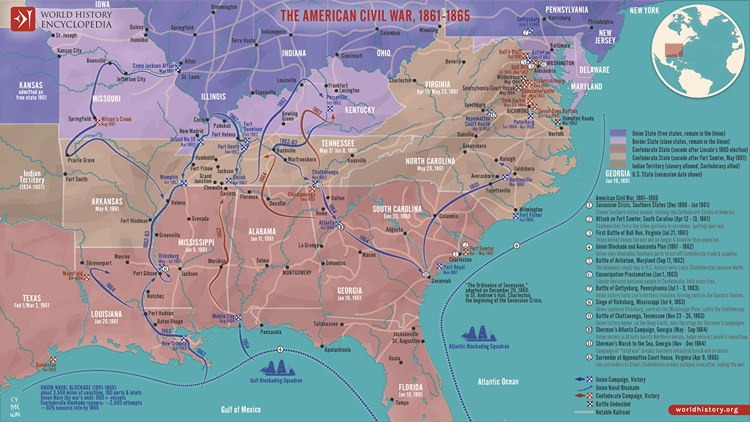 Map of the American Civil War, 1861-1865 Simeon Netchev (CC BY-NC-ND) ](https://www.worldhistory.org/image/21119/map-of-the-american-civil-war-1861-1865/ "Map of the American Civil War, 1861-1865")McClellan failed at this, and Johnston, having reached Richmond, launched an attack on McClellan's divided forces on the Chickahominy River at the Battle of Seven Pines (31 May-1 June 1862). Johnston was severely wounded in the battle on 1 June and was at first replaced by Major General G. W. Smith – until Smith was replaced by Robert E. Lee later the same day.
### Lee's Preparations for the Seven Days
Richmond's reaction to Lee's appointment was overwhelmingly negative. Lee's last field command had been a complete failure, and Richmond newspapers revived the "Granny Lee" nickname quickly. The overwhelming majority believed Davis had made a mistake in appointing Lee to command, and their conviction was only strengthened when, instead of mobilizing the army, he armed the men with shovels and set them to digging defensive entrenchments around the [city](https://www.worldhistory.org/city/). This earned Lee a new nickname: "The King of Spades."
The massive Union Army was only 4 miles (6.4 km) from Richmond, so close that people in the city could hear the bugle calls and smell the campfires, and yet Lee seemed to be doing nothing but organizing work details to dig trenches. Lee allowed himself to be mocked by the people and the press because he knew something they did not: that McClellan's reputation had not been earned.
Lee, as military advisor to Davis at the time of the Battle of [Philippi](https://www.worldhistory.org/Philippi/) (Philippi Races) and the Battle of Rich Mountain, had received the official action reports from the generals. He knew that Philippi had been won by Brigadier General Thomas A. Morris and Rich Mountain by Rosecrans. McClellan had nothing to do with either victory.
[ 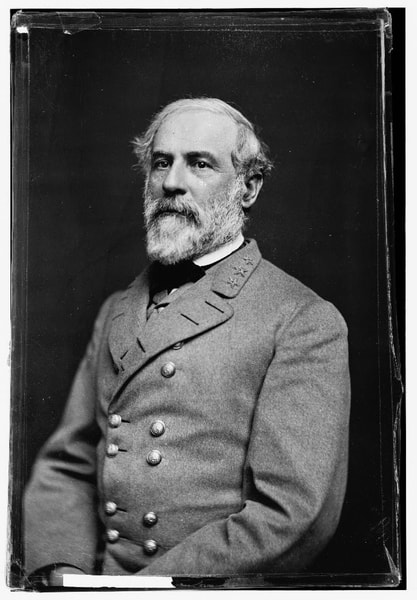 Robert E. Lee Julian Vannerson (Public Domain) ](https://www.worldhistory.org/image/20755/robert-e-lee/ "Robert E. Lee")Lee also understood, based on McClellan's slow advance up the peninsula and the [Siege of Yorktown](https://www.worldhistory.org/article/2532/siege-of-yorktown/), that he was overly cautious and would not attack Richmond, believing he was outnumbered. Lee seized on McClellan's fear by having troops march around the city, as Magruder had done at Yorktown, creating the impression he was receiving daily reinforcements, and used the ploy of "Quaker Guns" – logs painted black and placed in cannon positions – to give the impression of a heavily fortified position.
Lee had learned from his experience at Cheat Mountain and was not about to hesitate when the time came to attack. He knew, however, that he was outnumbered and, in order to free up as many soldiers as possible, he needed the defensive line of entrenchments so that fewer soldiers would be needed to defend the city. A few well-entrenched troops, he knew, could hold off a much larger number.
McClellan, meanwhile, freely obliged Lee in his preparations for almost a month, claiming the Chickahominy River was too high for his troops to cross and sending messages to Lincoln that Richmond would be taken as soon as its levels fell. While McClellan waited, General [Stonewall Jackson](https://www.worldhistory.org/Stonewall_Jackson/) won the Battle of Cross Keys (8 June 1862) and the Battle of Port Republic (9 June 1862), in the Shenandoah Valley, securing the region for the Confederacy and allowing Jackson to reinforce Lee at Richmond.
### Seven Days Battles
Lee, after reorganizing the troops into the [Army of Northern Virginia](https://www.worldhistory.org/Army_of_Northern_Virginia/), now only needed to know how McClellan's army was positioned and, especially, if his right flank was vulnerable. He ordered Brigadier General [J. E. B. Stuart](https://www.worldhistory.org/J._E._B._Stuart/) to reconnoiter and report back.
This became [Stuart's Ride Around McClellan](https://www.worldhistory.org/article/3024/stuarts-ride-around-mcclellan/) (12-15 June 1862), during which Stuart humiliated McClellan by making a complete circuit of his position and returning with the intelligence Lee required.
[  J. E. B. Stuart's Ride Around McClellan, June 1862 Henry Alexander Ogden (Public Domain) ](https://www.worldhistory.org/image/20527/j-e-b-stuarts-ride-around-mcclellan-june-1862/ "J. E. B. Stuart's Ride Around McClellan, June 1862")Lee understood he had no hope against the entire Army of the Potomac but could defeat McClellan piecemeal by striking at certain positions. He knew that McClellan's force was divided across the Chickahominy with most of the army south of the river and unable to reinforce the V Corps under Brigadier General Fitz John Porter to the north.
He planned for Jackson to attack Porter on the morning of 26 June with support from [A. P. Hill](https://www.worldhistory.org/A._P._Hill/), D. H. Hill, and [James Longstreet](https://www.worldhistory.org/James_Longstreet/). While this action was underway, Richmond would be defended by 25,000 troops deployed across the trenches.
McClellan had heard that Stonewall Jackson was on his way to reinforce Lee and recognized he finally needed to do something. He was certain Jackson would arrive from the north and planned to take the high ground near Old Tavern as his defensive position. To do that, however, he would first need to take Oak Grove, which was held by Confederates under Major General Benjamin Huger.
**Battle of Oak Grove**
On the morning of 25 June, Union forces under Major General [Samuel](https://www.worldhistory.org/samuel/) P. Heintzelman, commanding brigadier generals Cuvier Grover, John C. Reynolds, and Daniel E. Sickles advanced on Oak Grove. Sickles met with heavy rifle fire, breaking his line and driving him back.
McClellan chose to lead the engagement by telegraph 3 miles (4.8 km) away and, informed by Heintzelman of Sickles' retreat, sent word for all forces to withdraw until he arrived in person to oversee the operation. The brigades under Grover and Reynolds had advanced without difficulty but now retreated under orders.
[  George B. McClellan Mathew Brady (Public Domain) ](https://www.worldhistory.org/image/21460/george-b-mcclellan/ "George B. McClellan")Arriving over two [hours](https://www.worldhistory.org/Horae/) later, McClellan saw that the situation was not as serious as he had thought and ordered the attack renewed. The battle cost McClellan over 600 men for a gain of only 600 yards (550 m). Although Oak Grove's outcome is regarded as inconclusive, the Confederates stopped the Union advance.
**Battle of Beaver Dam Creek (Battle of Mechanicsville)**
Stonewall Jackson, with four divisions, arrived that same day, and Lee expected him to be ready to lead his force against Fitz John Porter the next morning, beginning the attack north of the Chickahominy. On 26 June, A. P. Hill, D. H. Hill, and James Longstreet were in position, but Jackson was nowhere to be seen.
Worn out by the forced march from the Shenandoah Valley, Jackson and his men did not arrive on the field until around 3:00 p.m., and A. P. Hill launched the attack without orders. He was driven back by the entrenched Union forces. Longstreet and D. H. Hill arrived too late in the day to support A. P. Hill, and Jackson did not participate in the battle, which was a tactical Union victory.
[  General A. P. Hill Brady-Handy Photograph Collection (Public Domain) ](https://www.worldhistory.org/image/20791/general-a-p-hill/ "General A. P. Hill")Union casualties were 361 to the Confederates' 1,484, but McClellan, fearful of Jackson, and increasingly convinced he was badly outnumbered, refused to counterattack and began plans to withdraw. The battle had not gone at all according to Lee's plan, but still encouraged McClellan's withdrawal from Richmond.
**Battle of Gaines' Mill (Battle of First Cold Harbor, Battle of the Chickahominy River)**
Lee recycled the plan of the 26th and used it on the 27th. This time, Jackson would march toward Old Cold Harbor and then strike at Fitz John Porter's right flank, supported by D. H. Hill, while A. P. Hill, Longstreet, Magruder, and Huger struck the front.
D. H. Hill arrived at Old Cold Harbor, but Jackson was not there. While looking for him, Hill ran into resistance from Brigadier General George Sykes, and the battle began as A. P. Hill ordered an assault on the front lines. Jackson, meanwhile, had taken a wrong road and would be over an hour late reaching the field.
McClellan again decided to command the battle by telegraph miles away and was encouraged when he heard that Porter's lines were holding against A. P. Hill. His hopes would be dashed as the day went on, however. Jackson arrived on the field after Longstreet and the others had already assaulted the lines repeatedly, and Porter's men were wearing out.
[  Battle of Gaines' Mill Alfred R. Waud (Public Domain) ](https://www.worldhistory.org/image/22337/battle-of-gaines-mill/ "Battle of Gaines' Mill")At around 7:00 that evening, Lee's generals were in position, and the assault was ordered – the largest Confederate charge of the war – and over 30,000 men broke Porter's lines and drove him into retreat. When the news reached McClellan, he had already packed up his headquarters, fearing the worst, and gave orders for a "change of base" for the army to the James River.
Lee had won his first combat victory at a cost of over 7,000 casualties, but reports came in that evening that McClellan had abandoned the White House Landing supply depot on the York River and was in retreat. Richmond was saved; but now Lee wanted to destroy McClellan's army.
**Battle of Garnett's and Golding's Farms**
While Gaines' Mill was being fought, General Magruder, performing reconnaissance, ran into Union forces near the farm of James M. Garnett. This turned into an artillery duel on the 27th between Union generals [Winfield Scott](https://www.worldhistory.org/Winfield_Scott/) Hancock and William F. Smith facing Confederate generals George T. Anderson, Magruder, and Robert Toombs.
The fighting of the 27th continued into the 28th, but the battle was inconclusive. It did serve, however, to convince McClellan that he was surrounded by a superior force and, on the night of the 27th, told his subordinates that, although he could still order an assault on Richmond, it would certainly fail, and their best option was a retreat to the James River.
Matching deeds to words, he then personally left his army and moved south toward Malvern Hill on the north bank of that river, designating no second-in-command to take over operations, issuing no orders, and providing no directions for movement.
**Battle of Savage's Station**
On 29 June, McClellan's forces were gathered at Savage's Station, a Union supply depot on the Richmond and York River [Railroad](https://www.worldhistory.org/disambiguation/Railroad/), in confusion because they lacked centralized leadership. Generals William B. Franklin, Heintzelman, and Sumner could not agree on who should command, and Heintzelman decided to leave and follow McClellan.
[  Savage's Station Union Field Hospital James F. Gibson (Public Domain) ](https://www.worldhistory.org/image/22429/savages-station-union-field-hospital/ "Savage's Station Union Field Hospital")Confederate forces under Anderson attacked around 9:00 in the morning, and this was continued by Magruder and Huger. The battle raged all day, only ending as darkness fell in a stalemate. The Union Army, unable to evacuate their wounded, left them at Savage's Station.
**Battle of Glendale (Battle of Frayser's Farm)**
On the 30th, the Army of the Potomac was in retreat across White Oak Swamp heading for Malvern Hill on the James. Lee's plan was to attack while they were in transit. He ordered A. P. Hill, Huger, and Longstreet to strike at the point where the Union forces would emerge from the swamp heading toward Malvern Hill, and these three would be supported by Jackson.
This plan was essentially the same as that used earlier: a three-pronged attack with support that would crush the enemy entirely. As it turned out – again – Lee's orders were not followed directly. Huger became hopelessly confused and Jackson, unable to find a way to cross White Oak Swamp, settled into a pointless artillery duel with William B. Franklin's forces.
A. P. Hill and Longstreet did their best to lead the assault as Lee had envisioned it. Longstreet committed almost every brigade in his command, and Hill operated in support, but when night fell, the Union Army had slipped away and linked up with the rest of the forces at Malvern Hill.
**Battle of Malvern Hill (1 July 1862)**
Malvern Hill rose 130 feet (40 m) to a plateau 0.75 miles (1.21 km) wide with a slope descending 1 mile (1.6 km) down and located two miles (3.2 km) from the James River. Here, Major General Fitz John Porter deployed the army in a defensive line, and, on the morning of 1 July, McClellan inspected the corps and then left to board a ship (probably the USS *Galena*) that took him downriver to inspect Harrison's Landing, which he had chosen as his new base of operations.
McClellan hoped that Lee would be happy with having driven him away from Richmond and would now leave him alone. Lee had no such intention. Having 'treed' McClellan on Malvern Hill, he now believed he had a chance to destroy him.
The battle began around 1:00 p.m. as Union Chief of Artillery Colonel Henry Hunt opened fire from the heights and was supported by gunboats on the James River. Although Lee had carefully planned the assault, his orders were again misunderstood. Huger, again, proved less than useful, and Magruder arrived late to his position. Jackson, also, again failed to live up to expectations as he spent most of his time trying to coordinate his artillery. Most of Jackson's men never participated in the battle.
Confederate Brigadier General Lewis Armistead led the first infantry charge up the hill and was repulsed. Charges were then led by Magruder, D. H. Hill, and Longstreet. Porter, having assumed command of the Union troops in McClellan's absence, ably directed the defense from an almost unassailable position that was heavily fortified. Colonel Hunt had 170 cannon on that hill and used them to great effect.
Lee refused to believe that the hill could not be taken, however, and continued to order charges up the 1-mile slope. The battle continued all day until darkness closed down the operation around 8:30 that night. Lee had lost over 5,000 men to Porter's losses of 3,007. McClellan could claim a stunning victory but, instead of capitalizing on it, ordered a retreat from Malvern Hill to Harrison's Landing. McClellan's Peninsula Campaign was over, and it had been an epic failure.
[  Battle of Malvern Hill Robert Knox Sweden (CC BY-NC-SA) ](https://www.worldhistory.org/image/22328/battle-of-malvern-hill/ "Battle of Malvern Hill")### Conclusion
McClellan blamed everyone except himself and sent letters to Washington, D.C., demanding at least 200,000 reinforcements if anyone expected him to still take Richmond. He was ordered to retreat from the Virginia Peninsula on 4 August 1862 but dragged his feet and made excuses until the operation was officially ended on 26 August.
Union morale fell – but would fall further after Lee then defeated Major General John Pope at the Second Battle of Bull Run (Second Manassas, 28-30 August 1862). Confederate morale, on the other hand, reached dizzying heights. No one mocked "Granny Lee" anymore as Robert E. Lee was hailed as a savior.
Lee would meet McClellan again at the Battle of Antietam (17 September 1862), where McClellan's forces would stop his Maryland Campaign, but that would be the last time McClellan commanded an army. Lincoln, tired of McClellan's timidity and excuses, relieved him of command and sent him to sit out the war in New Jersey.
The Seven Days Battles, which had saved Richmond, had also transformed Lee into the general who would remain the most highly respected Confederate commander throughout the rest of the war.
#### Editorial Review
This human-authored definition has been reviewed by our editorial team before publication to ensure accuracy, reliability and adherence to academic standards in accordance with our [editorial policy](https://www.worldhistory.org/static/editorial-policy/).
## Bibliography
- [Burton, B. K. *Extraordinary Circumstances: The Seven Days Battles.* Indiana University Press, 2010.](https://www.worldhistory.org/books/025322277X/)
- [Cozzens, P. & Girardi, R. I. *The New Annals of the Civil War.* Stackpole Books, 2004.](https://www.worldhistory.org/books/0811700585/)
- [Crenshaw, D. & Gruber, D. A. *To Hell or Richmond: The 1862 Peninsula Campaign.* Savas Beatie, 2023.](https://www.worldhistory.org/books/1611215234/)
- [Foote, S. *The Civil War Trilogy Box Set.* Modern Library, 2011.](https://www.worldhistory.org/books/0679643702/)
- [McPherson, J. M. *Battle Cry of Freedom.* Oxford University Press, 2003.](https://www.worldhistory.org/books/019516895X/)
- [Sears, S. W. *To The Gates Of Richmond: The Peninsula Campaign.* Mariner Books, 2001.](https://www.worldhistory.org/books/0618127135/)
- [Streissguth, T. *The Civil War: The South.* Greenhaven Press, 2001.](https://www.worldhistory.org/books/B00Q8M1EYK/)
- [Taylor, A. *American Civil Wars: A Continental History, 1850-1873.* W. W. Norton & Company, 2024.](https://www.worldhistory.org/books/1324035285/)
## About the Author
Joshua J. Mark is World History Encyclopedia's co-founder and Content Director. He was previously a professor at Marist College (NY) where he taught history, philosophy, literature, and writing. He has traveled extensively and lived in Greece and Germany.
- [Linkedin Profile](https://www.linkedin.com/pub/joshua-j-mark/38/614/339)
## Timeline
- **25 Jun 1862 CE**: The [Battle](https://www.worldhistory.org/disambiguation/battle/) of Oak Grove is fought during the Seven Days Battles.
- **25 Jun 1862 CE - 1 Jul 1862 CE**: The Seven Days Battles campaign is fought during the [American Civil War](https://www.worldhistory.org/American_Civil_War/) in which [Robert E. Lee](https://www.worldhistory.org/Robert_E._Lee/) defeats [George B. McClellan](https://www.worldhistory.org/George_B._McClellan/).
- **26 Jun 1862 CE**: The [Battle](https://www.worldhistory.org/disambiguation/battle/) of Beaver Dam Creek is fought during the Seven Days Battles.
- **27 Jun 1862 CE**: The [Battle](https://www.worldhistory.org/disambiguation/battle/) of Gaines' Mill is fought during the Seven Days Battles.
- **27 Jun 1862 CE - 28 Jun 1862 CE**: The [Battle](https://www.worldhistory.org/disambiguation/battle/) of Garnett's and Golding's Farms is fought during the Seven Days Battles.
- **29 Jun 1862 CE**: The [Battle](https://www.worldhistory.org/disambiguation/battle/) of Savage's Station is fought during the Seven Days Battles.
- **30 Jun 1862 CE**: The [Battle](https://www.worldhistory.org/disambiguation/battle/) of Glendale is fought during the Seven Days Battles.
- **1 Jul 1862 CE**: The [Battle](https://www.worldhistory.org/disambiguation/battle/) of Malvern Hill is fought during the Seven Days Battles, ending the [Peninsula Campaign](https://www.worldhistory.org/Peninsula_Campaign/).
## Questions & Answers
### What were the Seven Days Battles during the American Civil War?
The Seven Days Battles were a campaign launched by Confederate General Robert E. Lee against Union General George B. McClellan toward the end of the Peninsula Campaign of 1862 that drove McClellan away from his objective of taking Richmond, Virginia, the capital of the Confederacy.
### Why was the Seven Days Battles campaign waged during the American Civil War?
Union General George B. McClellan launched his Peninsula Campaign in March 1862, hoping to capture the Confederate capital of Richmond, Virginia. Confederate General Robert E. Lee launched the Seven Days Battles campaign to destroy McClellan's army and save Richmond, which he did.
### How was McClellan defeated during the Seven Days Battles?
McClellan was defeated during the Seven Days Battles because of his own fear of failure and his delusional belief that he was hopelessly outnumbered. None of Robert E. Lee's battle plans were executed as he envisioned, but his continual aggression unnerved McClellan and drove him to retreat.
### What is the significance of the Seven Days Battles of 1862?
The Seven Days Battles of 1862 established Confederate General Robert E. Lee as the "Savior of the South," ended McClellan's Peninsula Campaign to capture Richmond, and demoralized Union forces and Abraham Lincoln, who had hoped that McClellan would capture Richmond to end the war. Lee would emerge from the Seven Days Battles as the greatest general of the Confederacy.
## External Links
- [American Battlefield Trust/The Seven Days Battles](https://www.battlefields.org/learn/articles/seven-days-battles)
- [US National Park Service/Seven Days Battles Driving Tour](https://www.nps.gov/tours/view.htm?id=79DDC248-9557-AB61-35507265A85CEF10)
- [Encyclopedia Virginia/Seven Days Battles](https://encyclopediavirginia.org/entries/seven-days-battles/)
- [American Battlefield Trust/Cheat Mountain Battle Facts and Summary](https://www.battlefields.org/learn/civil-war/battles/cheat-mountain)
## Cite This Work
### APA
Mark, J. J. (2026, November 24). Seven Days Battles: How Granny Lee Became Robert E. Lee. *World History Encyclopedia*.
### Chicago
Mark, Joshua J.. "Seven Days Battles: How Granny Lee Became Robert E. Lee." *World History Encyclopedia*, November 24, 2026. .
### MLA
Mark, Joshua J.. "Seven Days Battles: How Granny Lee Became Robert E. Lee." *World History Encyclopedia*, 24 Nov 2026, .
## License & Copyright
Submitted by [Joshua J. Mark](https://www.worldhistory.org/user/JPryst/ "User Page: Joshua J. Mark"), published on 24 November 2026. The copyright holder has published this content under the following license: [Creative Commons Attribution-NonCommercial-ShareAlike](https://creativecommons.org/licenses/by-nc-sa/4.0/deed.en). This license lets others remix, tweak, and build upon this content non-commercially, as long as they credit the author and license their new creations under the identical terms. When republishing on the web a hyperlink back to the original content source URL must be included. Please note that content linked from this page may have different licensing terms.