---
title: Mahasanghika
author: Joshua J. Mark
source: https://www.worldhistory.org/Mahasanghika/
format: machine-readable-alternate
license: Creative Commons Attribution-NonCommercial-ShareAlike (https://creativecommons.org/licenses/by-nc-sa/4.0/)
updated: 1970-01-01
---
# Mahasanghika
_Authored by [Joshua J. Mark](https://www.worldhistory.org/user/JPryst/)_
Mahasanghika (“Great Congregation”, also given as Mahasamghika) was an early [Buddhist](https://www.worldhistory.org/buddhism/) school of thought which is thought to have been formed after the Second Buddhist Council of 383 BCE when it separated itself from another school, the Sthaviravada (“Sect of the Elders”, also given as Sthavira nikaya), over differences in monastic practices (known as *Vinaya*).
It is unclear why the Sthaviravada insisted on more rigorous rules of conduct for the monks, but their suggestions were rejected by the majority at the council who then referred to themselves as the “Great Congregation”, the majority view of what constituted Buddhist monastic practices and, by extension, Buddhist teachings.
They differed or came to differ significantly from the Sthaviravada in how they understood the nature of the [Buddha](https://www.worldhistory.org/Siddhartha_Gautama/), and they are the first to attribute divinity to him and represent him in anthropomorphic form in statuary, setting a precedent which has continued to the present day. The famous caves of [Ajanta](https://www.worldhistory.org/Ajanta/), Ellora, and Karla in [India](https://www.worldhistory.org/india/), intricately carved and painted with images of Buddha and his teachings, are associated with the Mahasanghika sect Caitika, and other Mahasanghika sects also contributed significantly to foundational aspects of [Buddhism](https://www.worldhistory.org/buddhism/) as it came to be recognized. The biography of the Buddha was written by the Lokottarvada sect, and the Kukkutika sect set down an early chronology of the Buddha's life.
These three sects broke away from the central Mahasanghika school over disputes in accepting the interpretation of another Buddhist school, the Mahayana, regarding the Buddha's life and teachings. Owing to the earlier dispute with the Sthaviravada, and the later fragmentation into other sects, the Mahasanghika school is cited as the first fragmentation of the original *sangha* (“community”) of Buddhists as established by the Buddha.
The school is thought to have influenced or even become [Mahayana Buddhism](https://www.worldhistory.org/Mahayana_Buddhism/), but this is disputed as it seems clear Mahayana texts already existed when the Mahasanghika school was a cohesive whole. The two schools most likely influenced each other, but Mahayana (“Great Vehicle”) would outlast the earlier Mahasanghika to become the most popular and widespread form of Buddhism in the world today.
### Buddha's Teachings
[Siddhartha Gautama](https://www.worldhistory.org/Siddhartha_Gautama/) (l. c. 563 - c. 483 BCE) became the Buddha upon attaining complete awareness of the nature of life and how one could best live it. He realized that the one constant in the human experience was suffering. People suffered from want of what they did not have, from fear of losing what they did have, and from loss of what they had loved only to then die and, caught on the wheel of rebirth and [death](https://www.worldhistory.org/disambiguation/Death/) (*samsara*), were then reincarnated to experience that suffering endlessly.
Upon attaining enlightenment, he recognized that people only suffered because they were ignorant of the actual nature of life, that it was always in constant flux, and nothing was permanent. By insisting on permanent states of experience – that what one enjoys at the moment will always last – they condemned themselves to the endless round of *samsara*. He developed a system through which one could arrive at the same state of harmonious detachment he had attained, the [Four Noble Truths](https://www.worldhistory.org/Four_Noble_Truths/) and the Eightfold Path.
[ 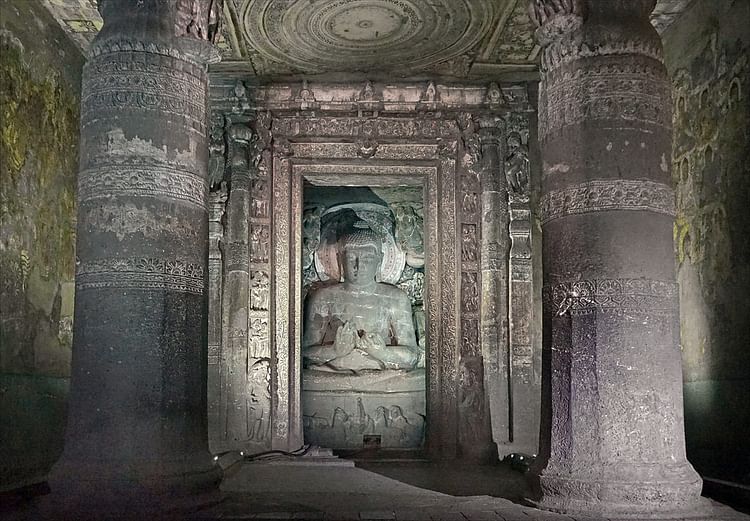 Buddha Sculpture in Ajanta Jean-Pierre Dalbéra (CC BY) ](https://www.worldhistory.org/image/4327/buddha-sculpture-in-ajanta/ "Buddha Sculpture in Ajanta")The Four Noble Truths simply stated that life was suffering, that suffering was caused by craving (craving for permanence in an impermanent world), that suffering ended with an end to craving, that there was a way to lead one away from the craving-suffering cycle, and that this way was the Eightfold Path:
- Right View
- Right Intention
- Right Speech
- Right Action
- Right Livelihood
- Right Effort
- Right Mindfulness
- Right Concentration
By disciplining one's self through the Eightfold Path, one moved from craving to detachment. Anyone, the Buddha said, could do what he had done and could then go on to live a life free of suffering and, when one died, be liberated from the cycle of *samsara* into the nothingness of *nirvana* (a “blowing out” of all attachment) and never have to suffer rebirth and death again.
The central focus of Buddha's teachings was on individual responsibility for one's own suffering. It was up to each person to recognize the nature of life and either follow his teachings, the *dharma* (“cosmic [law](https://www.worldhistory.org/disambiguation/law/)”) or reject them and continue to suffer. He formed the first Buddhist *sangha* after delivering his first sermon at the Deer Park in Sarnath and his disciples then followed him as he revealed his vision to others throughout India.
### First & Second Councils
When the Buddha died, he requested that the *sangha* should elect no leader but that each should perfect himself and teach others, just as he had done. Instead, his disciples organized and institutionalized the *sangha* in an effort to preserve the Buddha's teachings intact. At first, it seems, the *sangha* was uniform in belief (though this may not be so) and convened the First Council to establish the true teachings of the Buddha and the tenets of monastic discipline – the *Dharma* and *Vinaya*. This event may have occurred three months after the Buddha's death or around 400 BCE or, according to some scholars, never. Early Buddhist dates are difficult to substantiate as historical, even the [dates of the Buddha](https://www.worldhistory.org/article/493/the-dates-of-the-buddha/)'s life, but most scholars agree the council took place c. 400 BCE and the *Dharma* and *Vinaya* were agreed upon.
[  Stupa in Ajanta Jean-Pierre Dalbéra (CC BY) ](https://www.worldhistory.org/image/4328/stupa-in-ajanta/ "Stupa in Ajanta")The Second Council was called in 383 BCE, possibly to address *Vinaya*, but the reason is unclear. This meeting resulted in the first schism of the *sangha* when the Sthaviravada insisted on the observance of ten proscriptions of the *Vinaya* and the majority present disagreed. The ten proscriptions were against:
- Carrying salt in an animal horn
- Eating when the shadow of the sundial is two fingerbreadths past noon
- After eating, traveling to another village on the same day to eat another meal
- Holding several monastic assemblies within the same boundary during the same fortnight
- Making a monastic decision with an incomplete assembly and subsequently receiving the approval of absent monks
- Citing precedent as a justification to violate monastic procedures
- Drinking whey after mealtime
- Drinking unfermented wine
- Using mats with a fringe
- Accepting [gold](https://www.worldhistory.org/gold/) and [silver](https://www.worldhistory.org/Silver/)
The Sthaviravada seem to have claimed that violating these proscriptions was a serious infraction of monastic law, but the majority claimed such rules could safely be ignored. What happened next is unclear since, according to some sources, the Sthaviravada then split from the *sangha* while, according to others, it was the Mahasanghika who initiated the schism. Since the name of the Mahasanghika means “Great Congregation” and since all sources agree that the majority present disagreed with the Sthaviravada claim, it makes the most sense that the Sthaviravada left the assembly and formed their own school afterwards.
### The Sthaviravada & Devadatta
Scholars are in agreement that the schism at the Second Council had to do with differences over monastic discipline, but there is no general consensus on the details of the above narrative. The later Theravada and Mahayana schools give differing accounts including one in which the Second Council concludes harmoniously and the schism comes later when a monk, Mahadeva, questions the purity of Sthaviravada *arhats* (saints) and the majority agrees with him.
One very strange aspect of the narrative as given here is the Sthaviravada insistence on the ten proscriptions which seems modeled on an earlier tale of one Devadatta, a close associate (sometimes a cousin, sometimes brother-in-law) of the Buddha who, according to the *Vinaya Pitaka* (part of the *Tripitaka*, the Buddhist scriptures), created the first schism in Buddhism by doing the same.
According to the story given in the *Cullavagga* (section VII) of the *Vinaya Pitaka*, Devadatta was among the Buddha's first disciples and developed psychic powers through meditation in the first year of his discipleship. His power made him think too highly of himself and he sought to unseat the Buddha and take control of the *sangha*, even enlisting the aid of a local prince he had under his spell to try to kill him, but his attempts all failed.
He then tried to divide the *sangha* by insisting that all of the monks follow five rules:
- Forest dwelling only (no living in towns or [cities](https://www.worldhistory.org/city/))
- Subsistence only on alms food collected by begging (no accepting gifts of food)
- Use of rag robes only (no accepting gifts of clothing)
- Dwelling at the foot of a tree
- Complete vegetarianism
The Buddha refused to take any of these rules seriously and so Devadatta then tried to turn the *sangha* against him by claiming the Buddha did not care for their enlightenment, seduced 500 monks away for a time (they returned when they saw their error), and continued his resentment and jealousy toward the Buddha for the rest of his life. The story concludes with Devadatta, sick and wishing to repent (or trying one last time to kill the Buddha), falling into Hell (*Niraya*) but, since he had wished to repent (according to that version of the story), he would not remain there but be reincarnated multiple times until he reached *nirvana*.
The story would have been known to the later writers of the account of the Second Council and, possibly, was drawn on to discredit the minority Sthaviravada's insistence on rigid rules just as Devadatta had done. Owing to the nature of Early Buddhist texts, however, this is speculative but there is a remarkable similarity between the two accounts of rules resulting in schism.
### Mahasanghika Foundation & Beliefs
It is unclear how long after the Second Council – or perhaps even before the council - that different views of the Buddha's nature and interpretations of his teachings began to emerge but, at some point, his followers not only initiated many more rules than the Buddha seems to have intended but he came to be regarded by some adherents as supramundane and transcendent. He was no longer simply Siddhartha Gautama who had attained enlightenment on his own, this school of thought claimed, but an immortal being, only one of many buddhas who had existed since the beginning of time, and worthy of worship.
[ 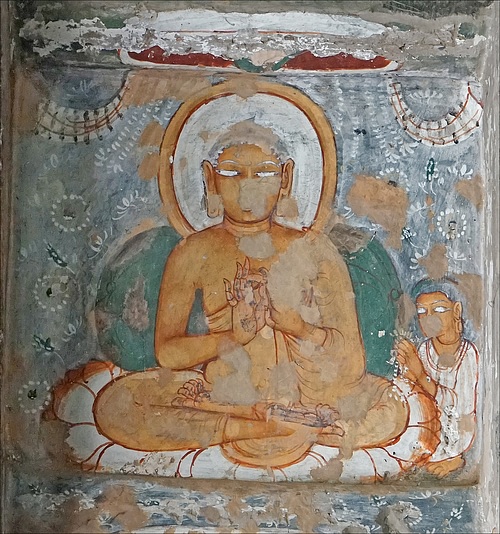 Buddha, Ajanta Cave No. 10 Jean-Pierre Dalbéra (CC BY-NC-SA) ](https://www.worldhistory.org/image/4333/buddha-ajanta-cave-no-10/ "Buddha, Ajanta Cave No. 10")This seems to have been the belief of the Mahasanghika school who, while accepting the Four Noble Truths and the Eightfold Path, made other assertions regarding the nature of the Buddha which centered on the claim that he had never existed in physical form but had only appeared to do so in order to better teach others the path to salvation. In this view, he had never been conceived through sexual intercourse nor born of a woman, never suffered the asceticism which brought him to enlightenment, never ate, never grew old, and never died because he had never had a physical form to begin with. The individual people saw, heard, and called “the Buddha” was a kind of apparition created and sustained by the love of humanity in an effort to elevate consciousness and lead people from ignorance to enlightenment. According to scholars Robert E. Buswell, Jr. and Donald S. Lopez, Jr.:
> They also taught that there was a root consciousness (Mulavijnana) that serves as the support for the six sensory consciousnesses, just as the root of a tree is the basis of the leaves; this concept may have been the antecedent of \[later Buddhist school's claims regarding a storehouse consciousness\]. (597)
Their focus was on attaining full awareness and then becoming a *Bodhisattva* (“essence of enlightenment”) who helped others do the same; as opposed to the Sthaviravada focus on becoming an *arhat* and perfecting the self. Among their other beliefs were:
- *Arhats* are fallible humans, possessing no supramundane powers, and require salvation just like anyone else.
- *Bodhisattvas* make vows before they are incarnated to be born in troubled locales in order to help the people there overcome their suffering.
- The past and future are illusions; only the present exists at all times.
- Once one has attained enlightenment, one can communicate without speech.
- Enlightened beings and spirits exist everywhere, in all directions, as do transcendent buddhas past and future, because there is no past and future, only the present.
Since the Buddha himself never wrote anything down, it is impossible to say definitively whether he ever suggested any concepts like these but, proceeding from his basic vision, he seemed to emphasize simplicity. The more complicated any system becomes, the greater the likelihood that one will become attached to it simply because one needs to pay more attention to it. Even so, the Mahasanghika and the Sthaviravada both went on to develop their own systems, each claiming to have preserved the true teachings of the Buddha.
### Mahasanghika & Mahayana
According to a 6th-century CE text, the Mahasanghika school fragmented c. 283 BCE over whether to accept the interpretation of another school, Mahayana, which also claimed to be following the true *Dharma* and practicing the proper *Vinaya*. The Caitika, Lokottarvada, and Kukkutika sects all emerge from the Mahasanghika school after this time and continue on with their own traditions. Mahasanghika seems to have merged with Mahayana, but this claim is challenged, and there is evidence it simply died out when it no longer had the authority to ordain monks. Why it should have lost this authority is unclear, however, unless some other school now had the kind of influence and power to have taken it; that other school could only have been Mahayana. [ 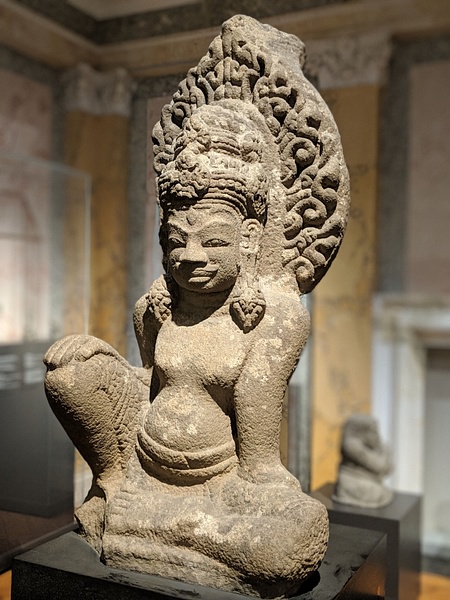 Seated Bodhisattva from Champa Jan van der Crabben (CC BY-NC-SA) ](https://www.worldhistory.org/image/9731/seated-bodhisattva-from-champa/ "Seated Bodhisattva from Champa")
The Sthaviravada school influenced, and may have become, the later Theravada school (though this claim is challenged) and retained the title “Teaching of the Elders” but, owing to its rigid monasticism, a clear demarcation between clergy and laity, and the belief that [women](https://www.worldhistory.org/disambiguation/women/) were inferior to men and could not attain enlightenment until reincarnated as a male, they did not attract as many adherents as Mahayana.
Mahayana emphasized the Buddha nature inherent in everyone – anyone could become enlightened, could become a buddha – and the focus was on attaining the full awareness of the *Bodhisattva* so that one could help the suffering world. Gods and spirits were recognized, as well as the divine nature of the Buddha, who served the same purpose as these other entities of possibly exerting influence but allowing human beings to work out their salvation on their own.
### Conclusion
Mahayana texts would eventually incorporate those of the three sects of Mahasanghika and so, even if one accepts the claim that Mahasanghika did not merge and become one with Mahayana, the final result is pretty much the same. In the present day, the three main schools of Buddhism are Theravada, Mahayana, and Vajrayana and, from these, all other Buddhist schools have developed.
It could be argued, however, that all of these schools have their roots in Mahasanghika which, if one accepts the account of the early texts, was once the great majority which first established the tenets of Buddhism. How closely their vision actually reflected the Buddha's is unknown, and will never be known, but this no longer matters because that vision established the belief system as it has been understood, more or less, for over 2,000 years.
#### Editorial Review
This human-authored definition has been reviewed by our editorial team before publication to ensure accuracy, reliability and adherence to academic standards in accordance with our [editorial policy](https://www.worldhistory.org/static/editorial-policy/).
## Bibliography
- [Baird, F. E. & Heimbeck, R. S. *Philosophic Classics: Asian Philosophy.* Routledge, 2005.](https://www.worldhistory.org/books/0133523292/)
- [Buswell, R. E. jr & Lopez, D. S. jr. *The Princeton Dictionary of Buddhism.* Princeton University Press, 2013.](https://www.worldhistory.org/books/0691157863/)
- [Harvey, P. *An Introduction to Buddhism.* Cambridge University Press, 2013.](https://www.worldhistory.org/books/0521859425/)
- [Keay, J. *India: A History.* Grove Press, 2010.](https://www.worldhistory.org/books/B00447AZ00/)
- [Koller, J. M. *Asian Philosophies.* Prentice Hall, 2007.](https://www.worldhistory.org/books/B008UYPMGU/)
- [Long, J. D. *Jainism: An Introduction.* I.B. Tauris, 2009.](https://www.worldhistory.org/books/1845116267/)
## About the Author
Joshua J. Mark is World History Encyclopedia's co-founder and Content Director. He was previously a professor at Marist College (NY) where he taught history, philosophy, literature, and writing. He has traveled extensively and lived in Greece and Germany.
- [Linkedin Profile](https://www.linkedin.com/pub/joshua-j-mark/38/614/339)
## Timeline
- **c. 400 BCE**: The First [Buddhist](https://www.worldhistory.org/buddhism/) Council at which the teachings and monastic discipline of [Buddhism](https://www.worldhistory.org/buddhism/) are agreed upon with, presumably, the [Mahasanghika](https://www.worldhistory.org/Mahasanghika/) as the majority.
- **383 BCE**: Second [Buddhist](https://www.worldhistory.org/buddhism/) Council at which the Sthaviravada and [Mahasanghika](https://www.worldhistory.org/Mahasanghika/) schools separate over differences in monastic discipline; the first schism in [Buddhism](https://www.worldhistory.org/buddhism/).
## Cite This Work
### APA
Mark, J. J. (2020, September 30). Mahasanghika. *World History Encyclopedia*.
### Chicago
Mark, Joshua J.. "Mahasanghika." *World History Encyclopedia*, September 30, 2020. .
### MLA
Mark, Joshua J.. "Mahasanghika." *World History Encyclopedia*, 30 Sep 2020, .
## License & Copyright
Submitted by [Joshua J. Mark](https://www.worldhistory.org/user/JPryst/ "User Page: Joshua J. Mark"), published on 30 September 2020. The copyright holder has published this content under the following license: [Creative Commons Attribution-NonCommercial-ShareAlike](https://creativecommons.org/licenses/by-nc-sa/4.0/deed.en). This license lets others remix, tweak, and build upon this content non-commercially, as long as they credit the author and license their new creations under the identical terms. When republishing on the web a hyperlink back to the original content source URL must be included. Please note that content linked from this page may have different licensing terms.