---
title: Hurrians
author: Mark Cartwright
source: https://www.worldhistory.org/Hurrians/
format: machine-readable-alternate
license: Creative Commons Attribution-NonCommercial-ShareAlike (https://creativecommons.org/licenses/by-nc-sa/4.0/)
updated: 1970-01-01
---
# Hurrians
_Authored by [Mark Cartwright](https://www.worldhistory.org/user/markzcartwright/)_
The Hurrians (aka Hurri or Khurri) were a [Bronze Age](https://www.worldhistory.org/disambiguation/Bronze_Age/) people who flourished across the [Near East](https://www.worldhistory.org/Near_East/) from the 4th millennium BCE to the 1st millennium BCE. Hurrian is also the name of the language these people spoke and, indeed, is the one constant and identifying feature of the [culture](https://www.worldhistory.org/disambiguation/culture/) over time and geography. Hurrians formed the principal cultural element of the [Bronze](https://www.worldhistory.org/disambiguation/bronze/) Age [Mitanni](https://www.worldhistory.org/Mitanni/) kingdom and blended with the culture of the neighbouring, and then conquering, [Hittites](https://www.worldhistory.org/hittite/). By the late Bronze Age, the Hurrians had been assimilated into surrounding cultures in the Near East but many of their gods and myths would live on in later cultures, notably the [Urartu civilization](https://www.worldhistory.org/Urartu_Civilization/), and even inspire elements of myth found in [Archaic](https://www.worldhistory.org/disambiguation/Archaic/) [Greece](https://www.worldhistory.org/greece/).
### Difficulties in Definition
The difficulties in precisely identifying who the Hurrians were and when they existed in various locations are here summarised in the relevant entry of the *Encyclopedia of Ancient History*:
> Probably Hurri was originally the designation borne by the population group, which was then applied to the land they inhabited and the language they spoke. However, that population and that land were not precisely delimited in genealogical terms; only the Hurrian language, which anyone could acquire, was a distinct and constant feature. (3345)
In addition, the language itself also presents difficulties of interpretation. Hurrian has only one other related ancient language, Urartian, and their connection to any living languages is uncertain. The Hurrian language was written using the [cuneiform](https://www.worldhistory.org/cuneiform/) [script](https://www.worldhistory.org/script/), although some surviving texts from [Ugarit](https://www.worldhistory.org/ugarit/) use the Ugaritic [alphabet](https://www.worldhistory.org/alphabet/).
The *Encyclopedia of Ancient History* gives the following concise description of the features of the Hurrian language:
> Typologically, Hurrian is an agglutinating language with ergative grammar, unlike [Indo-European](https://www.worldhistory.org/Indo-European_Languages/) and Semitic languages but like the [Sumerian language](https://www.worldhistory.org/Sumerian_Language/). Notwithstanding their lack of genealogical relationship, Hurrian and other ancient Near Eastern languages shared onomastic patterns as well as numerous lexemes. (3345)
For the moment, the Hurrians and their language remain one of the most enigmatic cultures of the ancient world, as here summarised succinctly by the historian Professor Holger Gzellar, "the origin of the Hurrians…is unknown, just like much of their culture and society" (in Steiner, 26). Greater information and clarity are to be hoped for from ongoing excavations at Hurrian [cities](https://www.worldhistory.org/city/) such as Urkesh in northeast [Syria](https://www.worldhistory.org/syria/), and it is, at least, possible to piece together a limited history from an examination of the Hurrians' neighbouring and contemporary cultures.
[  Map of the Akkadian Empire Nareklm (GNU FDL) ](https://www.worldhistory.org/image/160/map-of-the-akkadian-empire/ "Map of the Akkadian Empire")Finally, the Hurrians have been caught up in the controversial “Aryan question” - that is the proposal that [Aryans](https://www.worldhistory.org/Aryan/) from central Asia invaded and settled in the Near East - but there is little evidence besides a few linguistic terms of Indo-[Aryan](https://www.worldhistory.org/Aryan/) origin (which were, in any case, Hurrianised) to positively identify the presence of Aryans in Mitanni (see below) or the Near East in general. Nor is the argument that horses and chariots were introduced by Aryan migrants convincing as both were already present in the region before such a migration is proposed. A very few foreign gods in the Hurrian [pantheon](https://www.worldhistory.org/Pantheon/) have names of Indic origin, but they are of such a small percentage that they form a weak argument for a cultural invasion, especially as, when they do appear, it is in treaties arranged during the later stages of the Mitanni [Empire](https://www.worldhistory.org/empire/) when it was in decline and not, as might be expected, during its foundation.
### Historical Overview
**4th-3rd millennium BCE**
Hurrian speakers inhabited a core area, that is the upper Habur and Tigris rivers up to the Taurus and Zagros mountains, especially around Lake Van. Textual evidence of the Hurrians dates to the mid-3rd millennium BCE but, based on archaeological evidence, it is likely the culture at least stretched back to the mid-4th millennium BCE. Generally known in ancient sources as the Hurri, the culture and language may also be referred to as the Subartu or Subareans, while in biblical texts they are the Horites (strictly speaking the descendants of the Hurrians in [Canaan](https://www.worldhistory.org/canaan/)).
[  Mesopotamian Incense Container Osama Shukir Muhammed Amin (Copyright) ](https://www.worldhistory.org/image/2265/mesopotamian-incense-container/ "Mesopotamian Incense Container")One of the earliest and most important Hurrian sites was Urkesh, and it is from here that the earliest known inscriptions of the language were discovered. Other Mesopotamian [city](https://www.worldhistory.org/city/)-states with evidence of the worship of Hurrian gods and personal names include Kharbe and Nagar. Starting from the 4th millennium BCE, then, the Hurrians thrived and expanded across Upper [Mesopotamia](https://www.worldhistory.org/Mesopotamia/). And here the culture presents yet another difficulty in definition and identification, as explained by the historian Professor W. J. Hamblin:
> It was likely that the Hurrian [conquest](https://www.worldhistory.org/warfare/) of that region was a complex phenomenon including peaceful migration, infiltration by mercenary bands in the pay of local city-states, followed by the rise of to power of mercenary warlords…culminating in the eventual full-scale migration of Hurrian herding tribes out of the mountains into the more fertile river valleys. (304)
Further, the Hurrians often seem to have adopted the culture of the city-states they conquered, making them less visible than ever in the historical record. For example, "we have no evidence of a distinctive Hurrian military system" (ibid). It seems that if ever there were a people who were both everywhere and nowhere, it was the Hurrians.
[ 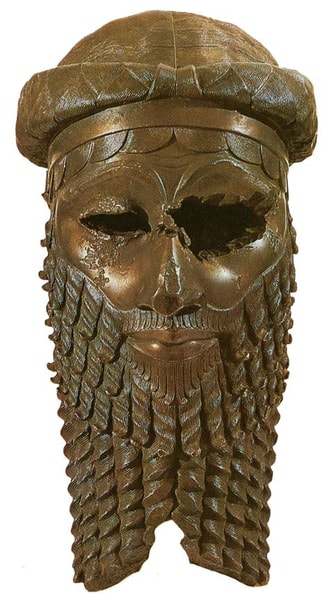 Akkadian Ruler Sumerophile (Public Domain) ](https://www.worldhistory.org/image/161/akkadian-ruler/ "Akkadian Ruler")Their expansion was sometimes halted by other regional powers, especially [Assyria](https://www.worldhistory.org/assyria/). During the reigns of [Sargon the Great](https://www.worldhistory.org/Sargon_of_Akkad/) (r. 2334-2279 BCE) and [Naram-Sin](https://www.worldhistory.org/Naram-Sin/) (r. 2261-2224 BCE), in particular, the rulers of [Akkad](https://www.worldhistory.org/akkad/) waged a successful [war](https://www.worldhistory.org/disambiguation/War/) of expansion in northern Mesopotamia which likely saw them defeat several Hurrian city-states, among them Nagar, which was made an [Akkadian](https://www.worldhistory.org/disambiguation/akkadian/) regional capital.
**2190-1900 BCE**
When the kingdom of Akkad fell c. 2190 BCE, the Hurrians (and others) exploited the consequent power vacuum in Mesopotamia. There was no Hurrian Empire as such but some of the independent city-states ruled by Hurrian kings may well have formed together in a loose confederation. Still others were in conflict with each other. Urkesh and Nagar continued to be important Hurrian centres in this period, which is known only through scattered fragments of inscriptions. In the last century of the 3rd millennium BCE, Hurrian cities were attacked and conquered by [Sumer](https://www.worldhistory.org/sumer/), particularly during the reign of kings Utuhegal of [Uruk](https://www.worldhistory.org/uruk/) (r. 2117-2111 BCE) and [Shulgi of Ur](https://www.worldhistory.org/Shulgi_of_Ur/) (r. 2029-1982 BCE). Despite this new threat, the Hurrian heartlands and their capital Urkesh remained untouched. Indeed, under the king Tish-atal (r. c. 2010), [Nineveh](https://www.worldhistory.org/nineveh/) was under Hurrian control, perhaps even Harhar in western Iran, too.
**1900-1200 BCE**
By the second quarter of the 2nd millennium BCE, the Hurrians were migrating into northern Syria and eastern [Anatolia](https://www.worldhistory.org/Asia_Minor/) as they moved westwards and southwards. Once again, military conquest was mixed with the peaceful migration of Hurrian merchants, farmers, artisans, and nomads. The Hanigalbat, an area of upper Mesopotamia, became the heartland of the Mitanni kingdom (c. 1500-1240 BCE) which was predominantly Hurrian in culture.
[  Map of Mesopotamia, c. 1400 BCE Javierfv1212 (CC BY-SA) ](https://www.worldhistory.org/image/249/map-of-mesopotamia-c-1400-bce/ "Map of Mesopotamia, c. 1400 BCE")From the 16th-15th century BCE, there was increasing antagonism between the [Hittite](https://www.worldhistory.org/hittite/) Empire (c. 1700-1200 BCE) and Mitanni. This was a continuation of the hostilities between Hittites and Hurrians which had been going on in the 17th century BCE - Syria being a particular bone of contention. Although a consequence of Hittite expansion was that, as more Hurrians came under Hittite rule, there was a further spreading of Hurrian cultural elements westwards, especially deities, which were borrowed and loaned between the two cultures and others in the region. For example, the Hurrian storm [god](https://www.worldhistory.org/God/) Tessub became identified with the Anatolian god of the same function, Tarhunza. Once more, the Hurrian culture was being assimilated by both friend and foe across the region.
Following the conquest and division of Mitanni by Assyria and [Hatti](https://www.worldhistory.org/hatti/) in the mid-13th century BCE, the Hurrian language and culture continued under the political control of the Hittites and Assyrians. By the 1st millennium BCE, the Hurrians had been absorbed into other cultures of the region but, as previously, elements of their culture became intermixed with that of their successors. For example, the god Tessub became Teisheba in the [religion](https://www.worldhistory.org/religion/) of the [Urartu](https://www.worldhistory.org/Urartu_Civilization/) [civilization](https://www.worldhistory.org/civilization/) which spread across ancient eastern [Turkey](https://www.worldhistory.org/Asia_Minor/), [Armenia](https://www.worldhistory.org/armenia/), and western Iran from the 9th to 6th century BCE. Similarly, elements of Hurrian [mythology](https://www.worldhistory.org/mythology/) and [literature](https://www.worldhistory.org/literature/) would be translated and preserved by Hittite scribes which would then eventually cross the [Aegean](https://www.worldhistory.org/aegean/) and inspire elements of the mythology of Archaic Greece.
This article was made possible with generous support from the [National Association for Armenian Studies and Research](https://naasr.org/?utm_source=ancient.eu&utm_medium=link&utm_campaign=ancient.eu) and the Knights of Vartan Fund for Armenian Studies.
#### Editorial Review
This human-authored definition has been reviewed by our editorial team before publication to ensure accuracy, reliability and adherence to academic standards in accordance with our [editorial policy](https://www.worldhistory.org/static/editorial-policy/).
## Bibliography
- Bagnall, R.S. *The Encyclopedia of Ancient History.* Wiley-Blackwell, 2012
- [Chahin, M. *The Kingdom of Armenia.* Routledge, 2018.](https://www.worldhistory.org/books/B01FIZNMY2/)
- [Gurney, O.R. *The Hittites.* Penguin Books, 2018.](https://www.worldhistory.org/books/B0000CID5C/)
- Lawler, A. "Who Were the Hurrians?." *Archaeology*, Vol. 61, No. 4 (July/August 2008), pp. 46-52.
- [Piotrovsky, B. *The Ancient Civilization of Urartu.* Cowles Book Co., 1969.](https://www.worldhistory.org/books/0214667936/)
- [Steiner, M.L. *The Oxford Handbook of the Archaeology of the Levant.* Oxford University Press, 2014.](https://www.worldhistory.org/books/019921297X/)
- [William J. Hamblin. *Warfare in the Ancient Near East to 1600 BC.* Routledge, 2006.](https://www.worldhistory.org/books/0415255899/)
## About the Author
Mark is WHE’s Publishing Director and has an MA in Political Philosophy (University of York). He is a full-time researcher, writer, historian and editor. Special interests include art, architecture and discovering the ideas that all civilizations share.
## Timeline
- **c. 3500 BCE - c. 1000 BCE**: The Hurrian [culture](https://www.worldhistory.org/disambiguation/culture/) flourishes in the [Near East](https://www.worldhistory.org/Near_East/).
- **1680 BCE**: [Hurrians](https://www.worldhistory.org/Hurrians/) occupy [Assyria](https://www.worldhistory.org/assyria/).
- **1550 BCE**: The Hurrian kingdom of [Mitanni](https://www.worldhistory.org/Mitanni/) is founded.
## Cite This Work
### APA
Cartwright, M. (2018, February 15). Hurrians. *World History Encyclopedia*.
### Chicago
Cartwright, Mark. "Hurrians." *World History Encyclopedia*, February 15, 2018. .
### MLA
Cartwright, Mark. "Hurrians." *World History Encyclopedia*, 15 Feb 2018, .
## License & Copyright
Submitted by [Mark Cartwright](https://www.worldhistory.org/user/markzcartwright/ "User Page: Mark Cartwright"), published on 15 February 2018. The copyright holder has published this content under the following license: [Creative Commons Attribution-NonCommercial-ShareAlike](https://creativecommons.org/licenses/by-nc-sa/4.0/deed.en). This license lets others remix, tweak, and build upon this content non-commercially, as long as they credit the author and license their new creations under the identical terms. When republishing on the web a hyperlink back to the original content source URL must be included. Please note that content linked from this page may have different licensing terms.