---
title: Audiencia
author: Mark Cartwright
source: https://www.worldhistory.org/Audiencia/
format: machine-readable-alternate
license: Creative Commons Attribution-NonCommercial-ShareAlike (https://creativecommons.org/licenses/by-nc-sa/4.0/)
updated: 1970-01-01
---
# Audiencia
_Authored by [Mark Cartwright](https://www.worldhistory.org/user/markzcartwright/)_
An *audiencia* began as a judicial institution in medieval Spain, but in the 16th century, it was applied as the highest form of local government in key [cities](https://www.worldhistory.org/city/) of the Spanish [Empire](https://www.worldhistory.org/empire/). An *audiencia* had a panel of judges made responsible for the political administration of a [city](https://www.worldhistory.org/city/) and certain criminal and civil legal matters concerning both settlers and indigenous peoples.
### Origins & Components
The *audiencia* has become a noted part of the political apparatus of the colonies within the Spanish Empire, but its origins lie in the medieval judicial institution established in Spain itself. This high court institution was then adopted by the main cities in the empire in the Americas and the Philippines, beginning with Santo Domingo in 1511. Unlike its Spanish predecessors, the colonial *audiencias* not only concerned themselves with matters of justice but also politics and commerce. Capitals like Mexico City (formerly [Tenochtitlan](https://www.worldhistory.org/Tenochtitlan/), capital of the [Aztec civilization](https://www.worldhistory.org/Aztec_Civilization/)) were governed by an *audiencia* which functioned alongside the viceroy and a local captain-general. The viceroy was responsible for a wide swathe of the empire in which the city was located – there were eventually four viceroyalties in the Spanish Empire. The captain-general was a sort of mini-viceroy, who operated in less populated areas of the empire and who could be the local governor with a certain semi-independence from the viceroy. There was, too, the *corregidor*, a judicial and political officer who directly represented the Spanish Crown and who was responsible for regulating the prices of foodstuffs and maintaining public buildings, streets, squares, and the sanitation in his district. Finally, the four *Official Real* in each colony were responsible for collecting taxes and revenues. Each man had a key to the strongbox that kept this cash, a safe that could only be opened using all four keys together.
In this multiheaded system at the top end of the colonial government apparatus, the *audiencia* functioned as a balance of power regarding the viceroy and captain-general, who both reported directly to the [Council of the Indies](https://www.worldhistory.org/Council_of_the_Indies/), which was based in Spain and which governed all colonial matters in the Americas and the Spanish East Indies. *Audiencias* had to work with officials like the head of the local town council (*cabildo*) and everyone else from the mayor (*alcaldes mayores*) down to junior administrators. The viceroy, captain-general, and *audiencia* represented royal interests, while the other institutions below them represented local interests, creating yet another interface of competition for resources and influence.
[  Map of the Spanish Colonial Empire Simeon Netchev (CC BY-NC-ND) ](https://www.worldhistory.org/image/14411/map-of-the-spanish-colonial-empire/ "Map of the Spanish Colonial Empire")An additional check on the other positions of power was the Church, represented by various ecclesiastical institutions and individuals. Through this separation of responsibilities and duties, the Spanish monarch was better able to keep a check on key colonial administrators and conquistadors ("conquerors") like [Hernán Cortés](https://www.worldhistory.org/Hernan_Cortes/) (1485-1547) who led armies to [conquer](https://www.worldhistory.org/warfare/) new territories.
Larger *audiencias* like Mexico City and Lima were initially composed of a panel of four judges (*oidores*), who were appointed for life. Judges were initially appointed from Spain and on merit so that the positions were dominated by Spanish-born Europeans (*peninsulares*), but there did develop a system where individuals could buy the position from the state by giving the Crown a large 'donation'. The latter option was attractive to colonial-born Spaniards (*criollos*) seeking to improve their standing in the community and heighten their influence on local affairs. As the colonies matured, the *criollos* came to dominate the *audiencias*.
The judges might have wielded substantial powers, but in order to limit any abuses of that power, there were certain restrictions on what they could and could not do, as the *Historical Dictionary of the Spanish Empire* notes:
> The Crown prohibited *oidores* from owning property, maintaining a business, holding an [encomienda](https://www.worldhistory.org/Encomienda/) \[right to use local labour\], attending weddings, receiving gifts, marrying in their area of jurisdiction, or even attending social functions.
> (Olson, 451)
[  Montezuma Meets Cortés Unknown Artist (Public Domain) ](https://www.worldhistory.org/image/5277/montezuma-meets-cortes/ "Montezuma Meets Cortés")A further check on abuses of power was the convention of *residencia* where, at the end of their term of office, any colonial official was subject to a lengthy inquiry into how they had conducted themselves. Claimants could come forward against the conduct of the official, and, if found guilty of misgovernment, the official, although rarely directly punished, would be unlikely to receive a new position or promotion.
The *audiencia* panels grew in size as the [colonization](https://www.worldhistory.org/disambiguation/colonization/) process was consolidated through the 16th century. However, smaller *audiencias* had a panel of between three and five judges with sometimes fewer due to the problems of recruiting qualified men and losses due to local diseases. This situation was not helped by the Spanish Crown's deliberate policy of not encouraging colonial officials to stay too long in one place and so become too powerful locally or establish colonial roots (*radicados*). By the 17th century, Mexico City had a panel of 12 judges whose responsibilities were divided between two separate chambers. The larger chamber was the civil chamber with eight judges. The smaller was the criminal chamber with four judges. In the 18th century, the total number of judges rose to 15. Within each chamber, there were a great number of other officials. There were attorneys (*fiscales*) – both civil and criminal, notaries, reporters, administrators, and a solicitor and attorney specifically appointed to guard the interests of the poorer members of the community.
Each *audiencia* had a president, but he had no voting rights, and, at least in theory, he was forbidden from influencing the *audiencia's* judges and officers in legal matters. The president could be the captain-general or even the viceroy himself in the case of the *audiencia* of a regional capital like Lima or Mexico City. The viceroy was the most powerful of all colonial officials, but his jurisdiction was so large that he was dependent on many subordinates. The Viceroyalty of New Spain, for example, incorporated what is today Mexico, Central America, parts of the southern United States, the Caribbean, and the Philippines. Frequently, the *audiencia* acted as an important advisory body for the viceroy so that he could ably govern such a vast geographical area and variety of peoples.
[ 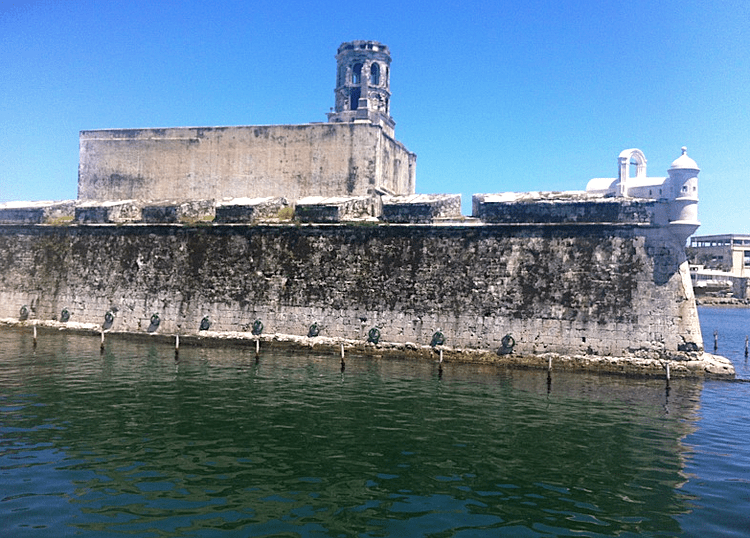 Fortifications, San Juan de Ulúa Angelinn RT (CC BY-SA) ](https://www.worldhistory.org/image/14750/fortifications-san-juan-de-ulua/ "Fortifications, San Juan de Ulúa")### Audiencia Responsibilities
**Judicial Function**
The *audiencias* had two main spheres of responsibility: legal and political affairs. The judges of the *audiencia* were responsible for hearing the appeals against decisions made by the city's lower courts. The jurisdiction of the *audiencia* was the city itself and all lands within a certain radius of it, typically about five leagues. The rulings of the *audiencia* regarding criminal matters could not be overturned, but in civil cases, an appeal could be made to the Council of the Indies.
The cases that came before the *audiencia* were not only those between colonists but also covered relations between settlers and indigenous peoples. One of the major directives of the Council of the Indies was that local peoples should be protected or, at least, not overexploited to the point of starvation and [death](https://www.worldhistory.org/disambiguation/Death/). In the harsh reality of colonial life, the locals usually came off badly, but it was one of the *audiencia's* functions to see that the twin aims of the empire – material wealth extraction and conversion of the locals to [Christianity](https://www.worldhistory.org/christianity/) – were balanced in such a way that the long-term welfare of the people was considered. Most audiencias convened at least two days per week to specifically hear cases of dispute between indigenous peoples and settlers and between indigenous peoples themselves. The legal fees were not imposed on indigenous peoples. Eventually, the *audiencia's* role in affairs concerning exclusively indigenous peoples was replaced by the *juzgado de indios*. Leading church figures were not slow to denounce abuses of power when it came to the welfare of local peoples. Priests included in their sermons criticisms of the *audiencia*, although whether this achieved very much in practical terms is open to debate.
**Political Function**
The *audiencia* was also a political institution. In this role, the *audiencia* worked with the president and/or viceroy to provide adequate legislation to administrate the city and its population. Regular sessions (*acuerdos*) made decisions (*autos* *acordados*) related to local affairs. Legislation could not usually be passed by a viceroy or a captain-general. The *audiencia* also had the responsibility to make sure that royal decrees from Spain and the Council of the Indies were being carried out locally. In the interim period between different viceroys or captain-generals (i. e. the individual died unexpectedly), the *audiencia* took over their duties and responsibilities too. Naturally, there was often some serious political rivalry going on between the viceroy, the captain-general, and the members of the *audiencia* as men of ambition attempted to dominate local affairs for their own personal gain or prestige.
**Commercial Function**
A third area of activity of *audiencias* was [trade](https://www.worldhistory.org/disambiguation/trade/) and commerce, often operating in consultation with royal treasurers. The judges were also responsible for assessing the size and type of tributes indigenous communities were required to pay the Spanish Crown. The *audiencia* sent out inspectors into the more remote parts of the colony for this purpose. At first, tribute was accepted in the form of goods of value, but gradually the system became more standardised, with payment expected each year in either money or maize.
Finally, the *audiencia* had an influence on the local labour market since it could grant settlers the right to use forced labour. This form of labour, known as *[repartimiento](https://www.worldhistory.org/Repartimiento/)* in New Spain and *mita* in the Viceroy of Peru, was imposed on local communities. Indigenous leaders were obliged to send a fixed number of male labourers to work for the colonial administration (rulers of such civilizations as the Aztecs and [Incas](https://www.worldhistory.org/Inca_Civilization/) had used precisely the same setup in their own empires). The team usually worked for a number of weeks before being replaced by another group from the same community. Besides being used for [silver](https://www.worldhistory.org/Silver/) mines and large-scale food production, the scheme permitted the colonies to create infrastructures such as roads and bridges, as well as public buildings, churches, convents, and hospitals. Although the labourers were paid a low wage, the removal of a large number of men from a rural community had negative consequences for local farming and created a great social upheaval as families were separated and individuals were obliged to live in urban communities they had no wish to be a part of.
### Decline
The performance of a particular *audiencia* varied depending on time, place, and the individuals involved, but as the historian J. H. Parry notes: "All in all, they formed the most consistently loyal and effective branch of the colonial bureaucracy" (202). The *audiencia* system came to an end with the crumbling of the Spanish Empire and the rise of the independence movements across the Americas. Interestingly, the *audiencia* system did create one notable legacy since the judicial areas of many new towns in the newly independent counties did maintain the old *audiencia* boundaries.
#### Editorial Review
This human-authored definition has been reviewed by our editorial team before publication to ensure accuracy, reliability and adherence to academic standards in accordance with our [editorial policy](https://www.worldhistory.org/static/editorial-policy/).
## Bibliography
- [Cervantes, Fernando. *Conquistadores.* Allen Lane, 2020.](https://www.worldhistory.org/books/0241242142/)
- [Covey, R. Alan. *Inca Apocalypse.* Oxford University Press, 2020.](https://www.worldhistory.org/books/B08762WJKS/)
- [Olson, James S. *Historical Dictionary of the Spanish Empire, 1402-1975.* Greenwood, 1991.](https://www.worldhistory.org/books/0313264139/)
- [Parry, J.H. (John Horace). *The Spanish Seaborne Empire .* Alfred A Knopf, 1966.](https://www.worldhistory.org/books/B0000CMUSM/)
- [von Habsburg, Max & Fordham, Michael & Smith, David. *Spain in the Age of Discovery, 1469–1598 .* Cambridge University Press, 2015.](https://www.worldhistory.org/books/110758728X/)
## About the Author
Mark is WHE’s Publishing Director and has an MA in Political Philosophy (University of York). He is a full-time researcher, writer, historian and editor. Special interests include art, architecture and discovering the ideas that all civilizations share.
## Timeline
- **1511 CE**: The [audiencia](https://www.worldhistory.org/Audiencia/) is formed in Santo Domingo, the first in the Spanish [empire](https://www.worldhistory.org/empire/).
- **1527 CE**: The [audiencia](https://www.worldhistory.org/Audiencia/) is formed in Mexico [City](https://www.worldhistory.org/city/) (formerly [Tenochtitlan](https://www.worldhistory.org/Tenochtitlan/)).
## Questions & Answers
### What is the meaning of audiencia?
The audiencia was the highest part of local government in major cities of the Spanish Empire. Its panel of judges was responsible for certain legal, political, and commercial matters.
### What was the role of the audiencia in the Americas?
The role of the audiencia in the Americas was to act as a court of appeal in civil and criminal legal cases, to pass legislation relevant to its jurisdiction, and to control the tributes and forced labour quotas extracted from indigenous peoples.
### What is the difference between the audiencias in medieval Spain and in the Spanish colonies?
The main difference between the medieval and colonial versions of the audiencias was that the former only had a judicial capacity, whereas the latter had much wider legal, political, and commercial powers.
## Cite This Work
### APA
Cartwright, M. (2022, June 09). Audiencia. *World History Encyclopedia*.
### Chicago
Cartwright, Mark. "Audiencia." *World History Encyclopedia*, June 09, 2022. .
### MLA
Cartwright, Mark. "Audiencia." *World History Encyclopedia*, 09 Jun 2022, .
## License & Copyright
Submitted by [Mark Cartwright](https://www.worldhistory.org/user/markzcartwright/ "User Page: Mark Cartwright"), published on 09 June 2022. The copyright holder has published this content under the following license: [Creative Commons Attribution-NonCommercial-ShareAlike](https://creativecommons.org/licenses/by-nc-sa/4.0/deed.en). This license lets others remix, tweak, and build upon this content non-commercially, as long as they credit the author and license their new creations under the identical terms. When republishing on the web a hyperlink back to the original content source URL must be included. Please note that content linked from this page may have different licensing terms.