---
title: Archaeology
author: Maisie Jewkes
source: https://www.worldhistory.org/Archaeology/
format: machine-readable-alternate
license: Creative Commons Attribution-NonCommercial-ShareAlike (https://creativecommons.org/licenses/by-nc-sa/4.0/)
updated: 1970-01-01
---
# Archaeology
_Authored by [Maisie Jewkes](https://www.worldhistory.org/user/Windrush/)_
Archaeology is a wide subject and definitions can vary, but broadly, it is the study of the [culture](https://www.worldhistory.org/disambiguation/culture/) and history of past peoples and their societies by uncovering and studying their material remains, i.e. tools, ruins, and [pottery](https://www.worldhistory.org/pottery/). Archaeology and history are different subjects but have things in common and constantly work with each other. While historians study books, tablets, and other written information to learn about the past, archaeologists uncover, date, and trace the source of such items, and in their turn focus on learning through material culture.
As much of human history is prehistoric (before written records), archaeology plays an important role in understanding the past. Different environments and climates help or hinder the survival of materials, e.g. papyri can survive thousands of years in the hot and dry desert but would not survive in damp conditions. Waterlogged conditions, such as bogs, can preserve organic material, like wood, and underwater wrecks are also excavated using diving equipment. Working everywhere from digging in the ground to testing samples in laboratories, archaeology is a wide-ranging discipline and has many subsections of expertise. The two rapidly widening areas are experimental archaeology and ethnoarchaeology. Experimental archaeology tries to recreate ancient techniques, such as glass making or [Egyptian](https://www.worldhistory.org/disambiguation/Egyptian/) [beer](https://www.worldhistory.org/Beer/) brewing. Ethnoarchaeology is living among modern ethnic communities, with the purpose of understanding how they hunt, work, and live. Using this information, archaeologists hope to better understand ancient communities.
### Archaeology of the Past
Archaeology as an academic study, career, and university subject is a fairly recent development. Nevertheless an interest in the past is not new. Humankind has always been interested in its history. Most cultures have a myth or story that explains their foundation and distant ancestors. Ancient rulers have sometimes collected ancient relics or rebuilt monuments and buildings. This can often be seen as political strategy - a leader wanting to be identified with a great figure or [civilisation](https://www.worldhistory.org/civilization/) from the past. On the other hand, ancient leaders have also been known for their curiosity and learning. King Nabonidus of [Babylon](https://www.worldhistory.org/babylon/), for example, had a keen interest in the past and investigated many sites and buildings. In one [temple](https://www.worldhistory.org/temple/), he found the foundation stone from 2200 years before. He housed his finds in a kind of museum at his capital of Babylon. The [Roman](https://www.worldhistory.org/disambiguation/Roman/) and [Greek](https://www.worldhistory.org/disambiguation/greek/) historians wrote books about the past, and the stories of famous heroes and leaders have come down to us.
However, modern archaeology, or at least its theories and practice, stem from the antiquarian tradition. In the 17th and 18th centuries CE, wealthy gentleman scholars, or antiquarians as they are also known, began to collect classical artefacts. Fuelled by interest, they began to make some of the first studies of sites like [Pompeii](https://www.worldhistory.org/pompeii/) and drew ancient monuments in detail. The first scientific excavation has been attributed to Thomas Jefferson (third president of the United States of America) who dug up some of the [burial](https://www.worldhistory.org/burial/) mounds on his property in the state of Virginia, USA. The beginnings of modern field techniques were pioneered by General [Augustus](https://www.worldhistory.org/augustus/) Lane-Fox Pitt Rivers, who excavated barrows at Camborne Chase with systematic recording and procedure. In the USA in the 1960s CE, archaeology went through a phase of new theories, often called processual archaeology. This approach has a scientific approach to questions and designs models to suggest answers and test its theories.
### Famous Archaeologists
Archaeology is a time-consuming study; it often takes many years of toil before an archaeologist makes a breakthrough or discovers a site. Famous archaeologists are often connected to their most famous find or theory. To name the score of people who worked and made developments in archaeology would take a hundred pages; what follows are but a few: Howard Carter, an Englishman, who in 1922 CE discovered the [tomb](https://www.worldhistory.org/tomb/) of the [pharaoh](https://www.worldhistory.org/pharaoh/) [Tutankhamun](https://www.worldhistory.org/Tutankhamun/) in [Egypt](https://www.worldhistory.org/egypt/); Leonard Woolley spent years excavating the ancient [city](https://www.worldhistory.org/city/) of [Ur](https://www.worldhistory.org/ur/) in [Mesopotamia](https://www.worldhistory.org/Mesopotamia/); Heinrich Schliemann unearthed what is believed to be the mythical city of [Troy](https://www.worldhistory.org/troy/), building on work done by an amateur archaeologist, Frank Calvert; Sir Arthur Evans excavated much of [Knossos](https://www.worldhistory.org/knossos/) (on the island of [Crete](https://www.worldhistory.org/crete/)) and developed the concept of [Minoan Civilization](https://www.worldhistory.org/Minoan_Civilization/).
[ 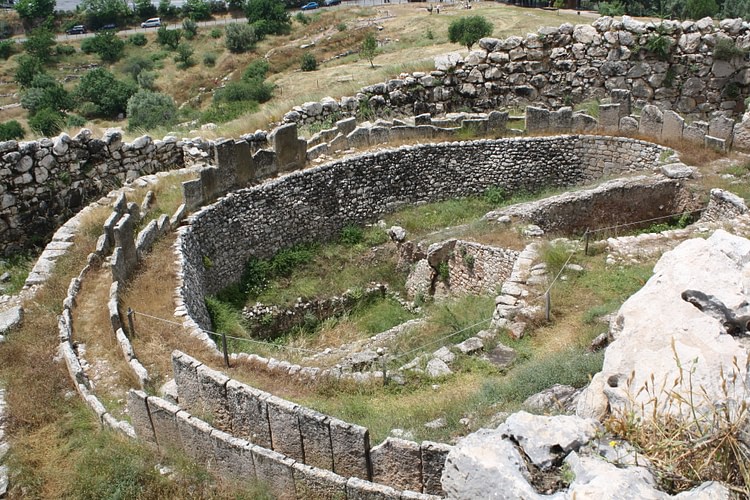 Grave Circle A, Mycenae Mark Cartwright (CC BY-NC-SA) ](https://www.worldhistory.org/image/458/grave-circle-a-mycenae/ "Grave Circle A, Mycenae")These men are all well-known for their famous finds but also made developments in field archaeology and techniques, although Heinrich Schliemann's methods of digging down very quickly and only recording the earlier levels are today questioned and criticised, as are the reports that he smuggled artefacts out of the country. Others such as Sir Mortimer Wheeler, Sir William Flinders Petrie, and Gordon Childe are famous for their methods of recoding, precision in excavations, and approaches to archaeology theory. Mary and Louis Leakey worked for many years in East [Africa](https://www.worldhistory.org/disambiguation/africa/) transforming our knowledge of human development and pushing back the dates of human ancestors by millions of years.
The work of other individuals, not all classified as archaeologists but rather as scholars, who worked for decades on the study of languages, should be mentioned. Jean-Francois Champollion cracked the Egyptian [hieroglyphics](https://www.worldhistory.org/Egyptian_Hieroglyphs/) in 1822 CE. Tatiana Proskouriakoff worked in the latter half of the 20th century CE on the problems of [Maya](https://www.worldhistory.org/disambiguation/Maya/) hieroglyphic [writing](https://www.worldhistory.org/writing/) and contributed to the final breakthrough. In the 1850s CE Henry Rawlinson cracked the Mesopotamian [cuneiform](https://www.worldhistory.org/cuneiform/) [script](https://www.worldhistory.org/script/).
### Modern Archaeological Techniques
Modern archaeology is a diverse field with many techniques in use. However, there are common ones that most archaeologists working in the field use:
1. **Field walking and surface survey:**
Basically this is when a team of people walk across the countryside, an equal distance apart, with each recording finds and features in his or her path. This is used, for example, to track settlement patterns. Surveys are also done in the air, by airplanes, or using satellites. In [England](https://www.worldhistory.org/disambiguation/england/), the outlines of hillforts or Roman villas are easily visible under the soil.
2. **Excavation:**
Probably the most recognisable feature of archaeology, (that, and of course, treasure). There are three types of excavations (or digs): research, rescue, and salvage. The first is usually to test a theory or answer a question. The last two types of digs are those conducted on sites that are threatened with or are after destruction. Excavations are usually carried out on a grid plan and go down in layers, carefully recording each layer and the finds, before clearing it away to reach an earlier level. This is called stratification. There is debate about when it is alright to dig, as excavations are in themselves destructive. However, they still remain the primary source of collecting archaeological knowledge. [ 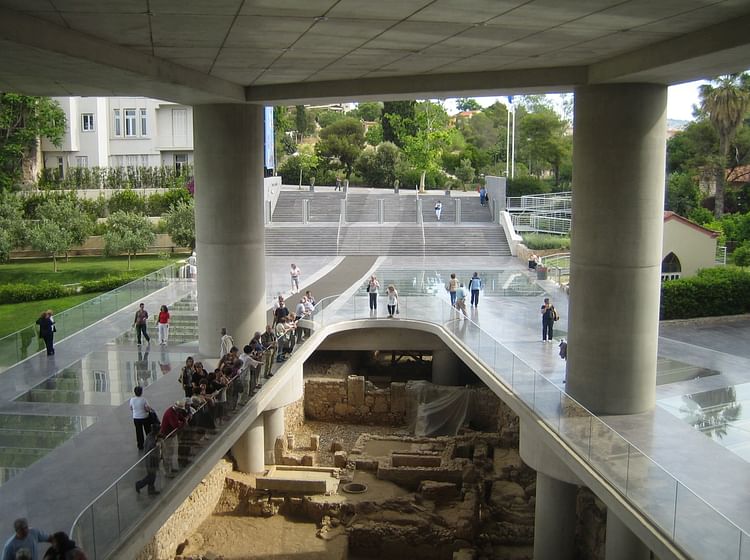 Excavation under the Acropolis Museum Tomisti via Wiki Commons (CC BY-NC-SA) ](https://www.worldhistory.org/image/6899/excavation-under-the-acropolis-museum/ "Excavation under the Acropolis Museum")
3. **Typologies:**
After finds have been cleaned, they are then sorted into groups and classified according to material, size, and decoration. This can help to provide a rough date for an object and provide a basis on which further study can be made. Studying the decoration or shape of an object can tell us about [trade](https://www.worldhistory.org/disambiguation/trade/) networks, craft skills, and people's artistic tastes and values.
4. **Laboratory analyses:**
A great deal of knowledge can be gained from looking at an artefact under a microscope or chemically testing it. Radiocarbon dating measures the rate of decay of carbon 14 and can be used to date many different types of organic materials (as long as they are less than 60,000 years old). This and other similar processes can help to give a fairly accurate date to an object. Another feature of testing is food sources. Even after thousands of years, food sediments can be traceable on artefacts. This can tell us what foods people were eating and even how they cooked.
By carefully studying a simple object, or mapping an ancient city or opening a forgotten tomb or excavating a sunken [galleon](https://www.worldhistory.org/Galleon/), the past is opened up and we can all learn more about peoples and societies otherwise outside our reach. That is archaeology.
#### Editorial Review
This human-authored definition has been reviewed by our editorial team before publication to ensure accuracy, reliability and adherence to academic standards in accordance with our [editorial policy](https://www.worldhistory.org/static/editorial-policy/).
## Bibliography
- Greene, K and Moore, T. *Archaeology: an Introduction.* Routledge, 2010
- [Renfrew, C and Bahn, P. *Archaeology: Theories, Methods, and Practice.* Thames & Hudson, 2012.](https://www.worldhistory.org/books/050028976X/)
## About the Author
Maisie has a passion for ancient history and archaeology.
## Timeline
- **c. 1780 CE**: First scientific archaeological excavations attributed to US President [Thomas Jefferson](https://www.worldhistory.org/Thomas_Jefferson/).
- **1819 CE**: C. J. Thomsen of the Danish National Museum first uses the Three-Age System of [Stone Age](https://www.worldhistory.org/Stone_Age/), [Bronze Age](https://www.worldhistory.org/disambiguation/Bronze_Age/) and [Iron Age](https://www.worldhistory.org/disambiguation/Iron_Age/) to organise its collection.
- **1822 CE**: Champollion announces decipherment of hieroglyphic [writing](https://www.worldhistory.org/writing/).
- **1828 CE**: First excavations begun at [Clava Cairns](https://www.worldhistory.org/Clava_Cairns/).
- **1828 CE - c. 1990 CE**: Ongoing excavations at [Clava Cairns](https://www.worldhistory.org/Clava_Cairns/).
- **c. 1850 CE - 1913 CE**: Excavations are ongoing at the [Skara Brae](https://www.worldhistory.org/Skara_Brae/) site.
- **c. 1860 CE**: Frank Calvert, then Heinrich Schliemann beginning in 1871 CE, excavate at the site of ancient [Troy](https://www.worldhistory.org/troy/).
- **1876 CE**: Heinrich Schliemann begins excavating at [Mycenae](https://www.worldhistory.org/mycenae/).
- **1900 CE - 1905 CE**: Sir Arthur Evans excavates at [Crete](https://www.worldhistory.org/crete/), discovering the [palace](https://www.worldhistory.org/disambiguation/palace/) at [Knossos](https://www.worldhistory.org/knossos/) and naming the [civilization](https://www.worldhistory.org/civilization/) "[Minoan](https://www.worldhistory.org/disambiguation/Minoan/)".
- **1902 CE - 1914 CE**: The [Ishtar Gate](https://www.worldhistory.org/Ishtar_Gate/) excavation is underway and lead by Robert Koldewey.
- **1913 CE**: [Skara Brae](https://www.worldhistory.org/Skara_Brae/) site is plundered by unknown parties.
- **1920 CE**: English archaeologist Sir Leonard Woolley excavates at [Ur](https://www.worldhistory.org/ur/) (in modern-day Iraq).
- **1922 CE**: English archaeologist Howard Carter discovers the [tomb](https://www.worldhistory.org/tomb/) of [Egyptian](https://www.worldhistory.org/disambiguation/Egyptian/) [Pharaoh](https://www.worldhistory.org/pharaoh/) [Tutankhamun](https://www.worldhistory.org/Tutankhamun/).
- **1927 CE**: Professional excavation and preservation efforts begin at [Skara Brae](https://www.worldhistory.org/Skara_Brae/) under V. G. Childe and J.W. Paterson.
- **1930 CE**: The reconstruction of the [Ishtar Gate](https://www.worldhistory.org/Ishtar_Gate/) is completed at the [Pergamon](https://www.worldhistory.org/pergamon/) Museum in Berlin, Germany.
- **c. 1960 CE**: Beginnings of processual [archaeology](https://www.worldhistory.org/Archaeology/), a scientific approach to questions and designing of models to suggest answers and test theories, in the US.
- **c. 1970 CE**: [The Sweet Track](https://www.worldhistory.org/The_Sweet_Track/) found during peat excavations, Somerset, [Britain](https://www.worldhistory.org/disambiguation/Britain/).
- **Aug 1984 CE**: [Lindow Man](https://www.worldhistory.org/Lindow_Man/) discovered at Lindow Moss, a peat bog in Cheshire, [England](https://www.worldhistory.org/disambiguation/england/).
## External Links
- [The Greek-Canadian archaeological excavations at Argilos](http://www.argilos.net)
- [following hadrian photography](https://followinghadrianphotography.com/)
- [The Newly Discovered Tablet V of the Epic of Gilgamesh](http://etc.ancient.eu/exhibitions/giglamesh-enkidu-humbaba-cedar-forest-newest-discovered-tablet-v-epic/)
- [What is Archaeology? Find Out From Real World Indiana Joneses!](https://www.peopleareculture.com/what-is-archaeology/)
## Cite This Work
### APA
Jewkes, M. (2013, July 15). Archaeology. *World History Encyclopedia*.
### Chicago
Jewkes, Maisie. "Archaeology." *World History Encyclopedia*, July 15, 2013. .
### MLA
Jewkes, Maisie. "Archaeology." *World History Encyclopedia*, 15 Jul 2013, .
## License & Copyright
Submitted by [Maisie Jewkes](https://www.worldhistory.org/user/Windrush/ "User Page: Maisie Jewkes"), published on 15 July 2013. The copyright holder has published this content under the following license: [Creative Commons Attribution-NonCommercial-ShareAlike](https://creativecommons.org/licenses/by-nc-sa/4.0/deed.en). This license lets others remix, tweak, and build upon this content non-commercially, as long as they credit the author and license their new creations under the identical terms. When republishing on the web a hyperlink back to the original content source URL must be included. Please note that content linked from this page may have different licensing terms.