
Featured

Article
The Causes of WWI
The origins of the First World War (1914-18) are many and varied, with some even dating back several decades, but a political assassination in the Balkans in the summer of 1914 was the spark that blew up Europe's political powder keg, that is, the highly volatile mix of imperialistic governments, rising nationalism, and the obligations of a complex...
Featured

Article
Causes of the Russian Revolution of 1917
There were many causes behind the Russian Revolution of 1917, ranging from the unpopular authoritarian rule of Tsar Nicholas II (reign 1894-1917) to the radical mobilisation...
Featured

Image
The Four Intact Pharaoh Burials of Ancient Egypt - Tutankhamun and the Royal Treasures of Tanis
Ancient Egyptian royal burials were designed to preserve the pharaoh's body, identity, and status for the afterlife. Coffins...
Featured

Image
12 Royal Princes Who Never Reached the Throne - From Germanicus to the Black Prince & Franz Ferdinand
Royal heirs and princes expected to succeed to a throne occupied an unusually precarious position: close enough to power...
Latest Content

Curriculum Collection
AP World History Unit 7 - Global Conflict (c. 1900 to the Present)
At the dawn of the 20th century, a few Western powers dominated global politics. Within only 50 years, that order was remade by two world wars of...

Article
Stalin's Gulag System - The USSR's Labour Camps
Joseph Stalin's gulag system was a network of labour camps across the USSR, which were, from 1930, used to detain criminals and anyone considered enemies of the state...

Article
F. Buchanan's Account of the Battle of Hampton Roads - Excerpts From the Official Action Report
Confederate Flag Officer Franklin Buchanan (1800 to 1874) is best known as the commander of the CSS Virginia on the first day...

Article
Battle of Hampton Roads - Clash of the Ironclads
The Battle of Hampton Roads (8-9 March 1862), also known as the Battle of the Monitor and the Merrimack, Battle of Ironclads, or Clash of the Ironclads, was a naval...

Article
The USSR's Great Famine of 1932-3
The USSR's Great Famine of 1932-3 was caused by a combination of aggressive requisitioning of foodstuffs by the state, the sale of grain abroad, persecution of farmers, and...

Article
Federalist No. 10 - James Madison's Antidote to the Dangers of Factionalism
Federalist No. 10 was an essay written by James Madison, under the pseudonym Publius, and originally published in the New York Daily Advisor...
Free for the World, Supported by You
World History Encyclopedia is a non-profit organization. Please support free history education for millions of learners worldwide for only $5 per month by becoming a member. Thank you!
Become a MemberHistory should be free for everyone!
If you find World History Encyclopedia helpful, a $10 contribution helps keep trusted history free and accessible to millions of readers and students worldwide. Thanks for making a difference!
Donate $10Maps

Image
Map of the Roman Empire under Septimius Severus, 193-211 CE - Civil War, Roman Expansion, and the Rise of the Severans
The reign of Septimius Severus (193–211 CE) marked a turning point in Roman imperial history. Rising to power...

Image
Wars of the Roses (1455–1487): York vs. Lancaster - Royal Bloodlines, Rival Claims, and the Tudor Dynasty
The Wars of the Roses (1455–1487) were a series of intermittent civil wars for the English crown between the houses...
Image
The Four Intact Pharaoh Burials of Ancient Egypt - Tutankhamun and the Royal Treasures of Tanis
Ancient Egyptian royal burials were designed to preserve the pharaoh's body, identity, and status for the afterlife. Coffins...
For You
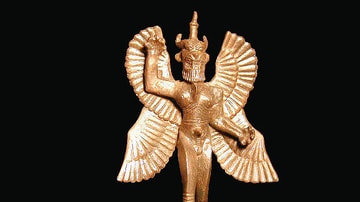
Article
Twelve Menacing & Protective Mythological Figures
The term mythology comes from the Greek words mythos (“story of the people”) and logos (“word”) and so is defined as the spoken (later written) story of a culture...
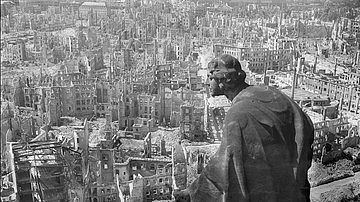
Article
The Bombing of Dresden in 1945
The bomber raid on Dresden was a controversial and highly destructive combined operation by Royal Air Force Lancaster bombers and United States Air Force B-17 Flying Fortress...

Definition
Genpei War
The Genpei War (1180-1185 CE), also known as the Taira-Minamoto War, was a conflict in Japan principally between two rival clans: the Minamoto and Taira, for control of the imperial throne...

Definition
Garden of Eden
The Garden of Eden is the biblical earthly paradise created by God to be inhabited by his first human creation - Adam and Eve. Some claim that the name “Eden” derives from the Akkadian term...
Book Reviews

Book Review
The Army of Alexander the Great
The Army of Alexander the Great (2025) is a highly detailed and insightful examination of one of the most influential military forces in history. Rather than presenting Alexander...

Book Review
Lugalbanda: The Boy Who Got Caught Up in a War: An Epic Tale From Ancient Iraq (Aesop Prize (Awards))
Lugalbanda: The Boy Who Got Caught Up In A War is a fine re-telling of the ancient tale by Kathy Henderson with beautiful...

Book Review
Liberty's Grid: A Founding Father, a Mathematical Dreamland, and the Shaping of America
Amir Alexander begins Liberty’s Grid by considering the view of the San Fernando Valley from Castle Peak, a hill near his home. Although...
Statistics
| 2,993 | definitions |
| 1,772 | articles |
| 19,889 | illustrations |
| 2,645 | videos |
| 415 | 3D images |
| 16,494 | translations |
| 48 | languages |
| 1,346 | contributors |
| 15,667 | keywords |
| 63,544 | registered users |
Ancient Period
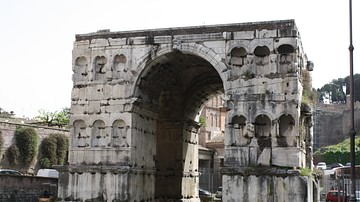
Article
Arch of Janus
The Arch of Janus, erected in the 4th century CE, stands in the forum Boarium of Rome and was most probably set up as a boundary-marker rather than a commemorative triumphal arch. The four-way...

Definition
Maya Architecture
Maya architecture is best characterized by the soaring pyramid temples and ornate palaces which were built in all Maya centres across Mesoamerica from El Tajin in the north to Copan in...

Definition
Hypaspist
The hypaspists or hypaspistai were a distinct type of infantry soldier who served as a vital part of the Macedonian armies of both Phillip II of Macedon (r. 359 BCE - 336 BCE) and his son and...

Definition
Literature - The Artistic Expression of the Human Experience
Literature (from the Latin Littera meaning "letters" and referring to an acquaintance with the written word) is the written work of a specific culture...
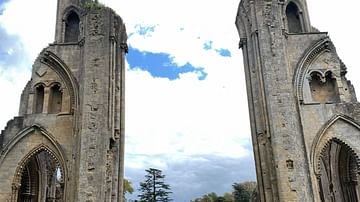
Article
Visiting Glastonbury - the Town of Myths & Legends
The Somerset Levels is an area of the British Isles that captivates visitors with its stunning natural landscape and historical sites and monuments. Glastonbury...

Article
Ghosts in Ancient Mesopotamia - Just Another Aspect of Life
Ghosts in ancient Mesopotamia were understood as a reality of life, just as they were in other civilizations of antiquity. Although the cultures of the...

Article
Ten Ancient Persia Facts You Need to Know
Ancient Persian culture exerted a powerful influence throughout the Near East, and beyond, for over a thousand years between c. 550 BCE - 651 CE and many aspects of their...

Collection
Colonization in the Ancient Mediterranean
Colonization of the ancient Mediterranean had been taking place since the Bronze Age, especially with Minoan and Mycenaean expansion, but it was the Phoenicians from...
Medieval Period

Definition
William II of England
William II of England, sometimes called William 'Rufus' for his red hair and complexion, reigned as the king of England from 1087 to 1100 CE. The son of William the Conqueror (r. 1066-1087...
Definition
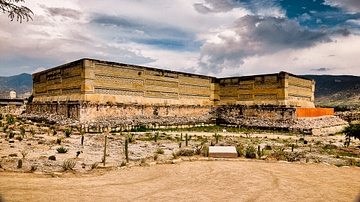
Mitla
Mitla, located in the eastern portion of the Valley of Oaxaca in southern Mexico, was an important site of the Zapotec civilization. Gaining prominence from the early Post-Classic period (c. 700-900...

Definition
Aihole
Aihole (Ayyavole) was an ancient walled city in Karnataka, central India. Aihole was the first regional capital of the Karnakata region under the rule of the Chalukyas. The large number of early...

Definition
Medieval Icelandic Government
Early medieval Icelandic government, or Viking Iceland, has been termed an incipient form of democracy or democratic parliamentarism, however, the system was actually nothing...

Definition
Tulum
Tulum, on the east coast of the Yucatan peninsula in southern Mexico, was an important Mesoamerican centre which displayed both Maya and Toltec influence. Tulum was a major trading and religious...

Definition
Xochicalco
Xochicalco in central Mexico was an important hilltop centre from the 8th century CE and was a rival and successor of Teotihuacán. Architecture at the site is closely connected to that of the...

Definition
Saladin
Saladin (1137-93) was the Muslim Sultan of Egypt and Syria (r. 1174-1193) who shocked the western world by defeating an army of the Christian Crusader states at the Battle of Hattin and then capturing...

Definition
Giovanni Bellini
Giovanni Bellini (c. 1430-1516 CE) was an Italian Renaissance artist best known for his innovative use of colour, interest in light, and emphasis on brushwork. Today, Giovanni is recognised...
Early Modern Period

Definition
Sofonisba Anguissola - The Founder of Feminist Art
Sofonisba Anguissola (c. 1532-1625) was an Italian Renaissance painter from Cremona who achieved considerable fame during her lifetime as the first widely-known...

Definition
Numismatics
Numismatics the study of coinage, and is a wonderfully useful tool in the archaeologist's and historian's toolbox. One of the best things for an archaeologist to find while digging is a coin...

Definition
Great Northern War
The Great Northern War took place from 1700 to 1721 and was fought between Russia and Sweden during the reign of Peter I of Russia (Peter the Great). One of the key causes of the war was...

Article
Falling Star
Falling Star is a Cheyenne tale of the great hero Hotoketana'ohtse ("Falling Star") who came from the heavens to stand up for those who could not defend themselves, slay monsters, and save...

Article
Weapons in the American Revolution
The American Revolutionary War (1775-1783) was a long and bitter conflict fought between Great Britain and its thirteen North American colonies over the Americans' liberties...
Collection
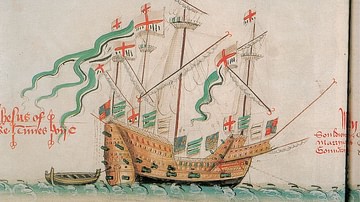
Elizabethan Explorers, Privateers & Colonists
The reign of Elizabeth I of England (1558-1603 CE) witnessed an extraordinary spurt of exploration as tiny wooden ships boldly set sail from English shores to cross...

Definition
Mayflower Compact
The Mayflower Compact is the agreement between the 41 male passengers of the ship Mayflower establishing the form of government of the Plymouth Colony (1620-1691), signed on 11 November...
Definition
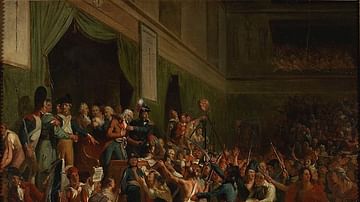
Prairial Uprising
The Uprising of 1 Prairial Year III (20 May 1795) was the last major popular insurrection during the French Revolution (1789-1799). It was the final time that the sans-culottes played an...
Modern Period

Article
Ellen and William Craft's Running a Thousand Miles for Freedom
Ellen and William Craft's Running a Thousand Miles for Freedom (1860) tells the story of the couple's escape from slavery, with Ellen disguised as a...

Article
Key British Weapons of World War I
The First World War (1914-18) witnessed an arsenal of new weapons as all sides were desperate to gain an advantage, particularly in the static trench warfare of the Western...

Definition
Robert E. Lee - General-in-Chief of the Southern Confederacy
Robert E. Lee (1807-1870) was the most prominent Confederate general of the American Civil War (1861-1865), who commanded the Army of Northern Virginia...

Article
Italian Colonialism in Eritrea
Eritrea, located on the Red Sea coast of the Horn of Africa, was the ‘firstborn’ colony of Italy. The potential of a trade centre and naval base at Assab first attracted Italian...

Definition
A. P. Hill - The Confederate General Who Saved Lee at Antietam
Ambrose Powell Hill (1825-1865) was a Confederate general during the American Civil War (1861-1865), who commanded the Third Corps of the Army of Northern...

Article
The Wise Man of Chief Mountain
The Wise Man of Chief Mountain is an origin story of the Blackfeet nation explaining how they came to wear brightly colored clothing. Although Native American nations generally...

Image Gallery
Pierre-Auguste Renoir: A Gallery of 30 Paintings
In this gallery, we showcase 30 paintings by Pierre-Auguste Renoir (1841-1919), the French impressionist painter. The selection here is presented in chronological...

Article
Coyote Tales of the Comanche
Coyote tales of the Comanche feature the same trickster figure as the Coyote tales of the Shasta nation, the Coyote tales of the Apache, and those of many other Native peoples...
Prehistoric Period

Article
The Megalithic Temples of Malta
The megalithic temples of Malta and Gozo rank amongst the oldest free-standing buildings in the world. Construction of these temples started c. 3500 BCE, an impressive architectural...

Definition
Hill of Tara
The Hill of Tara is an ancient Neolithic Age site in County Meath, Ireland. It was known as the seat of the High Kings of Ireland, the site of coronations, a place of assembly for the enacting...

Article
Dynamics of the Neolithic Revolution
The Neolithic Revolution began between 10,000 and 12,000 years ago at several widely dispersed locations across the world, when our ancestors first began planting and raising...
Definition
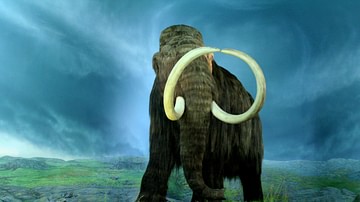
Woolly Mammoth
The woolly mammoth, Mammuthus primigenius, is an extinct herbivore related to elephants who trudged across the steppe-tundras of Eurasia and North America from around 300,000 years ago until...

Definition
Migration Age
The Migration Period, also called the Barbarian Invasions or German: Völkerwanderung (wandering of the peoples), was a period of human migration that occurred roughly between 300 to 700 CE...
Definition
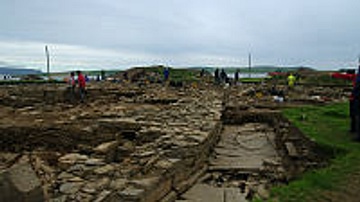
Ness of Brodgar
The Ness of Brodgar is a Neolithic Age site discovered in 2002 CE through a geophysical survey of the area of land in Stenness in Orkney, Scotland, which separates the salt water Stenness...
Definition
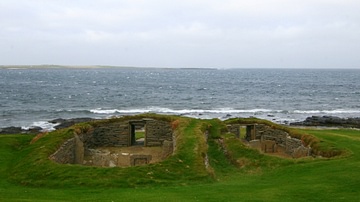
Knap of Howar
The Knap of Howar is a Neolithic site on the island of Papa Westray in Orkney, Scotland. The name is Old Norse for `mound of mounds' or `large barrow'. The building preserved at the site...

Definition
Skara Brae
Skara Brae is a Neolithic Age site, consisting of ten stone structures, near the Bay of Skaill, Orkney, Scotland. Today the village is situated by the shore but when it was inhabited (c.3100-2500...
